
Agenda-setting intelligence, analysis and advice for the global fashion community.
Agenda-setting intelligence, analysis and advice for the global fashion community.

The author has shared a YouTube video.
You will need to accept and consent to the use of cookies and similar technologies by our third-party partners (including: YouTube, Instagram or Twitter), in order to view embedded content in this article and others you may visit in future.

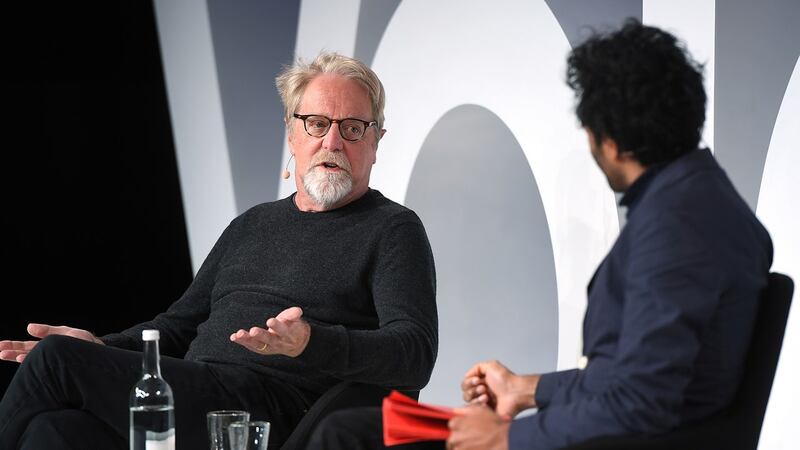
OXFORDSHIRE, United Kingdom — “Amazon now dominates the book business; Amazon would like to dominate the fashion business too,” said Jonathan Taplin, the author of “Move Fast and Break Things,” a polemic on what Taplin sees as the destructive monopolisation of the internet by Google, Facebook and Amazon.
In a live debate with Rohan Silva, co-founder of Second Home, Taplin recounted how “a small group of libertarian entrepreneurs,” including Larry Page and Peter Thiel, hijacked the counter-cultural, decentralised vision for the internet, putting tremendous power in the hands of a few technology platforms to the detriment of cultural producers whose copyrights were fundamentally eroded, undermining their source of economic sustenance.
Rohan countered that “internet platforms make it easier for creators to reach markets.” But Taplin noted the “deflationary” nature of the digital age in which free content is abundant, adding that the tech giants which dominate the attention economy were now developing their own content — and pushing it to the top of user’s feeds. He also questioned the rise of targeted content and advertising, saying: “These companies are in the business of surveillance capitalism.”
Taplin said the growing power of tech platforms was also undermining democracy, citing the rise of fake news and telling a story about a post he saw on Facebook in the wake of the recent mass shooting in Las Vegas that falsely claimed the shooter was a Hillary Clinton supporter who wanted to kill country music fans.
Rohan suggested that the global connectivity of tools like Facebook also allowed people to organise for good, using the example of a group at Second Home that used tech platforms to assist refugees around the world. But Taplin raised the example of the Arab Spring and said the same platforms were being used for surveillance and coercion. Ultimately, Rohan acknowledged that there were persuasive arguments on both sides of the debate and ended with a quip: “Buy Jonathan’s book — just not from Amazon!”
To learn more about VOICES, BoF's annual gathering for big thinkers, in partnership with QIC Global Real Estate, visit our VOICES website and click here to request an invitation to attend.
Related Articles:
[ How Fashion Can Fight AmazonOpens in new window ]
[ Snapchat, Facebook or Instagram: Who Is Winning the Social Media Shopping Race?Opens in new window ]
Getting recommended by ChatGPT, Claude, Gemini and other AI chatbots is fast emerging as a competitive advantage for fashion brands. As AI reshapes discovery, which brands are being favoured by AI and why?
A new analysis suggests most big fashion and retail players are using AI, though many are still reluctant to speak about it publicly.
Synthetic consumer research, where AI is used to simulate shoppers, is emerging as a cutting-edge way for brands and retailers to better understand their customers and test everything from products to marketing campaigns before they launch.
The more conversational commerce becomes, the more important generative engine optimisation will be, writes Andrea Felsted.
Christine Hunsicker admitted she falsified financial statements to promote CaaStle Inc. as a valuable, growing business when in reality it was struggling.
The American cosmetic giant’s buyout of Ayurvedic beauty line Forest Essentials came as a surprise. By picking an under-the-radar brand it knows well, the company can show that it’s still in the M&A game without needing to outbid rivals.
The underwear company is anticipating net sales of at least $6.85 billion in the current fiscal year, exceeding analyst estimates and marking the highest revenue since its split from L Brands Inc in 2021.
The Japanese brand is accelerating its expansion in India to capture a greater share of the rapidly growing apparel market and affluent consumer base.


