
Agenda-setting intelligence, analysis and advice for the global fashion community.
Agenda-setting intelligence, analysis and advice for the global fashion community.

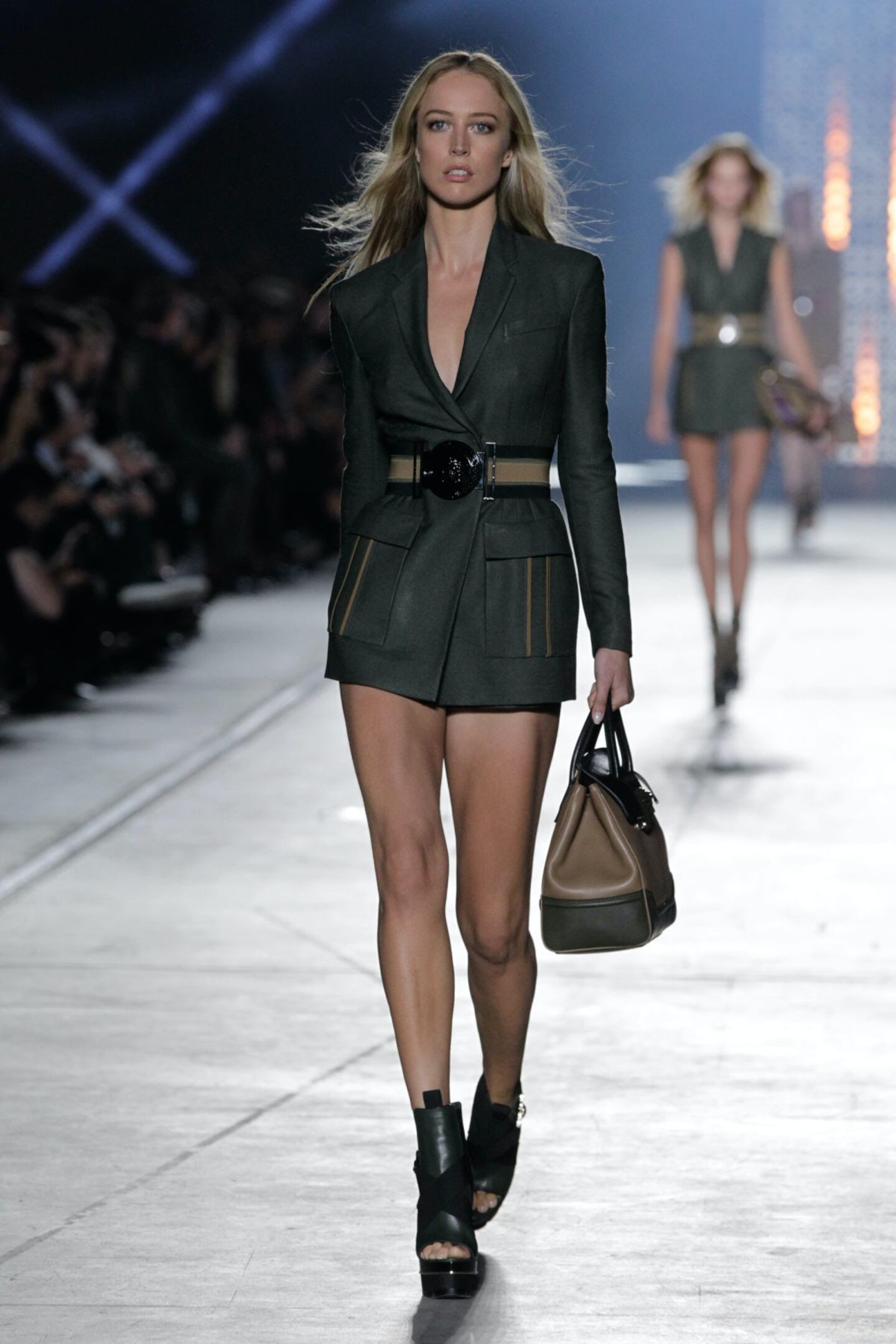
MILAN, Italy — Everything about the Versace show was gigantic. The venue was a huge domed space called the Citylife Palace. Strobed by spotlights, it felt like a rollerball arena. The sound was Transition, a massive early-Noughties techno track by Detroit politicists Underground Resistance, given an LGBTQ spin by Portuguese deejay Violet.
And the collection? The biggest, best thing Donatella Versace has ever marched down a catwalk. Maybe it was the scale of the venue that unleashed the beast within. Or perhaps it was her recent proximity to Riccardo Tisci that inspired her to kick back, then stomp.
Violet’s version of Transition was recorded for Equality Now, an NGO dedicated to ending violence and discrimination against women and girls. (Versace noted a donation to the organisation in the show notes.) Given the seriousness of that issue, the horrendous challenges faced by women in male-dominated communities all over the world, a fashion show is a pallid contribution to the cause. But Donatella was clearly galvanised. Images of empowerment can come from unexpected quarters. In fashion terms, she dressed a Versace army. Khaki, cotton drill, and camo were the basic ingredients, sculpted, laminated and stirred up with animal prints. Outfits for Amazons in an urban jungle; perched on weaponised footwear.
There were so many artful techniques on display — from crochet to glazed raffia to artfully feathered hems — that you began to wonder what bushel Donatella has been hiding her light under all these years. If there was razor sharp precision in khaki utility-wear, there was skilful deconstruction in fil coupe knotted into a dress as casually as if it were a holiday sarong.
From Loewe to Yohji Yamamoto, the fifth day of Paris fashion week featured recently installed designers rolling out fresh identities and unbeatable masters being themselves.
It’s not an existential crisis — yet — but Rick Owens and Daniel Roseberry confront some headscratchers in their latest collections.
Stick with the program or switch it up? Angelo Flaccavento reports on Chloé, Rabanne, Schiaparelli, Rick Owens and Uma Wang.
Haider at Tom Ford, Pieter at Alaïa, comings and goings in fashion, and Nico at Courrèges coming up fast, all of it leading to a day of dynamic fashion in Paris, writes Tim Blanks.
From Loewe to Yohji Yamamoto, the fifth day of Paris fashion week featured recently installed designers rolling out fresh identities and unbeatable masters being themselves.
The Supreme Court did not say how the collected tariffs should be refunded when it struck Trump’s economic policy down as unconstitutional last month, leaving small importers worried the process would be expensive and time-consuming.
Escalating conflict in the Middle East is exposing how quickly geopolitics can disrupt even luxury’s most carefully cultivated retail hubs.
In a document filed with the Securities and Exchange Commission, the company’s management has approved a plan for organisational changes expected to cost the brand nearly $300 million. One analyst posited the target could be its struggling subsidiary.


