
Agenda-setting intelligence, analysis and advice for the global fashion community.
Agenda-setting intelligence, analysis and advice for the global fashion community.

On Monday, Balenciaga announced that it will allow customers to sell their clothes and accessories in exchange for cash or a credit toward future purchases. The programme is being run by Reflaunt, which provides the back-end for many brands that deal in the secondhand market.
Balenciaga is the latest in a growing list of luxury brands attempting to capture a slice of the secondhand luxury market, in a rapid about-face for a sector that just a few years ago viewed resale as a threat to their full-price business, as well as a potential vehicle for counterfeits.
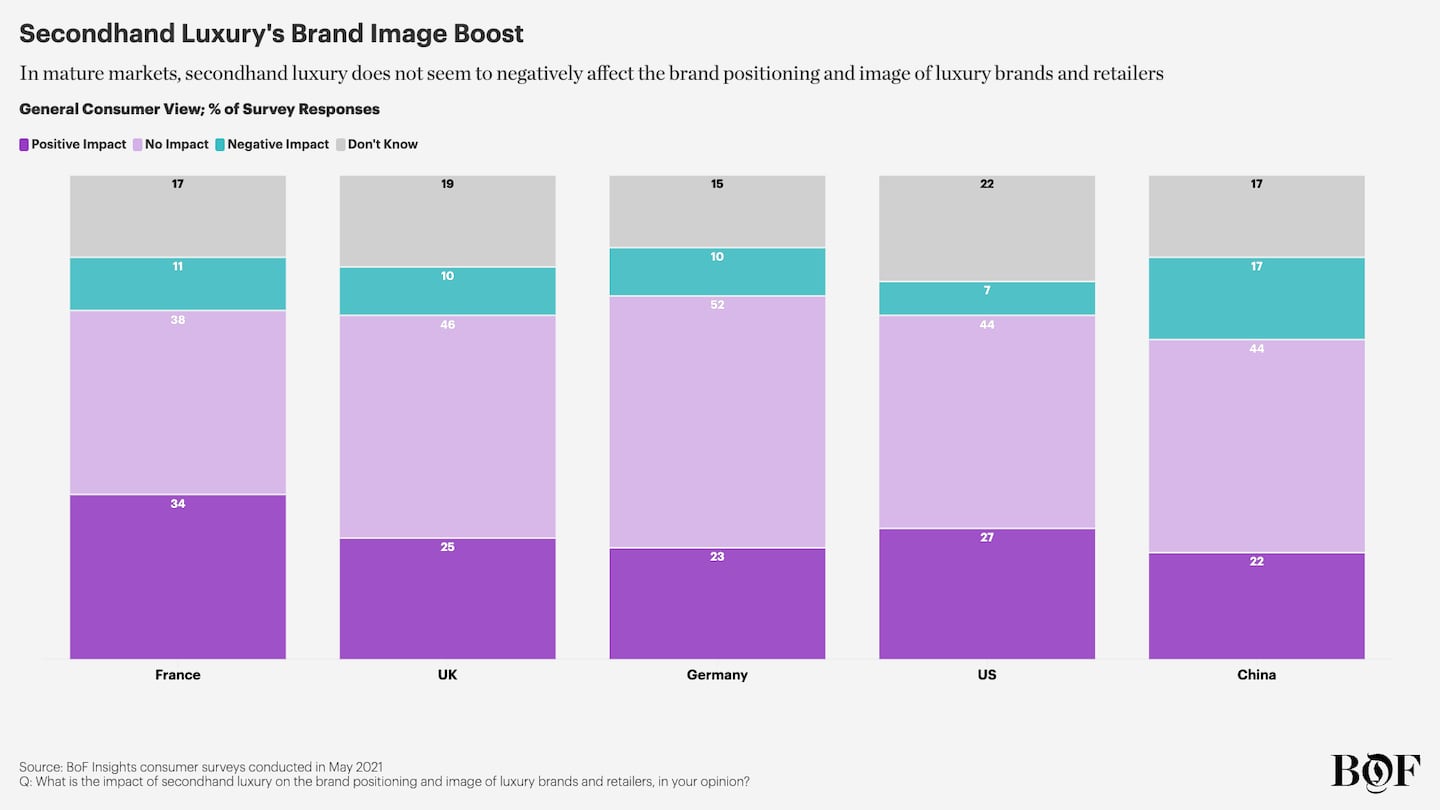
One reason for the shift: consumers are going to shop secondhand whether brands buy into the concept or not. But rather than hurting brands, the labels that do support resale could be poised to benefit from it. Data from BoF Insights’ in-depth report, The Future of Fashion Resale, found that upwards of 70 percent of general consumers in markets such as France, the US, the UK, Germany and China indicate that secondhand luxury has a positive or neutral impact on a luxury brand or retailer’s image and positioning.
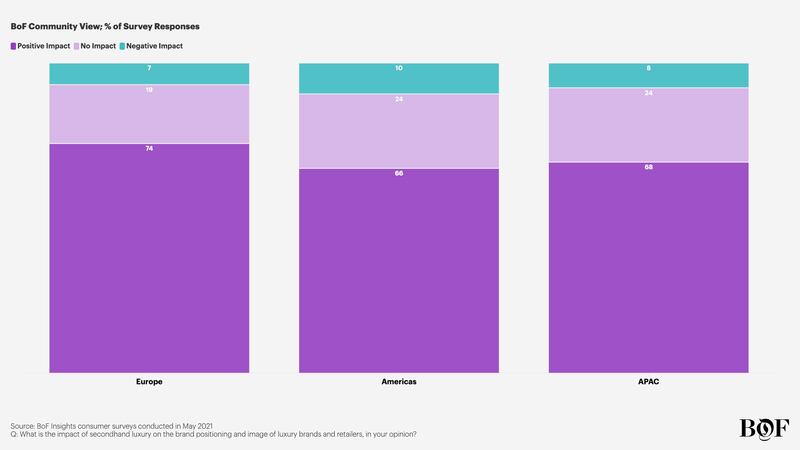
Among a panel of “industry insiders” drawn from the BoF community, this figure increases to upwards of 90 percent in the North American, European and APAC markets.
ADVERTISEMENT
For a brand or retailer, formally participating in the secondhand market could signal that its products are well made, and that the company is looking to minimise its impact on the planet by urging consumers to buy used clothes rather than new ones. It is also a revenue opportunity that’s becoming too big to pass up: BoF Insights forecasts double-digit growth for secondhand luxury globally.
BoF Insights is The Business of Fashion’s data and advisory team, partnering with leading fashion and beauty clients to help them grow their brands and businesses. Get in touch at insights@businessoffashion.com to understand how BoF Insights support your company’s growth for the long term.
Vestiaire Collective plans to shut down Tradesy and make a major push into the US, injecting fresh competition into a market where even the biggest players are struggling to turn a profit.
BoF’s definitive guide to fashion resale, covering the evolution of the market, its growth and upside, consumer behaviours and recommendations for crafting a data-driven resale strategy.
Ultra-fast fashion e-tailer PrettyLittleThing is the latest brand to launch a secondhand marketplace, playing into a debate over whether resale is becoming a smokescreen for even more and faster consumption.

Diana Lee is the Director of Research & Analysis at The Business of Fashion. She is based in London and oversees the content strategy and roadmap for BoF Insights.

Rahul Malik is the Chief Growth Officer & Head of BoF Insights for The Business of Fashion. He is based in New York City.
While $1.75 billion in court-approved funding has brought labels back to the fold, the real test for vendors will come when that temporary safety net vanishes later this year.
A growing number of mass and premium brands are pushing upmarket with a more luxe look, better materials and, often, higher prices. This case study unpacks how these labels are navigating the tricky challenge of elevating a brand.
Brands from Prada to Abercrombie & Fitch will provide clarity on how the fashion industry is approaching the newly uncertain trade landscape. Plus, a preview of Paris Fashion Week.
The goods come from more than 380 brands, including Burberry and those owned by luxury powerhouses LVMH and Kering.
Christine Hunsicker admitted she falsified financial statements to promote CaaStle Inc. as a valuable, growing business when in reality it was struggling.
The American cosmetic giant’s buyout of Ayurvedic beauty line Forest Essentials came as a surprise. By picking an under-the-radar brand it knows well, the company can show that it’s still in the M&A game without needing to outbid rivals.
The underwear company is anticipating net sales of at least $6.85 billion in the current fiscal year, exceeding analyst estimates and marking the highest revenue since its split from L Brands Inc in 2021.
The Japanese brand is accelerating its expansion in India to capture a greater share of the rapidly growing apparel market and affluent consumer base.


