
Agenda-setting intelligence, analysis and advice for the global fashion community.
Agenda-setting intelligence, analysis and advice for the global fashion community.

To subscribe to The Debrief, please follow this link.
Background:
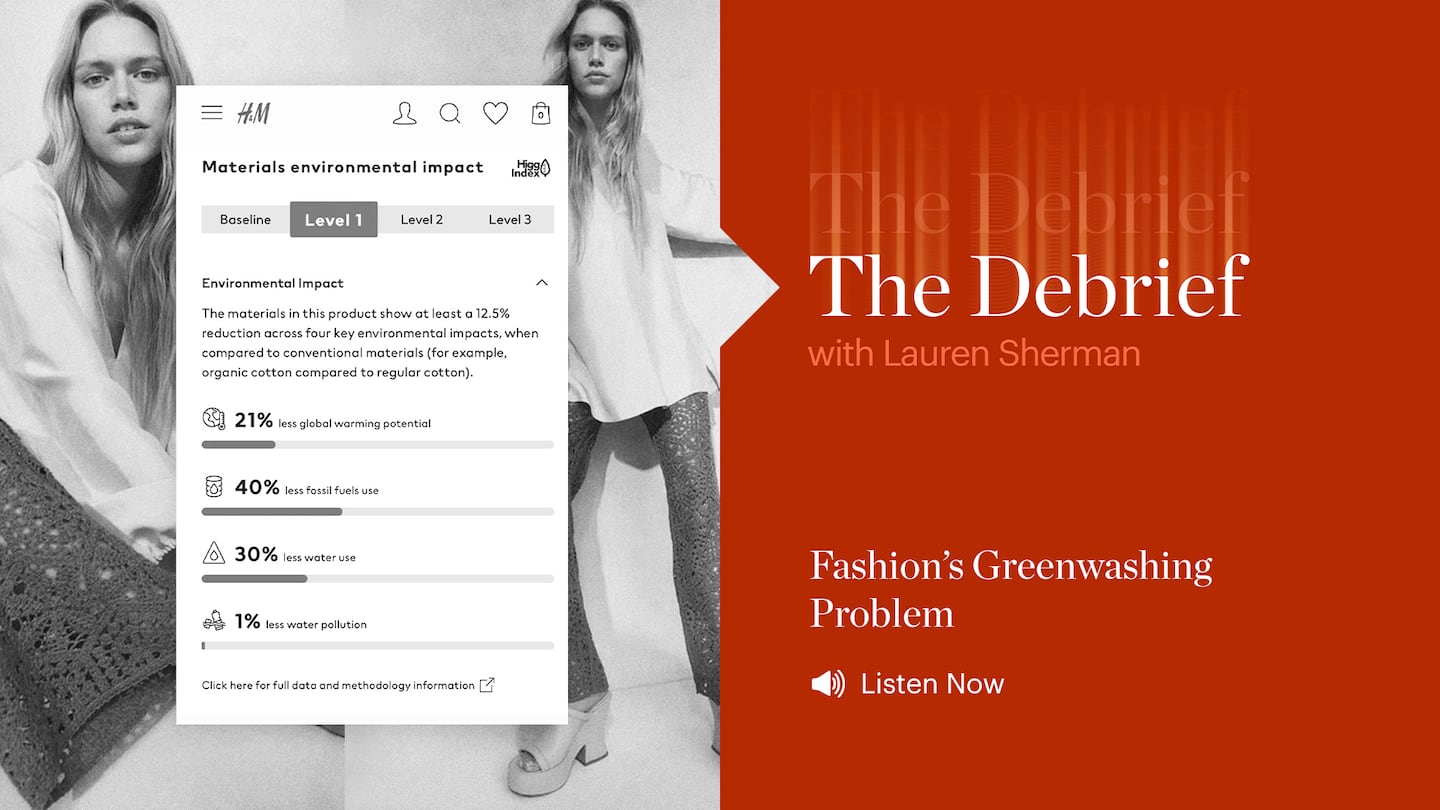
Concern about the environmental impact of clothing has swelled in the past few years. So too has the practice of greenwashing. Right now, fashion marketing is flooded with eco-conscious messaging as brands dub their products “sustainable” without doing the groundwork to back up declarations. Consumers and regulatory parties are starting to demand more.
“What we’re seeing is companies wanting to talk more about this, consumers wanting to know more about this, and regulators really sitting up,” said chief sustainability correspondent Sarah Kent. “It’s this perfect storm where something that has been an issue that needed to be addressed for a long time is coming to a head.”
ADVERTISEMENT
Key Insights:
Additional Resources:
Join BoF Professional for the analysis and advice you need. Get 30 days for just $1 or explore group subscriptions for your business.
Coach-owner Tapestry’s new carbon-removal partnership and brands making fresh commitments to textile-to-textile recycling startups show an industry searching for ways to address its environmental impact.
A new group of brand partners, including Reformation and C&A, is joining the poly-cotton recycler’s long-term commercialisation program only weeks after its debut, signalling growing demand as the company gears up for industrial-scale production in Europe.
The sustainable materials company, which closed its Swedish factory in 2024, is opening it again after a year of restructuring.
The consumer base for activewear made of natural materials like cotton and wool is growing, as more people on the political right join progressives in worrying about the health effects of polyester and other synthetics.
Christine Hunsicker admitted she falsified financial statements to promote CaaStle Inc. as a valuable, growing business when in reality it was struggling.
The American cosmetic giant’s buyout of Ayurvedic beauty line Forest Essentials came as a surprise. By picking an under-the-radar brand it knows well, the company can show that it’s still in the M&A game without needing to outbid rivals.
The underwear company is anticipating net sales of at least $6.85 billion in the current fiscal year, exceeding analyst estimates and marking the highest revenue since its split from L Brands Inc in 2021.
The Japanese brand is accelerating its expansion in India to capture a greater share of the rapidly growing apparel market and affluent consumer base.