
Agenda-setting intelligence, analysis and advice for the global fashion community.
Agenda-setting intelligence, analysis and advice for the global fashion community.

To subscribe to the BoF Podcast, please follow this link.
OXFORDSHIRE, United Kingdom — Whilst fighting against human rights abuses and gender inequality in India, social activist and lawyer Trisha Shetty became only too familiar with the systematic human wrongs that occur not just in her home nation, but all over the world.
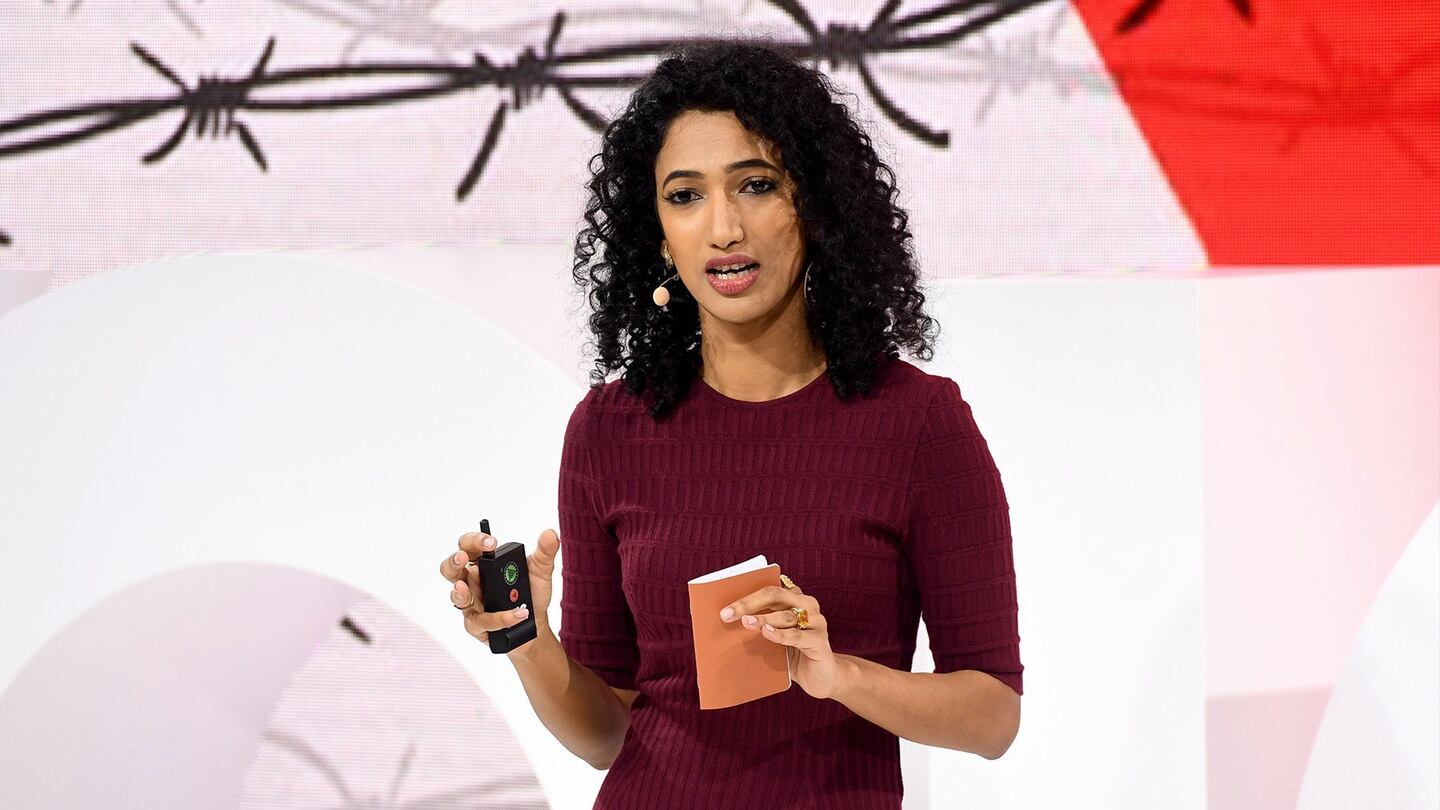
Speaking to an audience of global thought-leaders, executives and entrepreneurs at BoF VOICES 2019, Shetty described a 2016 call from a father whose four-and-half-year-old daughter had been raped across the road from their home by a store owner's relative.
The SheSays founder — a non-profit organisation campaigning for gender equality by advocating for policy change — described the discriminatory treatment experienced by the father and daughter as they navigated police stations, courtrooms and hospitals in search of justice.
ADVERTISEMENT
In September 2019, the child’s attacker was convicted and given a 10-year prison sentence as a result of the father’s resilient pursuit for justice despite the many obstacles laid in his path.
"When I think of resilience, I think of it as a muscle, two steps forward one step back three steps forward five steps back. But we still keep showing up,” Shetty said.
“The people on the frontlines doing the most work are the most vulnerable, most marginalised, the ones that have very little to lose and yet are putting everything at risk to fight,” she continued.
When I think of resilience, I think of it as a muscle, two steps forward one step back three steps forward five steps back.
In order to effect change “in times of failed leadership,” Shetty was adamant that it is up to individuals to speak up and seek justice: “If you believe you hold positions of power and authority it is incumbent upon you to speak up and demand better from our leaders.”
Shetty's message holds particular poignancy in the context of recent political tensions in India as a result of the Citizenship Amendment Act passed by Prime Minister Narendra Modi's government on December 12 2019.
The Act eases the path to gaining Indian citizenship for people from Afghanistan, Pakistan and Bangladesh — provided they are not Muslims. Critics and activists argue that the Act contradicts India’s secular constitution, which ensures different religions equal treatment by the government.
To learn more about VOICES, BoF's annual gathering for big thinkers, visit our VOICES website, where you can find all the details on our invitation-only global gathering.
To contact The Business of Fashion with comments, questions, or speaker ideas please e-mail podcast@businessoffashion.com.
Hours after the Supreme Court issued its decision, Trump began relying on alternative legislation to try to rebuild his tariff wall.
The new announcement stirred up more economic turbulence as president Trump lashed out at the US Supreme Court.
A majority of justices struck down the ‘Liberation Day’ tariffs that sent shockwaves through the fashion industry, setting the stage for a rush of brands trying to recoup duties they’ve already paid.
The ruling strikes down the so-called ‘Liberation Day’ tariffs that sent a shockwave through the fashion industry and sets the stage for a rush of brands trying to recoup duties they’ve already paid.
Stick with the program or switch it up? Angelo Flaccavento reports on Chloé, Rabanne, Schiaparelli, Rick Owens and Uma Wang.
The brands Gap and Banana Republic beat comparable sales estimates.
Sex sells — if anyone can figure out what sexy means in 2026. Robert Williams tracks the search for a new silhouette at Kering’s Gucci, LVMH’s Dior and more.
Christine Hunsicker admitted she falsified financial statements to promote CaaStle Inc. as a valuable, growing business when in reality it was struggling.


