
Agenda-setting intelligence, analysis and advice for the global fashion community.
Agenda-setting intelligence, analysis and advice for the global fashion community.

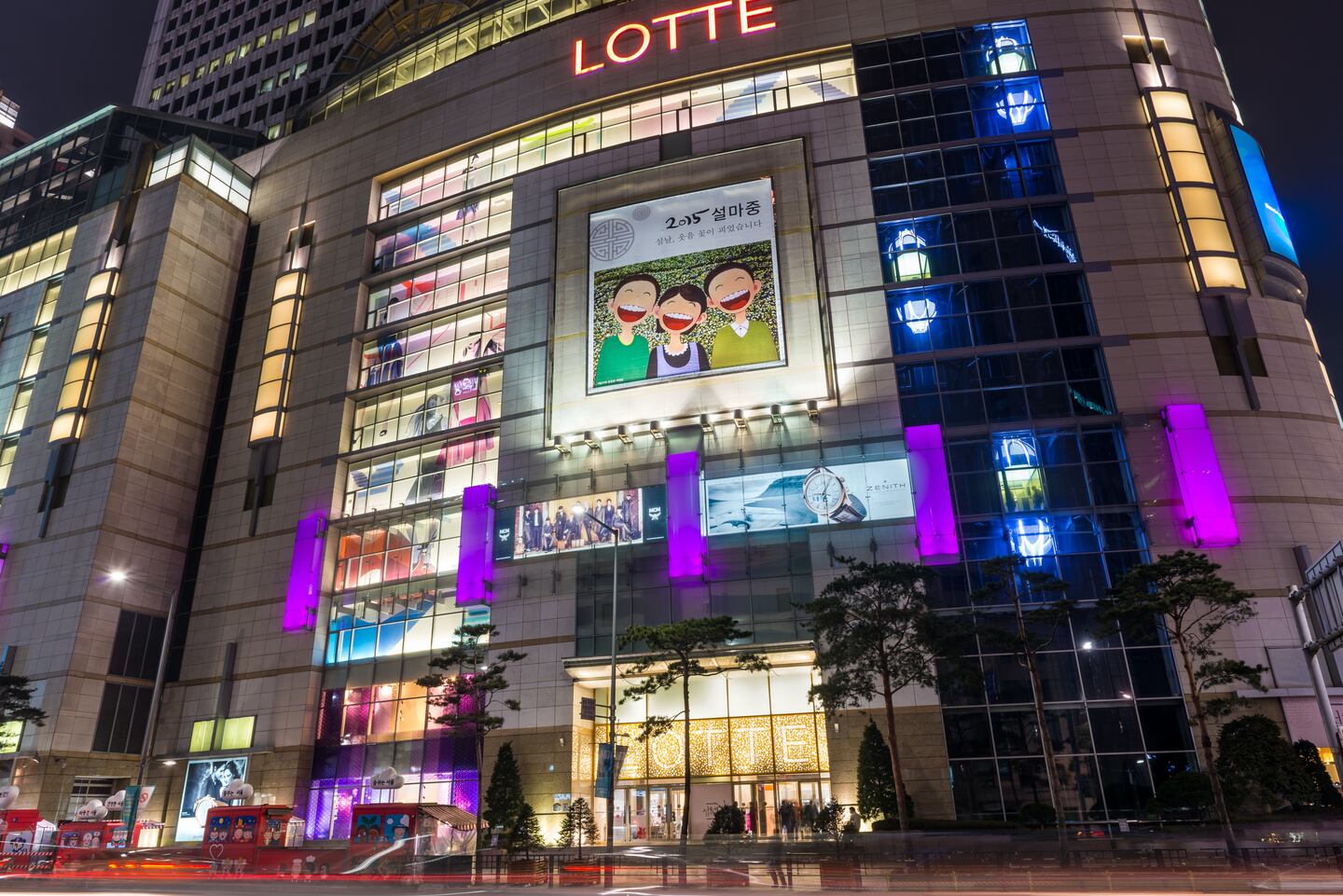
HONG KONG, China — China's bite might hurt, but not for long.
That's worth remembering as Beijing rattles the cage of South Korean companies dependent on sales to Chinese consumers. Lotte Group and other retailers such as cosmetics firm Amorepacific Corp. need only look at recent history for examples of their neighbour's short fuse.
Upset at Seoul's planned deployment of a US missile defence system, China is making life difficult for Korean retailers both at home and on the mainland. According to the state-run Korea Tourism Organization, travel agents in China have been ordered to stop selling tour packages to South Korea from this month.
Given that visitors from China accounted for almost half the tourists to South Korea last year, that's no small matter. Some 55 percent of Korea's duty-free sales in 2015, for example, were to Chinese consumers, according to Deutsche Bank AG. Add an anti-Korea media blitz, including the pulling by major internet-streaming sites of popular TV dramas that champion Korean products, and it's little wonder retailers are worried.
ADVERTISEMENT
Lotte Group, already struggling with a family feud that led it to scrap a float of its hotel unit, has been hit directly. Chinese authorities suspended the operations of 23 Lotte Mart stores because of alleged fire-safety rule violations, according to Yonhap News, and some websites have stopped selling its products in China.
Lotte Group isn't listed, but investors have punished its publicly traded hypermarket-to-convenience store outfit Lotte Shopping Co., as well as Lotte Confectionery Co. Both firms make less than 5 percent of their sales on the mainland, Bloomberg-compiled data show. Lotte isn't alone.
China has reportedly ordered the destruction of 700 kilograms (1,650 pounds) of Amorepacific's imported products on the grounds they contained bacteria. Such an assault may rekindle memories for other brands that have been caught up in Beijing's nationalist sentiments.
Remember when McDonald's Corp. blamed protests related to events in the South China Sea for hurting sales? Yet, as Japan's automakers can attest, these attacks don't last. No matter how much firms may be hurting now, Chinese fans of K-Pop aren't gone for good.
Companies like Amorepacific are also known for their cheaper prices and faster product turnaround, which makes it easier for them to gain a following among fickle Shanghai fashionistas. Tourists from other countries in Asia could pick up any temporary slack, too.
If anything, the won's strength against the yuan, up 4.7 percent this year, will have a more significant impact on Chinese consumers' love for all things Korean. Beijing's ire can be fierce, but it's also often fleeting.
By Nisha Gopalan; editor: Katrina Nicholas. This column does not necessarily reflect the opinion of Bloomberg LP and its owners.
While $1.75 billion in court-approved funding has brought labels back to the fold, the real test for vendors will come when that temporary safety net vanishes later this year.
A growing number of mass and premium brands are pushing upmarket with a more luxe look, better materials and, often, higher prices. This case study unpacks how these labels are navigating the tricky challenge of elevating a brand.
Brands from Prada to Abercrombie & Fitch will provide clarity on how the fashion industry is approaching the newly uncertain trade landscape. Plus, a preview of Paris Fashion Week.
The goods come from more than 380 brands, including Burberry and those owned by luxury powerhouses LVMH and Kering.
Christine Hunsicker admitted she falsified financial statements to promote CaaStle Inc. as a valuable, growing business when in reality it was struggling.
The American cosmetic giant’s buyout of Ayurvedic beauty line Forest Essentials came as a surprise. By picking an under-the-radar brand it knows well, the company can show that it’s still in the M&A game without needing to outbid rivals.
The underwear company is anticipating net sales of at least $6.85 billion in the current fiscal year, exceeding analyst estimates and marking the highest revenue since its split from L Brands Inc in 2021.
The Japanese brand is accelerating its expansion in India to capture a greater share of the rapidly growing apparel market and affluent consumer base.


