Muji Is Turning Skincare Into Its Next Growth Engine
The Japanese retailer is betting on its fast-growing, value-for-money skincare products to drive growth at home and abroad.

Social class remains curiously absent from America’s conversation on race, but it has always been in sharp focus at Condé Nast, writes Bonnie Morrison.
Social class remains curiously absent from America’s conversation on race, but it has always been in sharp focus at Condé Nast, writes Bonnie Morrison.

The work-from-anywhere revolution will accelerate the coming of a post-digital age for shopping, argues Doug Stephens of Retail Prophet.
The work-from-anywhere revolution will accelerate the coming of a post-digital age for shopping, argues Doug Stephens of Retail Prophet.

The French luxury titan is doubling down on six shows per year and the Cruise extravaganzas pioneered by Karl Lagerfeld. Chanel’s Bruno Pavlovsky lays out the logic to Tim Blanks.
The French luxury titan is doubling down on six shows per year and the Cruise extravaganzas pioneered by Karl Lagerfeld. Chanel’s Bruno Pavlovsky lays out the logic to Tim Blanks.

Racism is firmly entrenched in the fashion industry, argue Jason Campbell and Henrietta Gallina.
Racism is firmly entrenched in the fashion industry, argue Jason Campbell and Henrietta Gallina.

After yet another senseless killing of an unarmed black man at the hands of the police in the United States, the fashion industry has a duty to its customers and society at large to use its privilege and power to drive systemic change.
After yet another senseless killing of an unarmed black man at the hands of the police in the United States, the fashion industry has a duty to its customers and society at large to use its privilege and power to drive systemic change.

A recently released study reveals that, between 2003 and 2013, the United States Fish and Wildlife Service seized thousands of products made by Gucci, Michael Kors and others. As the fashion industry scrambles to reinvent itself during the Covid-19 pandemic, it must not forget animals, writes Joshua Katcher.
A recently released study reveals that, between 2003 and 2013, the United States Fish and Wildlife Service seized thousands of products made by Gucci, Michael Kors and others. As the fashion industry scrambles to reinvent itself during the Covid-19 pandemic, it must not forget animals, writes Joshua Katcher.

Michele said that the defined seasons that have conventionally enslaved the fashion industry will be less meaningful to him in the future, writes Tim Blanks.
Michele said that the defined seasons that have conventionally enslaved the fashion industry will be less meaningful to him in the future, writes Tim Blanks.

The exploitation of Asia by western businesses is as widespread today as it was when the British ruled India and Gandhi and Charlie Chaplin discussed the subject in a brief encounter in 1931, argues Bandana Tewari.
The exploitation of Asia by western businesses is as widespread today as it was when the British ruled India and Gandhi and Charlie Chaplin discussed the subject in a brief encounter in 1931, argues Bandana Tewari.
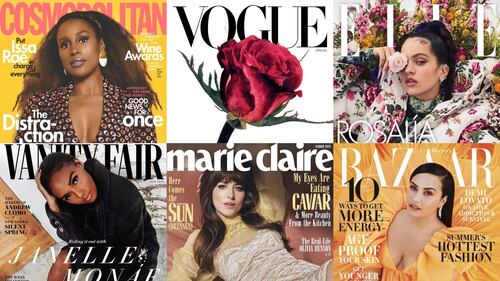
The Covid-19 crisis may reconfigure the publishing rhythms of glossy print magazines until there’s little left, writes Amy Odell.
The Covid-19 crisis may reconfigure the publishing rhythms of glossy print magazines until there’s little left, writes Amy Odell.

If it costs $4,000, few people will buy your coat at full price, regardless of when it’s delivered, argues Eugene Rabkin.
If it costs $4,000, few people will buy your coat at full price, regardless of when it’s delivered, argues Eugene Rabkin.

Neither the e-commerce giant nor government is going to save fashion. The industry needs to save itself by embracing substantive, systemic change, argues Lawrence Lenihan.
Neither the e-commerce giant nor government is going to save fashion. The industry needs to save itself by embracing substantive, systemic change, argues Lawrence Lenihan.

The post-virus luxury sector will be shaped by the acceleration of four existing trends, writes Erwan Rambourg.
The post-virus luxury sector will be shaped by the acceleration of four existing trends, writes Erwan Rambourg.
The Japanese retailer is betting on its fast-growing, value-for-money skincare products to drive growth at home and abroad.
Shipments of garments for major retailers are stranded at airports in Bangladesh and India as the conflict in the Middle East forces airlines cancel flights.
The luxury retailer, which filed for bankruptcy earlier this year, will close more stores as it tries to cut losses and focus on more profitable, higher-end locations.
In a document filed with the Securities and Exchange Commission, the company’s management has approved a plan for organisational changes expected to cost the brand nearly $300 million. One analyst posited the target could be its struggling subsidiary.
The decline in nonfarm payrolls reported by the Labor Department in its employment report on Friday was the sixth since January 2025 and the second largest.
The Japanese sportswear brand is accelerating global expansion by acquiring race-registration platforms to deepen engagement with runners.
The brands Gap and Banana Republic beat comparable sales estimates.
Christine Hunsicker admitted she falsified financial statements to promote CaaStle Inc. as a valuable, growing business when in reality it was struggling.