
Agenda-setting intelligence, analysis and advice for the global fashion community.
Agenda-setting intelligence, analysis and advice for the global fashion community.

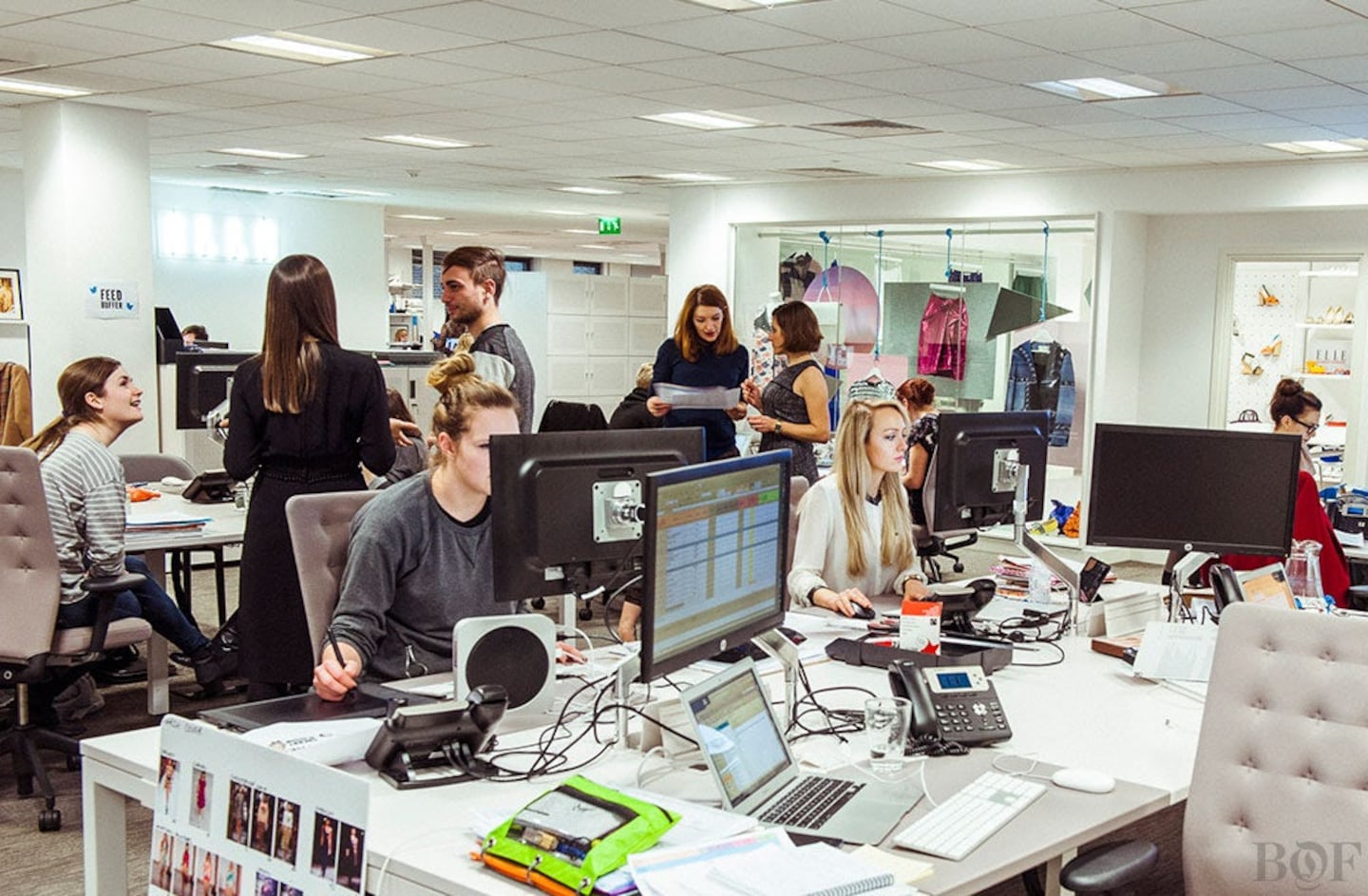
LONDON, United Kingdom — I am a rarity in my industry: a female chief executive. I also happen to be under the age of 40 with two young children.
I run Hearst Magazines UK, which publishes 19 magazines, including the UK editions of Elle, Harper’s Bazaar, Cosmopolitan, Esquire, Town & Country and Red, as well as seven pure play digital brands.
We employ 900 people and 70 percent of them are female. We reach one in three women in the UK through our brands and in order to keep up with what they want, we blend instinct and creativity with insight from research and data. This gives me as an individual, and the company at large, a real understanding of what makes modern women tick. I also know the fashion industry, as I have worked within fashion media for over fifteen years.
I am a firm believer that we need more women in leadership positions in the fashion industry. Women make up 50 percent of the population and they tend to work more collaboratively. There is a huge amount of evidence that shows that businesses with diverse workforces deliver better returns for shareholders and are generally happier places to work. It’s a no brainer that we should have more of them around the boardroom table, running factories and leading teams of people.
ADVERTISEMENT
So what can employers do to encourage more women into senior positions?
The first thing is to not treat women as some huge amorphous mass. Women, like men, are individuals. Some have babies, some don’t. Some want to work flexibly, others don’t want to take all their maternity leave. As employers, we need to create flexible businesses that can respond to the needs of women as individuals, not as some nebulous group with only gender in common.
Enabling women to have children, staying in touch with them while they are away and ensuring they can return to the job supported and able to work flexibly or part time if that suits them, is crucial. Hearst UK is 70 percent female. We employ a lot of working mothers. And as any employer knows, most working mothers are ferociously organised and efficient — they have to be, to manage the relentless juggle. We need to support them and to provide them with the flexibility to manage their work as well as their life as their children grow.
We must encourage women to push themselves forward, to apply for roles that challenge them, that they might not have all the experience for, but for which they have the aptitude and the approach to do a brilliant job. I am with Madeleine Albright, former US Secretary of State, who said, “There is a special place in hell for women who don’t help other women.” That’s right, of course, but I also think that men also have a significant role to play in helping women reach the top. I have been lucky enough to have been championed and mentored by men throughout my career.
I started off working in magazine media at Emap, which was a very “can do” business. From early on, I was encouraged to try new things and challenge myself. I then spent the next few years at Hachette, working as marketing director on brands like Elle, Red and Digital Spy. I was lucky enough to be sponsored by an inspiring chairman who kept giving me new challenges, firstly, running our digital division and then heading up strategy for the company. I got where I am today through a combination of hard work, drive and the opportunity to be a part of working cultures that didn’t consider gender as a blocker to opportunity.
At Hearst, we aim to create a culture where it is recognised that good ideas can come from anywhere. If that’s the young, quiet, female graduate who might not have bags of experience, but might just have that genius idea that no one else has thought of yet, then let’s provide the culture to give her the confidence to speak up.
We need to make sure that young women starting out in the industry, and those that are working in it today are given the same support that I was.
Anna Jones is chief executive of Hearst Magazines UK.
ADVERTISEMENT
The views expressed in Op-Ed pieces are those of the author and do not necessarily reflect the views of The Business of Fashion.
Join the discussion on BoF Voices, a new platform where the global fashion community can come together to express and exchange ideas and opinions on the most important topics facing fashion today.
Hours after the Supreme Court issued its decision, Trump began relying on alternative legislation to try to rebuild his tariff wall.
The new announcement stirred up more economic turbulence as president Trump lashed out at the US Supreme Court.
A majority of justices struck down the ‘Liberation Day’ tariffs that sent shockwaves through the fashion industry, setting the stage for a rush of brands trying to recoup duties they’ve already paid.
The ruling strikes down the so-called ‘Liberation Day’ tariffs that sent a shockwave through the fashion industry and sets the stage for a rush of brands trying to recoup duties they’ve already paid.
From Loewe to Yohji Yamamoto, the fifth day of Paris fashion week featured recently installed designers rolling out fresh identities and unbeatable masters being themselves.
The Supreme Court did not say how the collected tariffs should be refunded when it struck Trump’s economic policy down as unconstitutional last month, leaving small importers worried the process would be expensive and time-consuming.
Escalating conflict in the Middle East is exposing how quickly geopolitics can disrupt even luxury’s most carefully cultivated retail hubs.
In a document filed with the Securities and Exchange Commission, the company’s management has approved a plan for organisational changes expected to cost the brand nearly $300 million. One analyst posited the target could be its struggling subsidiary.


