
Agenda-setting intelligence, analysis and advice for the global fashion community.
Agenda-setting intelligence, analysis and advice for the global fashion community.

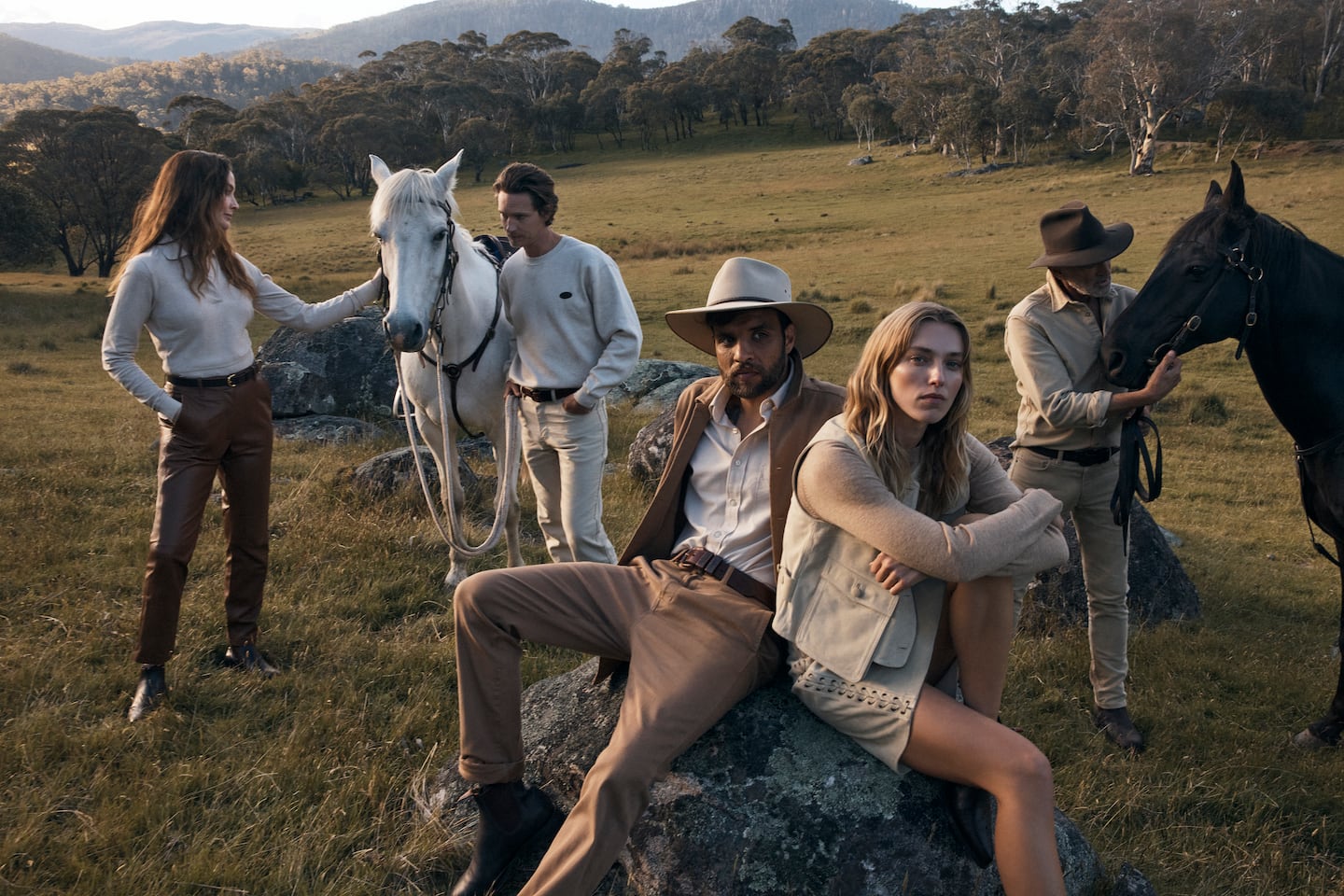
The Australian bush clothing and footwear brand could soon be making a plant-based version of its famous boots following a $20 million investment in sustainable textile company Natural Fiber Welding.
RM Williams owner Andrew Forrest’s Tattarang investment firm participated in the Illinois-based Natural Fiber Welding’s $85 million series B round of funding, alongside a raft of other investors including BMW and Ralph Lauren.
Natural Fiber Welding’s main products are Clarus, a range of sustainable textiles, and Mirum, a plastic-free, plant-based, biodegradable leather alternative.
Tattarang is considering using Mirum for some of its boots, which are worn by celebrities, politicians and businesspeople around the world.
ADVERTISEMENT
Chief investment officer John Hartman said Mirum could provide “wide-ranging” opportunities for the Australian brand, but stressed the company’s core range would remain traditional leather.
“Leather is of course deeply entwined in the DNA of RM Williams, and we have no plan to change that, however we know consumers are increasingly seeking high-performance, plastic-free leather alternatives. NFW could provide an opportunity for us to further explore this with RM Williams,” Hartman said in a statement.
Mining magnate Forrest acquired RM Williams in late 2020 as part of a AU$ 190 million deal, which returned the company to Australian hands after years of foreign ownership. Following the acquisition, the company said it would focus more on sourcing Australian-made leathers for its boots, and bring as much of its boot manufacturing back to Australia as possible.
If RM Williams does use Natural Fiber Welding’s leather alternative, it will join Patagonia, H&M, Allbirds, Camper, and Alexander McQueen as among the brands using the company’s zero-plastic materials.
Learn more:
Fashion’s Race for New Materials — Download the Case Study
Brands are pursuing a raft of initiatives to adopt recycled textiles, regeneratively farmed cotton and mushroom-based leather, but giving fashion’s major materials a sustainability makeover still requires billions of dollars worth of investments and deeper, longer-term commitments to scale. BoF breaks down some of the key innovations, the companies leading the charge and the barriers to change.
Coach-owner Tapestry’s new carbon-removal partnership and brands making fresh commitments to textile-to-textile recycling startups show an industry searching for ways to address its environmental impact.
A new group of brand partners, including Reformation and C&A, is joining the poly-cotton recycler’s long-term commercialisation program only weeks after its debut, signalling growing demand as the company gears up for industrial-scale production in Europe.
The sustainable materials company, which closed its Swedish factory in 2024, is opening it again after a year of restructuring.
The consumer base for activewear made of natural materials like cotton and wool is growing, as more people on the political right join progressives in worrying about the health effects of polyester and other synthetics.
Activist fund Oasis Management Co. is calling on the Japanese personal care company to convene an extraordinary general meeting, seeking a probe into its supply-chain risk management and internal control.
The retailer surpassed annual sales forecasts but expects a $60 million drag from import tariffs in the first half of 2026.
The luxury Ayurvedic skincare line will be the first deal by the conglomerate under the leadership of Stéphane de La Faverie.
By introducing a new version of her Magic Cream, Tilbury joins a number of other brands, from Armani and Olaplex, wading into the tricky waters of reformulation.


