
Agenda-setting intelligence, analysis and advice for the global fashion community.
Agenda-setting intelligence, analysis and advice for the global fashion community.

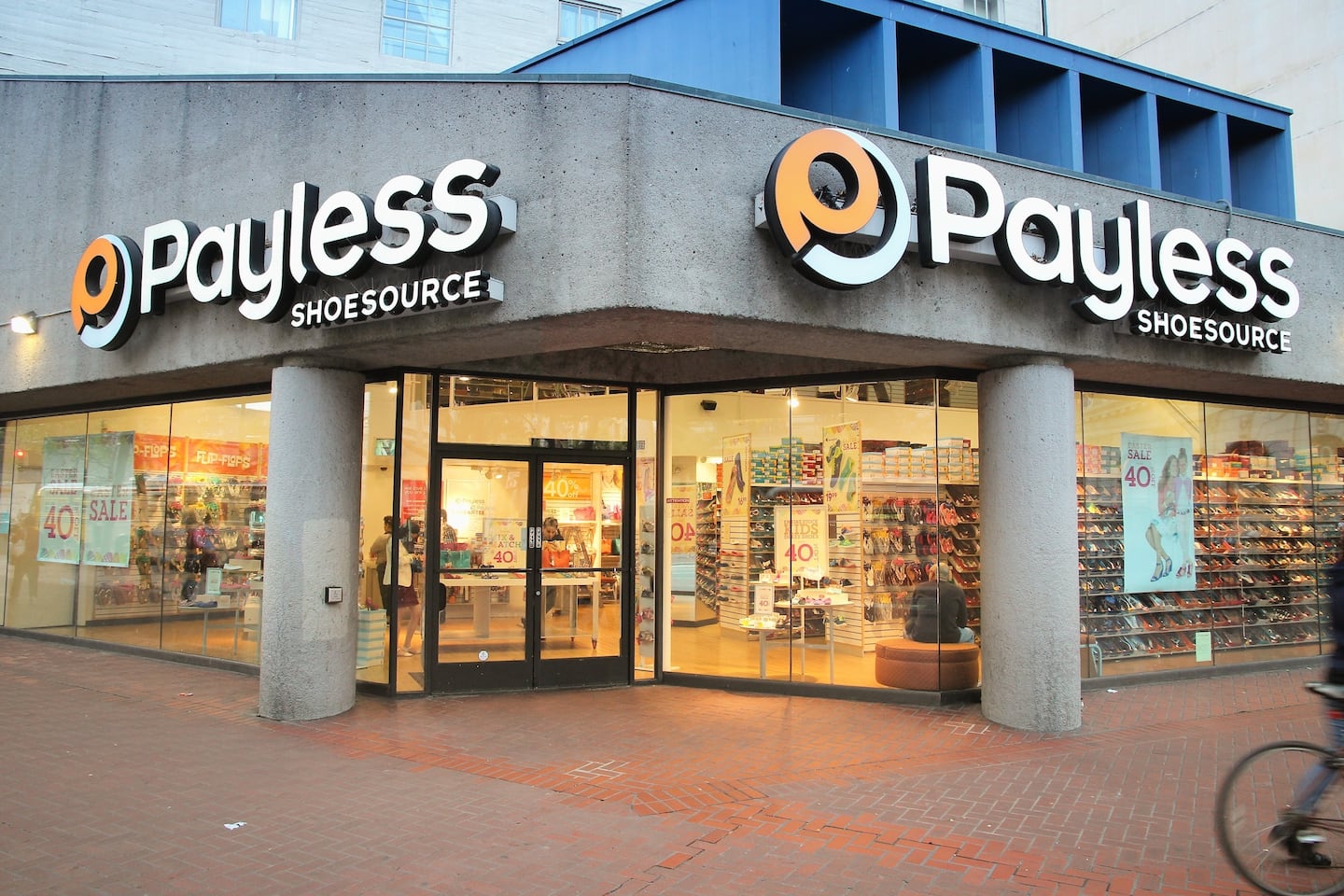
NEW YORK, United States — When a group of disgruntled shoe manufacturers assembled in China earlier this year, they put up signs with messages in English, hoping they would be seen by Americans 7,000 miles away: "Payless Sucks."
The footwear suppliers had lost patience with the soon-to-be-bankrupt Payless Inc. chain, which they said owed them hundreds of millions of dollars. In frustration, they held the meeting to assess their options: enlist the Chinese government to push for payment, try to block shipments from Payless’s Xiamen warehouse to the US, or sue Payless in American courts.
The banners were written in bold red letters — one said “Payless Pay!!” — and took the unusual approach of directly attacking a customer. But hostility between vendors and the ailing US retail industry is growing more broadly. Suppliers are becoming increasingly concerned they won’t be paid for the goods they ship, and they’re taking more aggressive steps to protect themselves.
“Vendors are getting extraordinarily nervous,” said Hilldun Corp. chief executive officer Gary Wassner, whose firm finances fashion suppliers. He now gets two or three extra calls a day from worried manufacturers that sell to retailers, including luxury stores.
ADVERTISEMENT
Bankruptcies at Payless, Gordmans Stores, Wet Seal and RadioShack’s ill-fated successor General Wireless have rocked the industry this year. And Sears Holdings Corp., once the world’s largest retailer, warned investors last month that there was “substantial doubt” about its ability to keep operating.
Low Rank
A bankruptcy can deal an especially big blow to suppliers because they're low in the pecking order. When the court assesses claims, secured creditors will get paid before vendors. "Their unsecured status pushes them down the line," said Steven Ruggiero, head of research at financial firm R.W. Pressprich & Co.
Perhaps no company has fallen as far in the eyes of suppliers as Sears. The retailer was once the premier venue for many vendors: During its heyday in the mid-20th century, securing a spot in its catalog or department stores was seen as key to success.
But the chain’s sales have plunged in recent years, contributing to losses of more than $10 billion since 2012. Stores are more thinly stocked, and certain brands have disappeared from shelves. To stay afloat, the company has received more than $1 billion in support from its CEO and largest shareholder, Edward Lampert.
Curbing Insurance
By 2014, insurance firms that helped protect suppliers were already scaling back their policies, according to people familiar with the situation. Wells Fargo & Co. is among the firms no longer providing Sears vendors with factoring — short-term financing that helps gives them a cushion.
Against that backdrop, some suppliers have put Sears on a tighter leash. They’re demanding payment terms as short as one week, people with knowledge of the matter said.
ADVERTISEMENT
Still, the company is taking steps to return to profitability, including a plan to lower its debt burden and cut annual expenses by at least $1 billion. Chris Brathwaite, a spokesman for Hoffman Estates, Illinois-based Sears, said the retailer has “enjoyed longstanding, productive relationships with our tens of thousands of suppliers and vendors.”
Strained relations with vendors also can hurt companies trying to bounce back from a bankruptcy, said Christa Hart, a retail and consumer consultant at FTI Consulting Inc.
Supplier networks aren’t easily rebuilt and are “the lifeblood of the company and its future.” Empty shelves mean fewer sales, turning an attempt to revive a bankrupt company into a liquidation.
Michael Stanley, managing director at financing company Rosenthal & Rosenthal, said he’s seeing higher demand for various services, including credit insurance and factoring, that protect vendors. He’s also hearing from suppliers in new categories, such as beauty.
Waiting for Payment
In the case of Payless, Los Angeles-based Inter-Pacific Trading Corp. and dozens of Chinese factories were seeking payments for products shipped as far back as August, according to people with knowledge of the matter. When Payless filed for Chapter 11 this month, it owed lenders about $838 million and an additional $240 million to so-called trade creditors, which are typically suppliers, according to court records.
Representatives for Inter-Pacific and Payless didn’t respond to requests for comment.
A battle between Sports Authority Inc. and about 160 of its consignment vendors contributed to that retailer’s failure to survive bankruptcy. When it filed for Chapter 11, it sued the suppliers to prevent them from interfering with its plans to liquidate merchandise.
ADVERTISEMENT
Staying Stocked
The rift made it difficult for Sports Authority to keep enough items in stock to attract customers, and the business ultimately was forced to shut down. A supplier to bankrupt HHGregg Inc., Electrolux Home Products Inc., also voiced complaints about appliances it had supplied to the Indianapolis-based retailer under a consignment deal.
Struggling companies often suspend or delay payments to their vendors as a quick way to conserve cash. But vendors’ wariness creates a painful cycle, and may continue to push retailers into Chapter 11, Hart said.
“Lack of faith — and canceled shipments — from vendors and factors has precipitated numerous retail bankruptcies,” she said.
While $1.75 billion in court-approved funding has brought labels back to the fold, the real test for vendors will come when that temporary safety net vanishes later this year.
A growing number of mass and premium brands are pushing upmarket with a more luxe look, better materials and, often, higher prices. This case study unpacks how these labels are navigating the tricky challenge of elevating a brand.
Brands from Prada to Abercrombie & Fitch will provide clarity on how the fashion industry is approaching the newly uncertain trade landscape. Plus, a preview of Paris Fashion Week.
The goods come from more than 380 brands, including Burberry and those owned by luxury powerhouses LVMH and Kering.
The activewear giant seems intent on turning its nearly 40-year-old niche outdoor fashion brand into a mainstream success. The plan hinges on convincing backpackers and athletes its rugged technical gear can perform just as well as The North Face or Arc’teryx.
It’s not an existential crisis — yet — but Rick Owens and Daniel Roseberry confront some headscratchers in their latest collections.
Stick with the program or switch it up? Angelo Flaccavento reports on Chloé, Rabanne, Schiaparelli, Rick Owens and Uma Wang.
The brands Gap and Banana Republic beat comparable sales estimates.


