
Agenda-setting intelligence, analysis and advice for the global fashion community.
Agenda-setting intelligence, analysis and advice for the global fashion community.

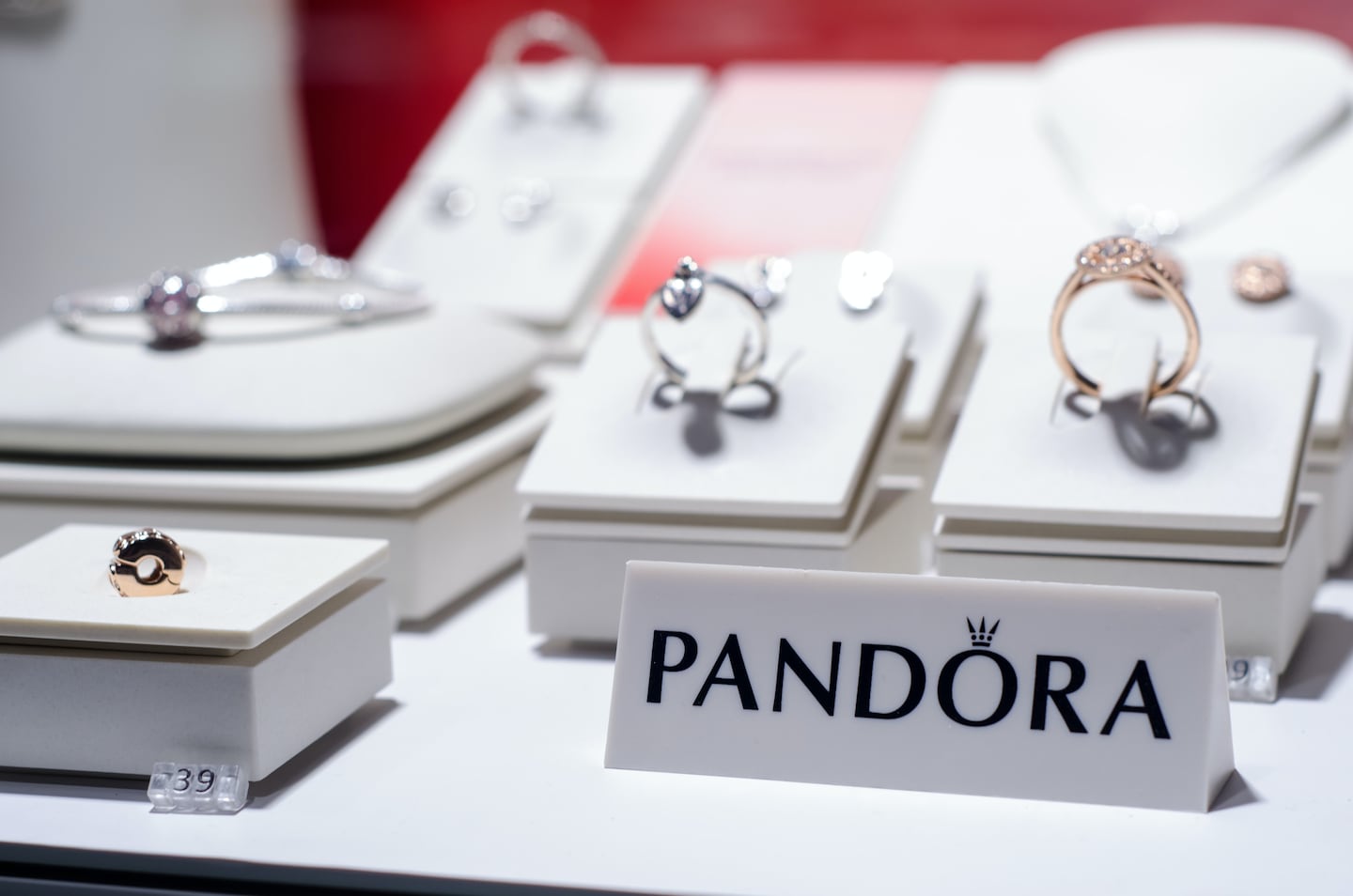
Pandora could do more for the mainstreaming of lab-created diamonds than any company on the planet.
The Copenhagen-based firm sells the most pieces of jewellery in the world, totalling about $3 billion in sales a year from more than 100 countries. Its breakthrough has been offering affordable luxury to the masses. But diamonds have been too pricey for its middle class customer base — just 50,000 of the roughly 85 million items it sold last year contained the precious stone.
Enter Alexander Lacik, who joined Pandora as CEO in April 2019. A veteran of packaged goods giant Reckitt Benckiser, Lacik is trying to ignite growth. His strategy is a simple one: sell more jewellery to the millions of customers Pandora already has, instead of finding new ones. That’s why lab-grown diamonds are so tantalising because at roughly a third of the cost of mined stones, they are in the price range (starting at about $300 for an item with 0.15 carat) Pandora’s customers expect. That could open the diamond market to them for the first time.
Bloomberg spoke with Lacik about Pandora’s push into diamonds, which recently kicked off with a rollout in the UK and will go global next year.
ADVERTISEMENT
Since lab-created diamonds are cheaper than mined diamonds, why not market them that way? For a segment that is still new to many consumers and only has a single-digit share of the US diamond market, it seems like an obvious strategy.
I don’t talk about that. Then it’s very easy to fall into the trap of: ‘I’m a cheap wannabe.’ We don’t want to denigrate the value the industry has built up around diamonds—the whole flair around diamonds. We definitely want to keep that.
OK. But what are you telling customers about these diamonds, which the company sources from suppliers?
The whole discussion is it’s a diamond. It’s just the way it’s produced that’s different. One is through the geological route, and the other is through modern technology. But the outcome is exactly the same. That’s what we’ve trained our staff to explain.
The biggest portion of the diamond market by far is engagement and bridal. But Pandora isn’t going that route. It’s instead pitching rings, necklaces and bracelets made with lab-created diamonds to women to buy for themselves. Why?
The lazy approach would have been to say everyone is in bridal and everyone is in engagement, so let’s go in there and market the fact that we are a third of the cost. I could have done that. But to me, that just lacks imagination and creativity. Do I want to be the guy famous for cheapening diamonds?
Gotcha. You really don’t want to destroy the perceived value of mined diamonds. So women are going to buy diamonds for themselves?
The advertising is around transformation. It’s about someone who has transformed themselves. Ashley Graham is one of the spokespersons, a plus-sized model. Everyone said you can’t be a model, and she persisted.
ADVERTISEMENT
Many lab-created diamonds are marketed as better for the planet. But they also require loads of energy—one step uses heat of 1,500 degrees Fahrenheit. Pandora says it makes up for that by using renewables and carbon offsets. So how do you position sustainability?
I’m not going to town on ‘hey, I have cheap diamonds or only sustainable diamonds.’ I’m going to town on ‘you want to transform yourself? You want to celebrate you’re a strong woman? Well here’s something we can offer to you. And by the way, it’s at this price, and it’s sustainable.’ That’s how it flows.
Given Pandora’s size and global reach, what will be the ultimate impact of its move into lab-grown diamonds?
There have been a lot of small players putting their fingers into the pot, but no one with the muscle. So let’s see. We are applying the marketing muscle. We’re going all in.
Editor’s note: This interview has been edited and condensed.
By Matthew Townsend
While $1.75 billion in court-approved funding has brought labels back to the fold, the real test for vendors will come when that temporary safety net vanishes later this year.
A growing number of mass and premium brands are pushing upmarket with a more luxe look, better materials and, often, higher prices. This case study unpacks how these labels are navigating the tricky challenge of elevating a brand.
Brands from Prada to Abercrombie & Fitch will provide clarity on how the fashion industry is approaching the newly uncertain trade landscape. Plus, a preview of Paris Fashion Week.
The goods come from more than 380 brands, including Burberry and those owned by luxury powerhouses LVMH and Kering.
The brands Gap and Banana Republic beat comparable sales estimates.
Sex sells — if anyone can figure out what sexy means in 2026. Robert Williams tracks the search for a new silhouette at Kering’s Gucci, LVMH’s Dior and more.
Christine Hunsicker admitted she falsified financial statements to promote CaaStle Inc. as a valuable, growing business when in reality it was struggling.
The American cosmetic giant’s buyout of Ayurvedic beauty line Forest Essentials came as a surprise. By picking an under-the-radar brand it knows well, the company can show that it’s still in the M&A game without needing to outbid rivals.


