
Agenda-setting intelligence, analysis and advice for the global fashion community.
Agenda-setting intelligence, analysis and advice for the global fashion community.

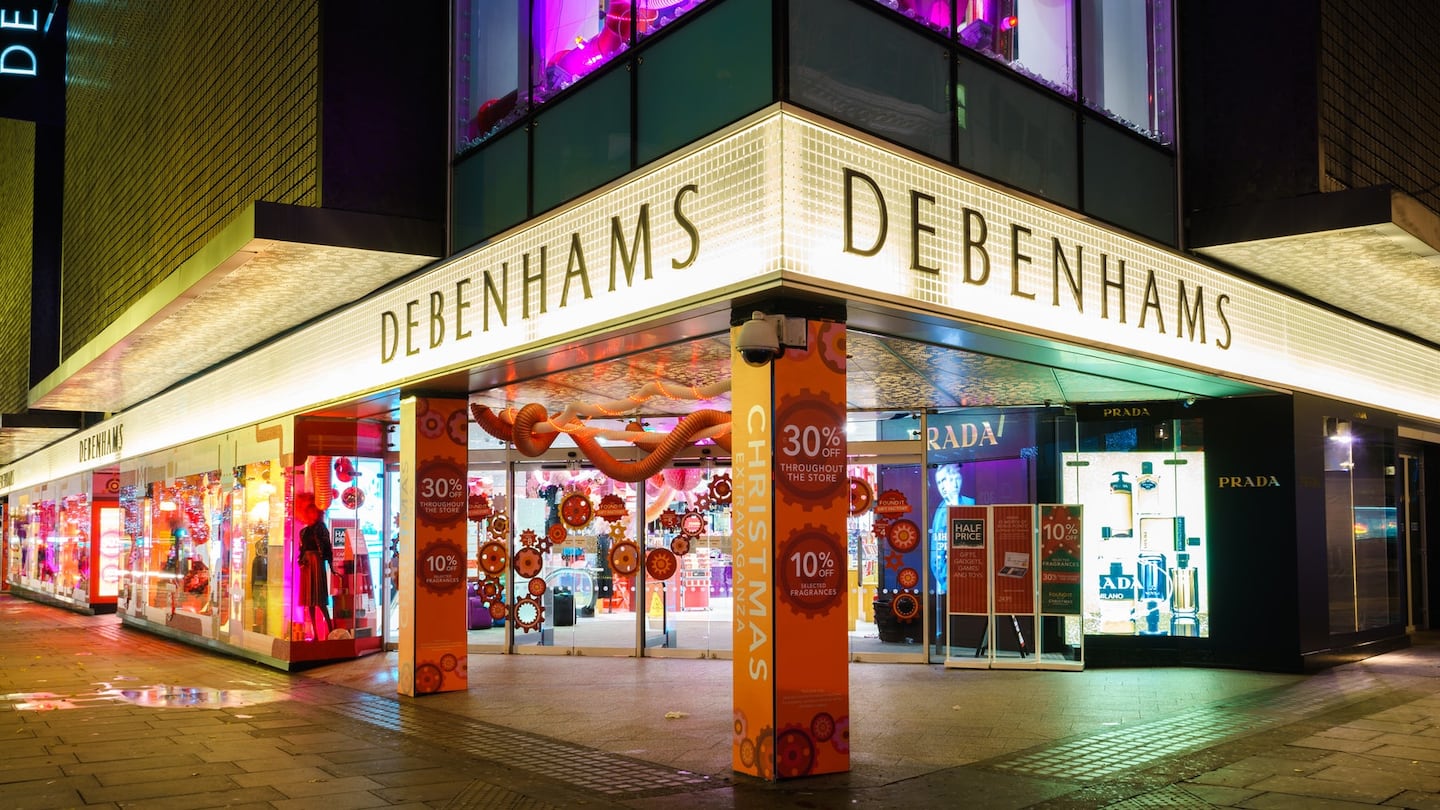
LONDON, United Kingdom — Struggling British department store chain Debenhams is closing 50 of its underperforming stores, putting about 4,000 jobs at risk, after it reported a record full-year loss of nearly £500 million ($645 million).
Chief executive Sergio Bucher said he was "taking decisive steps to strengthen Debenhams" in a tough retail market.
"We are taking tough decisions on stores where financial performance is likely to deteriorate over time," he said.
Bucher, a former Amazon executive, is trying to keep Debenhams relevant to British shoppers who are increasingly buying online and spending less on clothes.
ADVERTISEMENT
The cuts are deeper than Bucher's original plan to close 10 of the chain's 166 UK stores, downsize others and renegotiate leases and rents on its estate.
"We want to have fewer but better stores, with a better shopping experience," he told BBC radio on Thursday.
"We want to grow our online business and we want the whole of the organization to be more profitable."
Debenhams shares, down 80 percent in the past year, touched a new low of 8 pence, valuing the company's equity at about £100 million, before gaining 16 percent.
Analysts at Royal Bank of Canada said Debenhams was in "survival mode" but the more aggressive store closures should be well received.
"However, for Debenhams to offer an attractive long-term equity story, we also need to see some prospect of an improvement in underlying trading, and department store trading conditions remain very challenging," they said.
Debenhams, which has issued three profit warnings this year, wrote off £512.4 million relating to leases and goodwill, leading to a statutory loss of £491.5 million, the biggest in its 240-year history.
Underlying pretax profit for the year to September 1 slumped 65 percent to £33.2 million, a result that Bucher said reflected "a tough year for retail."
ADVERTISEMENT
"Debenhams remains a strong and trusted brand with 19 million customers shopping with us over the past year," Bucher said.
Department Store Pain
Debenhams is not the only long-established retailer that has suffered on the high street in Britain and beyond.
BHS went bust in 2016, House of Fraser was bought out of administration in August by Mike Ashley's Sports Direct and market leader John Lewis has warned on profit.
In the United States, Sears, a retailer that once dominated shopping malls, filed for bankruptcy this month.
Bucher is trying to make Debenhams' stores more attractive to shoppers with product and store improvements, such as enhancing its beauty and food offers.
But the consumer environment is not helping him.
Shoppers' budgets have been squeezed and the money they are spending is increasingly going towards holidays, entertainment and online offers.
ADVERTISEMENT
Debenhams' like-for-like sales fell 2.3 percent, reflecting weak demand for fashion and make-up, both core segments for the retailer.
The clothing market declined in the second half of the year, Debenhams said, citing data from industry analyst Kantar, but it maintained market share and grew in womenswear, where it is most advanced in improving its ranges.
Bucher said he would focus investment on 100 key stores, as well as growing online sales to around 30 percent of the total from around 20 percent currently.
He is also targeting further cost savings of at least £30 million, reducing capital expenditure to about £70 million — half the level of last year — and scrapping the dividend to bolster the group's balance sheet.
The company's net debt increased to £321.3 million from £275.9 million a year earlier.
Debenhams did not name the additional stores that would be closed in the next three to five years under its plan.
By Paul Sandle; Editor: Andrew MacAskill and Adrian Croft.
While $1.75 billion in court-approved funding has brought labels back to the fold, the real test for vendors will come when that temporary safety net vanishes later this year.
A growing number of mass and premium brands are pushing upmarket with a more luxe look, better materials and, often, higher prices. This case study unpacks how these labels are navigating the tricky challenge of elevating a brand.
Brands from Prada to Abercrombie & Fitch will provide clarity on how the fashion industry is approaching the newly uncertain trade landscape. Plus, a preview of Paris Fashion Week.
The goods come from more than 380 brands, including Burberry and those owned by luxury powerhouses LVMH and Kering.
The activewear giant seems intent on turning its nearly 40-year-old niche outdoor fashion brand into a mainstream success. The plan hinges on convincing backpackers and athletes its rugged technical gear can perform just as well as The North Face or Arc’teryx.
It’s not an existential crisis — yet — but Rick Owens and Daniel Roseberry confront some headscratchers in their latest collections.
Stick with the program or switch it up? Angelo Flaccavento reports on Chloé, Rabanne, Schiaparelli, Rick Owens and Uma Wang.
The brands Gap and Banana Republic beat comparable sales estimates.


