
Agenda-setting intelligence, analysis and advice for the global fashion community.
Agenda-setting intelligence, analysis and advice for the global fashion community.

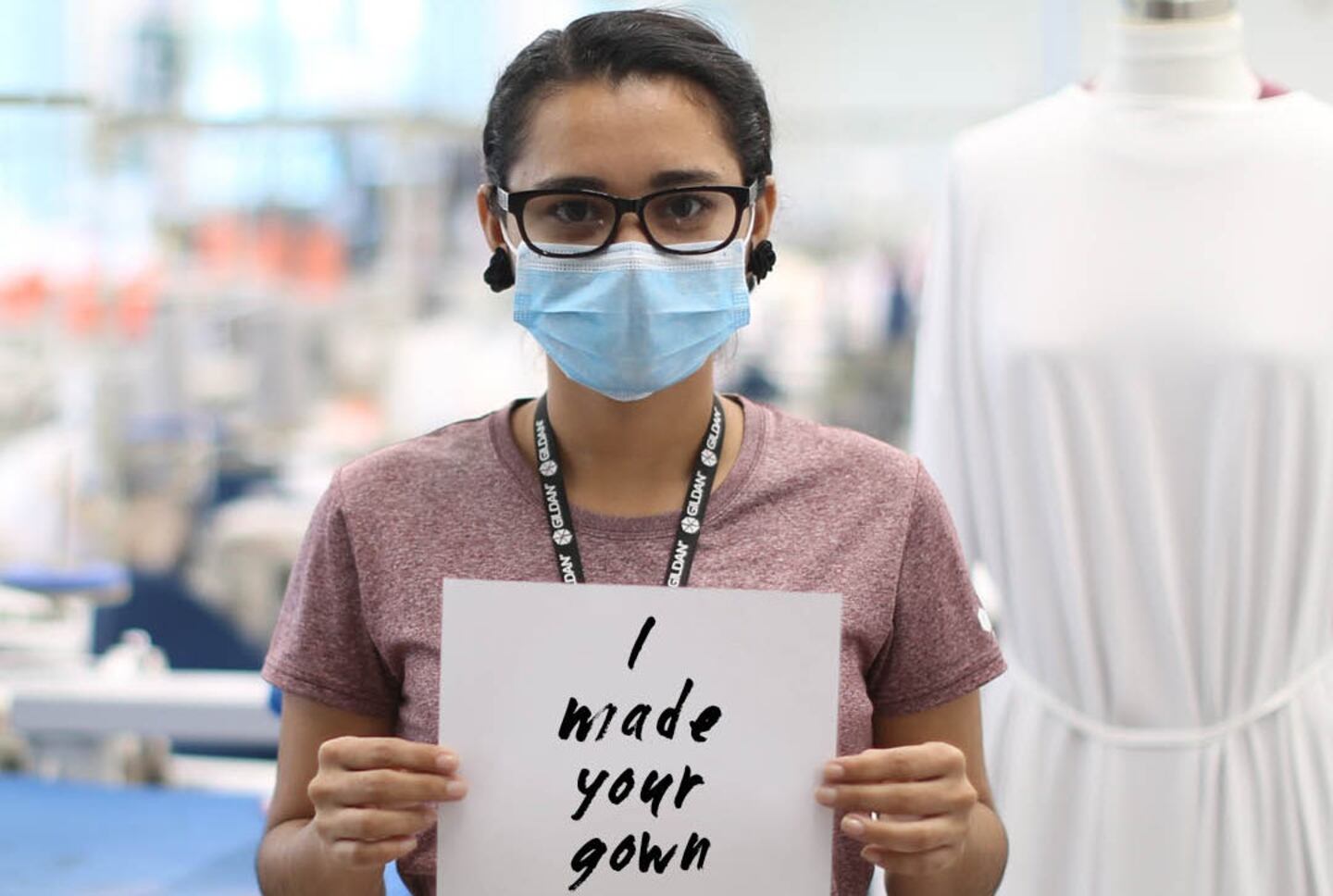
MONTREAL, Canada — Like many companies around the globe, Canadian apparel giant Gildan Activewear Inc. pivoted to making hard-to-find personal protective equipment during the pandemic. It's now considering making the temporary business permanent.
Montreal-based Gildan, which usually makes T-shirts, underwear and other basic garments, said April 8 it would start producing non-medical face masks and isolation gowns at its idle Honduras factories to help respond to shortages. Three weeks later, orders keep coming in, and the manufacturer sees opportunities supplying North American customers that have long relied on Asian imports.
“All of a sudden it’s turned out to be much bigger than we anticipated,” Chief Executive Officer Glenn Chamandy said in a phone interview Thursday. “This could become part of our business as we go forward.”
The manufacturer was hit hard by the coronavirus crisis, in part because a large chunk of its revenue comes from selling blank garments to printing companies that customize them for concerts or sporting events. First-quarter sales dropped 26 percent and on Wednesday Gildan predicted a “significant earnings loss” for the current quarter. Its Canadian-listed shares are down 49 percent this year.
ADVERTISEMENT
Gildan is planning to make 150 million masks and gowns out of facilities in Honduras and Nicaragua, with a U.S.-based yarn-spinning factory also set to partly reopen for the project. It has been documenting the process on social media, featuring employees who’ve returned to work, while about 95 percent of its 51,000 staff stay at home.
The company is selling the equipment to local governments and to retailers supplying health organizations, particularly in the U.S., Chamandy said. The new endeavour sparked a relationship with big uniform companies that traditionally source protective equipment from Asia and weren’t aware of Gildan’s manufacturing capacity, he said.
Gildan, which also owns the American Apparel brand, has built a global production chain allowing that helps it compete with Hanesbrands Inc. and Berkshire Hathaway Inc.’s Fruit of the Loom. The company spins raw cotton into yarn in the U.S., sends it to Central America to make garments, and ships it back to the U.S., all under five weeks, says Chamandy.
That could be a selling point at a time when the pandemic had stirred international tensions over medical equipment and left governments scrambling to secure supplies in China and fly them back home in time.
“Even though we’re in Central America, we’re an hour and a half away from Miami — it’s not like being in Asia, which is a completely different hemisphere,” Chamandy said. “I think that’s an important part of our success.”
For now, the company is making close to no profit from the equipment, in part because it’s giving some away.
“If we decided to make this a venture as we go forward, obviously it would have to have a good economic return,” Chamandy said.
By Sandrine Rastello.
While $1.75 billion in court-approved funding has brought labels back to the fold, the real test for vendors will come when that temporary safety net vanishes later this year.
A growing number of mass and premium brands are pushing upmarket with a more luxe look, better materials and, often, higher prices. This case study unpacks how these labels are navigating the tricky challenge of elevating a brand.
Brands from Prada to Abercrombie & Fitch will provide clarity on how the fashion industry is approaching the newly uncertain trade landscape. Plus, a preview of Paris Fashion Week.
The goods come from more than 380 brands, including Burberry and those owned by luxury powerhouses LVMH and Kering.
Christine Hunsicker admitted she falsified financial statements to promote CaaStle Inc. as a valuable, growing business when in reality it was struggling.
The American cosmetic giant’s buyout of Ayurvedic beauty line Forest Essentials came as a surprise. By picking an under-the-radar brand it knows well, the company can show that it’s still in the M&A game without needing to outbid rivals.
The underwear company is anticipating net sales of at least $6.85 billion in the current fiscal year, exceeding analyst estimates and marking the highest revenue since its split from L Brands Inc in 2021.
The Japanese brand is accelerating its expansion in India to capture a greater share of the rapidly growing apparel market and affluent consumer base.


