
Agenda-setting intelligence, analysis and advice for the global fashion community.
Agenda-setting intelligence, analysis and advice for the global fashion community.

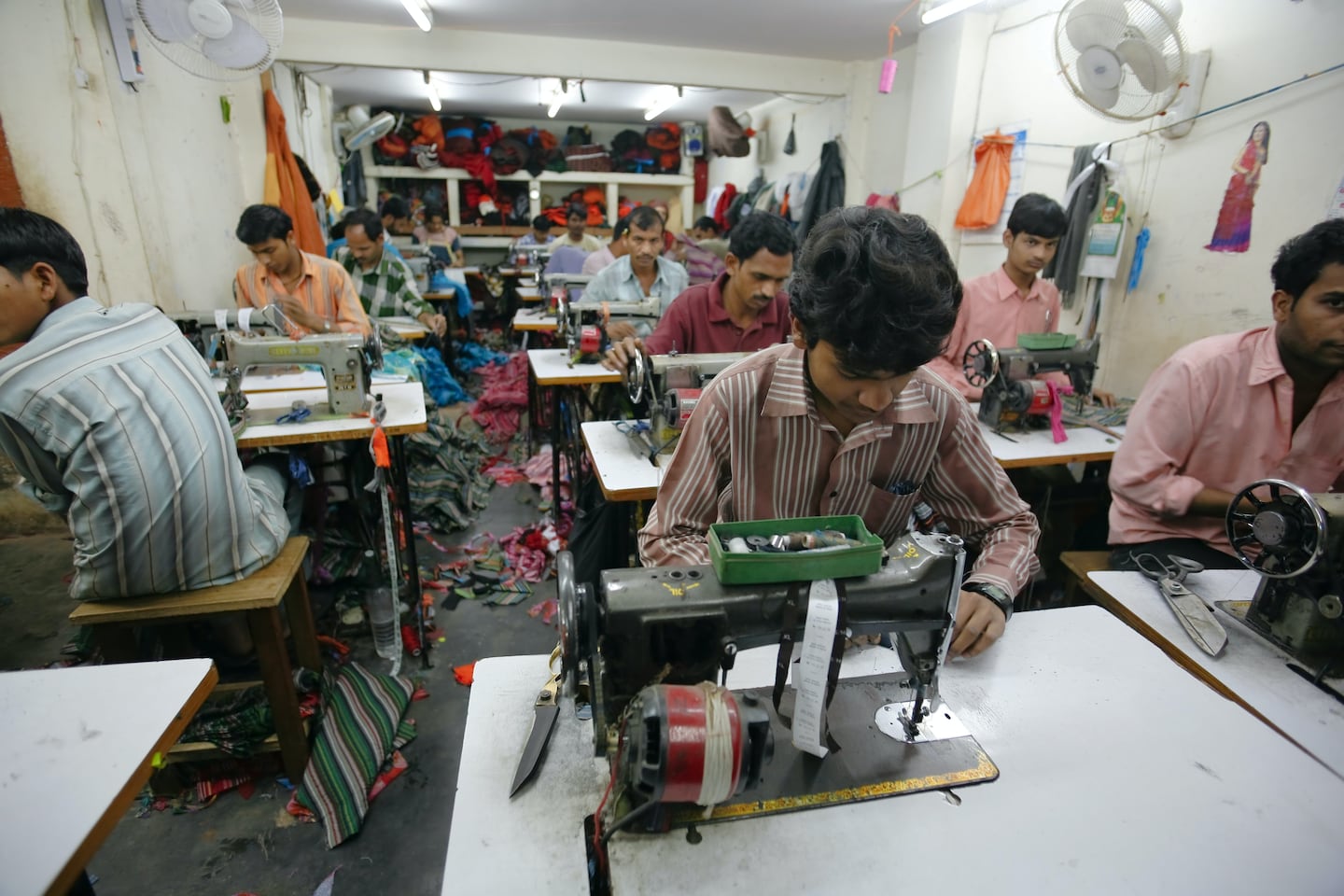
NEW DELHI, India — At least 13 garment workers were killed after a fire broke out in a factory on the outskirts of the Indian capital, police and witnesses said on Friday.
The blaze, which started in the early hours of Friday as the workers slept inside the leather factory workshop in Uttar Pradesh state, also critically injured eight more people.
Police investigating the cause of the fire in Ghaziabad district said preliminary findings suggested it may have been sparked by an electrical short circuit.
"We are reason to believe that it may be linked to an electrical short circuit, but we are still looking into it," Deepak Kumar, Ghaziabad's senior superintendent of police, told reporters.
ADVERTISEMENT
"Everyone worked together to rescue the people inside the building. These included local residents, police, fire and ambulance services."
Police said they were also investigating the possibility the factory, was illegal and did not have a license to operate in the congested residential area.
Television pictures showed large crowds outside the gutted three-storey building, located in a narrowed-laned area lined cheek-by-jowl with similar structures in Sahibabad.
The fire, which started at around 4 a.m. local time, spread from the ground floor housing the stitching unit to the upper two storeys, where the labourers were sleeping, said witnesses.
Fire engines were rushed to area and managed to rescue 16 workers, said witnesses, many of whom were taken to a nearby hospital suffering from burns and respiratory problems.
Activists say the incident is one in a series illustrating the neglect of workplace safety in South Asia's industrial sector, even in the wake of Bangladesh's 2013 Rana Plaza disaster, in which more than 1,100 garment workers were killed.
The Rana Plaza tragedy, where an eight-storey building housing several garment factories supplying global brands collapsed on the outskirts of Dhaka, was one of the world's most deadly industrial accidents.
In India, as well as Bangladesh, such accidents are common.
ADVERTISEMENT
Eight people were killed in October in an explosion at a firework factory in the southern state of Tamil Nadu, while in May 2014, 15 others were killed in a similar accident in the central state of Madhya Pradesh.
Campaigners advocating for better living and working conditions in the textile and garment sector said the incident showed the plight of workers were still being ignored.
"Despite the many disasters we have seen before, and the great amount of attention to the dangerous working conditions in the South Asian garment industry, factories there largely remain unsafe. These workers were killed because they were sleeping in the factory," said Carin Leffler of the Clean Clothes Campaign.
"The deep tragedy that took 13 peoples' lives in Sahibabad this morning shows that there is still a long way to go before workers can feel safe."
Reporting by Nita Bhalla; Editor: by Ros Russell of the Thomson Reuters Foundation.
Hours after the Supreme Court issued its decision, Trump began relying on alternative legislation to try to rebuild his tariff wall.
The new announcement stirred up more economic turbulence as president Trump lashed out at the US Supreme Court.
A majority of justices struck down the ‘Liberation Day’ tariffs that sent shockwaves through the fashion industry, setting the stage for a rush of brands trying to recoup duties they’ve already paid.
The ruling strikes down the so-called ‘Liberation Day’ tariffs that sent a shockwave through the fashion industry and sets the stage for a rush of brands trying to recoup duties they’ve already paid.
Fresh solutions to water scarcity in the supply chain, sourcing shifts and regulatory recalibration are reshaping fashion’s sustainability playbook.
The decline in nonfarm payrolls reported by the Labor Department in its employment report on Friday was the sixth since January 2025 and the second largest.
Credo Beauty has added stylish clean makeup brand Saie to its portfolio, as the category enters a mature, results-driven era.
On finished its 2025 fiscal year with 30 percent sales growth. Despite its successful run last year, the company isn’t getting ahead of itself for 2026. Co-founder David Allemann explains that and more in today’s newsletter.


