
Agenda-setting intelligence, analysis and advice for the global fashion community.
Agenda-setting intelligence, analysis and advice for the global fashion community.

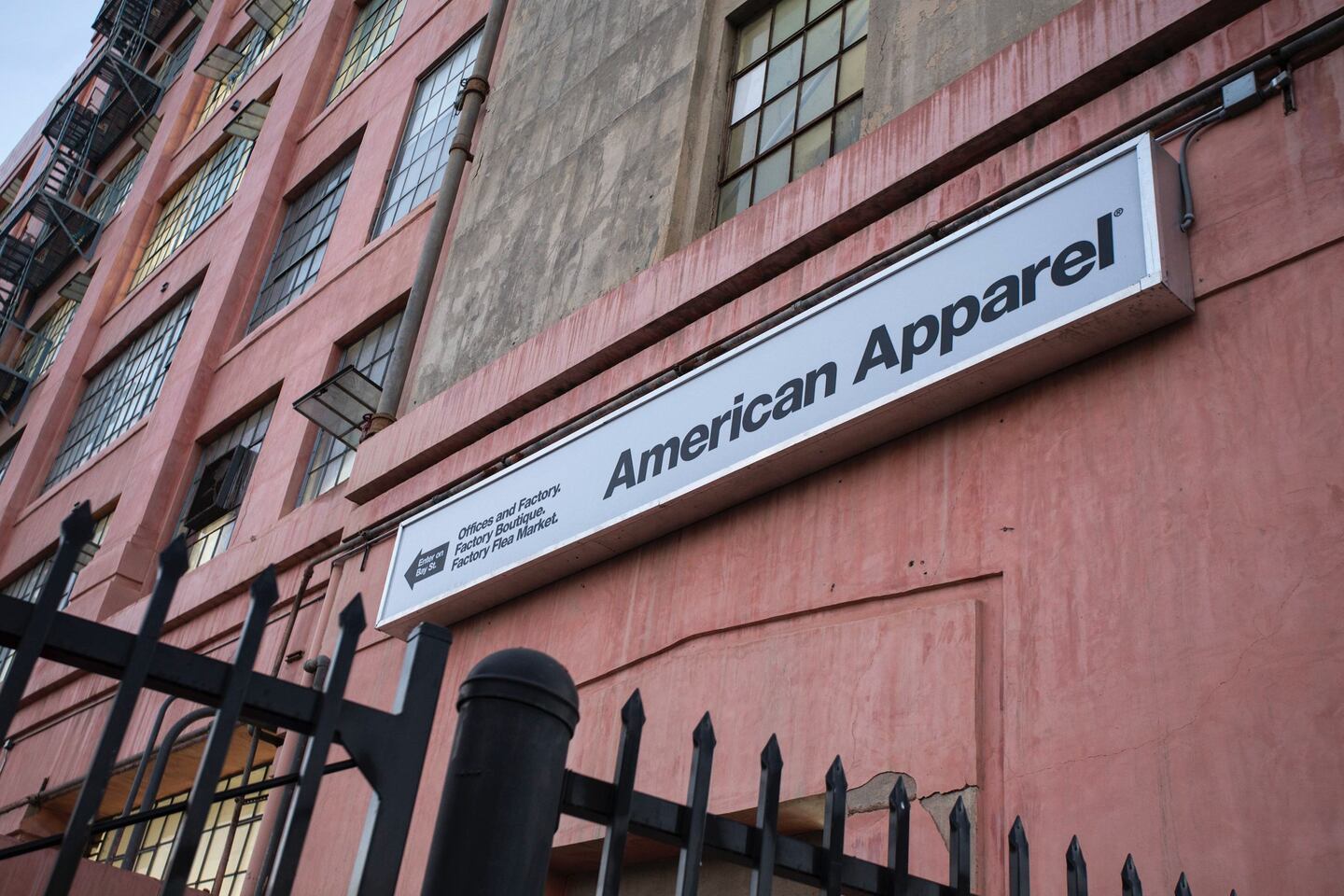
LOS ANGELES, United States — Ousted American Apparel Inc head Dov Charney supported workers in the clothing industry with his stance in favor of immigration rights and determination to keep jobs in the United States, but some employees are not returning the favor.
Four of the six workers who would talk to a Reuters reporter outside the company's downtown Los Angeles factory said they back the board's decision to fire Charney, the company's outspoken founder who has been dogged by lawsuits and allegations of sexual harassment.
During breaks at a food truck parked near American Apparel's main 800,000-square-foot factory that produces brightly colored T-shirts and leather goods, workers said they hoped new leadership would fix problems that have saddled the 250-store chain with losses in 16 of the past 17 quarters.
"I hope things do change. Work has been slow for about five months," said Jose Barrera, 42.
ADVERTISEMENT
"That's bad because my wife also works here and sometimes she can only work three days a week," said Barrera, who has been with American Apparel for about two years and makes $10 per hour in the sewing department.
While he would like to earn more, he said he is glad to be making $1 above Los Angeles' minimum wage in an environment that lacks the pressure he experienced at some other textile factories in the city.
Many workers declined to comment, saying they weren't authorized to.
NUDE PHOTOS
Charney, 45, started American Apparel's predecessor companies in 1989 and has been at the helm since 2007, when the company went public.
Last month American Apparel's board dismissed Charney. It accused the chairman, president and chief executive of misusing corporate funds and failing to prevent the dissemination of nude photos of a female ex-employee who sued him.
Charney, who is known for his unconventional behavior, has fought off a series of sexual harassment lawsuits in recent years, including one from the former employee who claimed she was held as a teenage sex slave. American Apparel claimed the woman had stalked Charney and was trying to shake down the company.
American Apparel and Charney did not respond to requests for comment.
ADVERTISEMENT
Charney made immigration reform a central theme of American Apparel's message, and the phrase "Legalize LA" is emblazoned on the company's salmon-colored factory.
He grabbed headlines in 2009, when he marched with workers in a May Day protest rally for immigrant rights. However, just a few months later, American Apparel was forced to lay off 1,500 workers who lacked documents needed to work in the United States. It is unclear how many people currently work at the factory.
The company is a poster child for the "Made in the USA" movement, especially given that only an estimated 3 percent to 5 percent of apparel sold in the country is from domestic factories.
Experts say it works because American Apparel makes its T-shirts, leggings and other products in small batches that can be delivered quickly to stores, something foreign manufacturers can't do cost effectively.
David Williams, 31, works in the department that makes leather handbags and belts. He recently got a promotion, but still earns Los Angeles' $9 per hour minimum wage because the company put his $1 raise on hold due to a slowdown in business.
Williams, who is leaving next week for a better-paying job as a longshoreman, expects new management to run the company a "little better."
Manuel Arellano, 52, who has been with the company almost five years, is concerned that new bosses may not be as involved as Charney.
"Maybe ... they don't even come to see how things are going here," he said.
ADVERTISEMENT
Shortly after firing Charney in June, local management told workers at the factory that American Apparel would not be sold.
"We're not shutting down, so everything is OK," said Heather Baez, 26, who works in the corporate office onsite.
By Lisa Baertlein and Alicia Avila in Los Angeles; Editors: Ronald Grover, Lisa Von Ahn and Martin Howell
Copyright (2014) Thomson Reuters. Click for restrictions
Hours after the Supreme Court issued its decision, Trump began relying on alternative legislation to try to rebuild his tariff wall.
The new announcement stirred up more economic turbulence as president Trump lashed out at the US Supreme Court.
A majority of justices struck down the ‘Liberation Day’ tariffs that sent shockwaves through the fashion industry, setting the stage for a rush of brands trying to recoup duties they’ve already paid.
The ruling strikes down the so-called ‘Liberation Day’ tariffs that sent a shockwave through the fashion industry and sets the stage for a rush of brands trying to recoup duties they’ve already paid.
Fresh solutions to water scarcity in the supply chain, sourcing shifts and regulatory recalibration are reshaping fashion’s sustainability playbook.
The decline in nonfarm payrolls reported by the Labor Department in its employment report on Friday was the sixth since January 2025 and the second largest.
Credo Beauty has added stylish clean makeup brand Saie to its portfolio, as the category enters a mature, results-driven era.
On finished its 2025 fiscal year with 30 percent sales growth. Despite its successful run last year, the company isn’t getting ahead of itself for 2026. Co-founder David Allemann explains that and more in today’s newsletter.


