
Agenda-setting intelligence, analysis and advice for the global fashion community.
Agenda-setting intelligence, analysis and advice for the global fashion community.

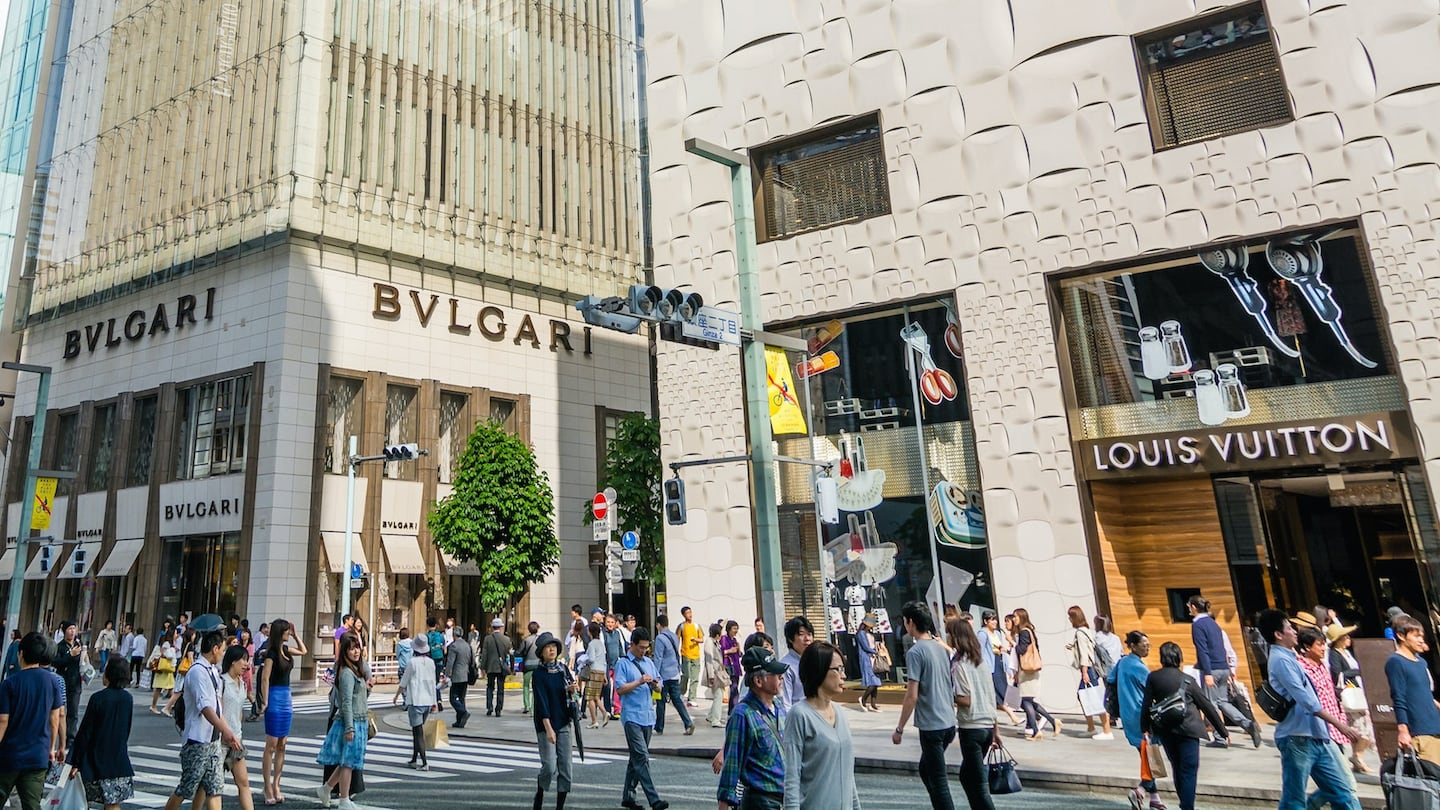
No foreign tourists? No problem. Even in an absence of overseas shoppers, Japan’s luxury boutiques are seeing a surge in demand that’s lifting rents in Tokyo’s most high-class neighbourhoods.
Rates in prime locations in upscale Tokyo shopping districts rose in the last three months of 2021, the first gain since the beginning of the pandemic, according to real estate services firm Cushman & Wakefield.
Footfall has been returning in Tokyo’s shopping districts since the lifting of states of emergency that were in place for most of 2021. With international travel still a hassle for most Japanese due to lengthy quarantine periods on return, more shoppers are now spending on luxury handbags, watches and fashion at home instead.
That’s helping to spur competition for the most upscale locations between overseas luxury brands such as LVMH and Richemont, as buildings are redeveloped and tenants relocate.
ADVERTISEMENT
“It’s becoming like a turf war,” said Isao Suga, the head of retail services at Cushman & Wakefield.
Rents in the prestigious Ginza district rose 5.3 percent in the three months ended December from a year earlier to 400,000 yen ($3,440) per tsubo, a Japanese measurement equivalent to about 3.3 square metres. Those in Omotesando, the upscale neighborhood adjoining Harajuku and Shibuya, gained 6.7 percent to 320,000 yen a tsubo.
The surge in demand for luxury locations has put an end to six straight quarters of declines in rent since Covid first reached Japan’s shores. In December alone, LVMH’s Swiss watchmaking brand Hublot opened a new store in Omotesando, while Vacheron Constantin, a member of the Richemont group, added a new store in Ginza.
In recent years, boutiques in these districts were buoyed by an influx of wealthy tourists, primarily from China, willing to spend in Japan and boosted by favourable tax refund policies. When the coronavirus outbreak first cut off Chinese tourists, and then depressed physical spending in favour of online shopping, the neighbourhoods temporarily became ghost towns.
But as the world has recovered from the pandemic, demand for luxury has surged across the globe. LVMH stock hit a record high last month, while shares in Hermes International trade at nearly double the level at the start of 2020 despite coming off recent highs.
When Japanese shoppers ventured out amid lulls in Covid infections, they’ve favoured the less-crowded boutiques rather than department stores, said Kenji Govaers, vice president at Bain & Co. in Tokyo.
Japan’s department stores are still struggling to recover from the pandemic, with Seven & I Holdings Co. reportedly set to sell its struggling Sogo & Seibu chain. With revenue from department store locations declining, luxury brands were already moving toward operating their own locations even before Covid, Govaers added.
The rising rents apply only to a small strip of the most desirable, station-adjacent real estate in both neighbourhoods, and Cushman & Wakefield’s Suga notes it’s only the locations coveted by foreign brands that are gaining. “Japanese brands can’t afford these locations,” he said.
ADVERTISEMENT
By Yasutaka Tamura
Learn more:
Japanese Designers Are Still Betting on Gorpcore
A pandemic-induced camping boom boosted global sales for Japanese fashion labels with a functional edge, but has it cemented performance wear as a long-term fashion staple?
Sex sells — if anyone can figure out what sexy means in 2026. Robert Williams tracks the search for a new silhouette at Kering’s Gucci, LVMH’s Dior and more.
Strong growth at Miu Miu helped lift results, but the Italian luxury group said that integrating Versace will weigh on margins in the near term as it begins the turnaround of the struggling brand
After Swatch Group launched an attack on Morgan Stanley’s influential annual watch report, Swatch-owned Tissot cracks open the door for a glimpse at some numbers and Robin Swithinbank says it’s time a secretive industry came clean on financials.
Half a year after Giorgio Armani’s death, it appears to be business as usual at the sprawling fashion empire while potential investors continue to circle with no firm bid in sight.
Stick with the program or switch it up? Angelo Flaccavento reports on Chloé, Rabanne, Schiaparelli, Rick Owens and Uma Wang.
The brands Gap and Banana Republic beat comparable sales estimates.
Sex sells — if anyone can figure out what sexy means in 2026. Robert Williams tracks the search for a new silhouette at Kering’s Gucci, LVMH’s Dior and more.
Christine Hunsicker admitted she falsified financial statements to promote CaaStle Inc. as a valuable, growing business when in reality it was struggling.


