
Agenda-setting intelligence, analysis and advice for the global fashion community.
Agenda-setting intelligence, analysis and advice for the global fashion community.

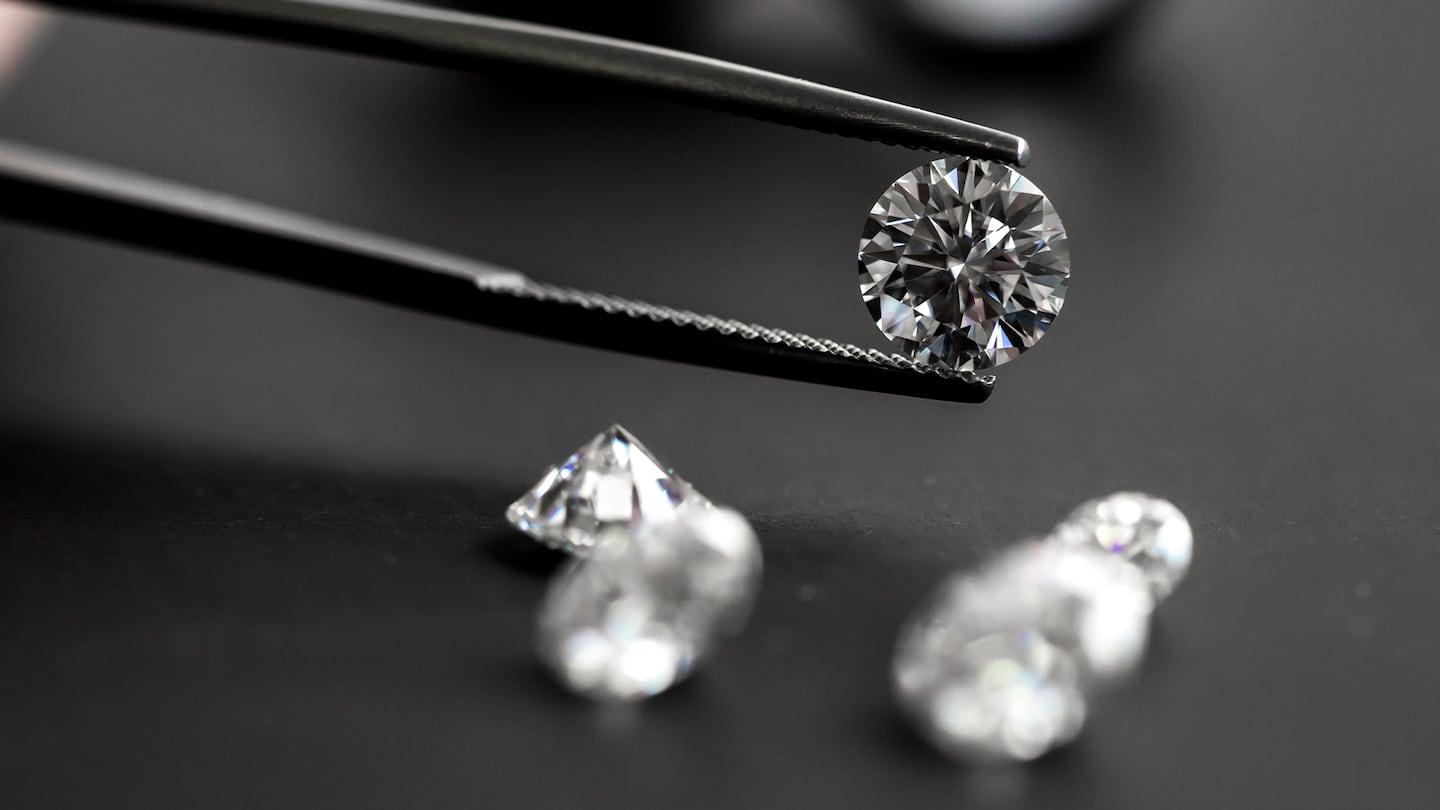
The global diamond sector is scrambling to get ahead of an upcoming G7 ban on Russian gems, with consumers and producers battling to manage ever more complex supply chains against a backdrop of sluggish demand.
With direct sales of Russian gems already crushed by U.S. sanctions on Russia’s state diamond miner Alrosa, the G7 is now in the process of thrashing out details of a further ban on indirect sales in its member countries, expected by end-October.
But even before it is in force, producers say Western customers have been shunning gemstones from Russia, the world’s biggest producer of rough diamonds by volume with 30 percent of the market.
Tiffany, part of French luxury group LVMH, said in March last year it had stopped sourcing rough diamonds from Russia.
ADVERTISEMENT
Labels of Swiss-based luxury group Richemont, including Van Cleef & Arpels, went further, sending executives to visit suppliers in India and hiring an external auditor to look at gemstone flow in the supply chain.
The proposed G7 ban now risks further complicating supply chains, at a point when demand is already under heavy pressure.
With various proposals under consideration, the industry is currently debating how a diamond’s country of origin should be checked, where it should be done, and what sizes of stones, rough or polished, should be part of the rule.
“It’s all about the breadth and interconnection intricacies of the supply chain that makes this technically difficult,” diamond analyst Paul Zimnisky said.
“The diamond trade spans many countries, with many different cultures, religions and levels of economic development.”
Demand for diamond jewellery is already suffering in the US, home to 55 percent of global demand, due to high interest rates, a muted post-pandemic recovery in China, and competition from lab-grown diamonds.
India - cutter and polisher of 90 percent of the world’s rough diamonds - last month asked global miners to stop selling it rough gems for two months to manage accumulated stocks. That means stocks at diamond miners will grow.
“At some point these stocks will have to come onto the market,” Richard Chetwode, a diamond industry consultant said.
ADVERTISEMENT
De Beers, the world’s largest rough diamond producer by value, said in a recent report that while global diamond jewellery demand would hold above pre-pandemic levels in 2023, the economic landscape was difficult.
“Elevated inflation and higher interest rates continue to affect consumer confidence and discretionary spending in some of the major diamond consuming countries, including the US and Europe,” the company said.
According to Richard Chetwode, “retail in China has been hit badly, and the US retailers are already stocked to the gills ahead of the Christmas season.”
“There are literally no buyers” of rough diamonds now, he said.
By Polina Devitt, Clara Denina and Mimosa Spencer
Learn more:
How 2023 Became the Year of the Lab-Grown Diamond
Consumers are increasingly buying into the idea of lab-grown stones, altering long-held jewellery industry standards for how diamonds are sold.
Sex sells — if anyone can figure out what sexy means in 2026. Robert Williams tracks the search for a new silhouette at Kering’s Gucci, LVMH’s Dior and more.
Strong growth at Miu Miu helped lift results, but the Italian luxury group said that integrating Versace will weigh on margins in the near term as it begins the turnaround of the struggling brand
After Swatch Group launched an attack on Morgan Stanley’s influential annual watch report, Swatch-owned Tissot cracks open the door for a glimpse at some numbers and Robin Swithinbank says it’s time a secretive industry came clean on financials.
Half a year after Giorgio Armani’s death, it appears to be business as usual at the sprawling fashion empire while potential investors continue to circle with no firm bid in sight.
The activewear giant seems intent on turning its nearly 40-year-old niche outdoor fashion brand into a mainstream success. The plan hinges on convincing backpackers and athletes its rugged technical gear can perform just as well as The North Face or Arc’teryx.
It’s not an existential crisis — yet — but Rick Owens and Daniel Roseberry confront some headscratchers in their latest collections.
Stick with the program or switch it up? Angelo Flaccavento reports on Chloé, Rabanne, Schiaparelli, Rick Owens and Uma Wang.
The brands Gap and Banana Republic beat comparable sales estimates.


