
Agenda-setting intelligence, analysis and advice for the global fashion community.
Agenda-setting intelligence, analysis and advice for the global fashion community.

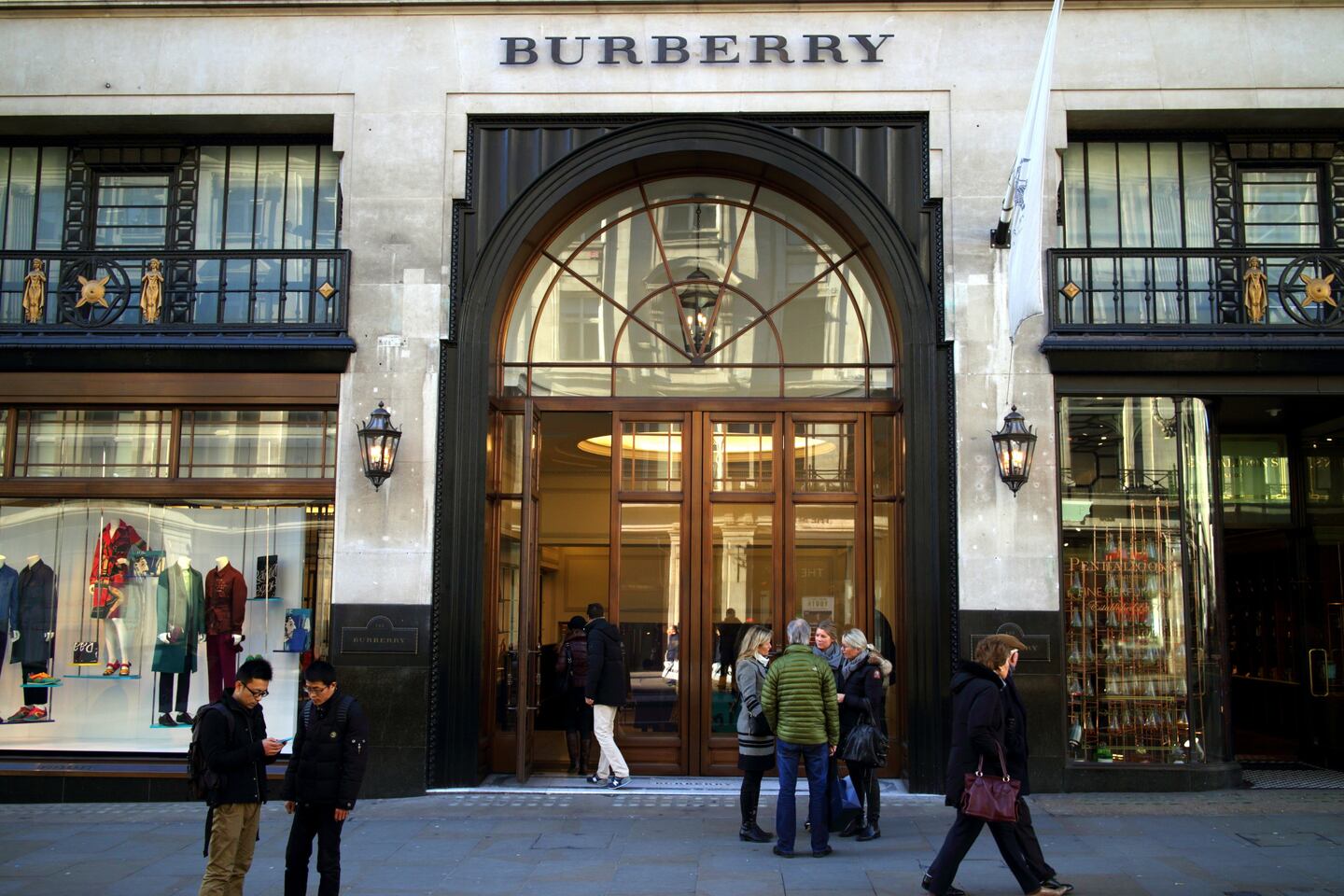
LONDON, United Kingdom — Burberry says a sleeker cut will help chief executive officer Marco Gobbetti lift the brand's image when he takes over in July.
The UK trenchcoat maker said Thursday that it has sacrificed some sales in the short term in order to strengthen its luxury credentials in a bid to raise profitability down the road. It said planned cost cuts are on track after it streamlined its product offer and took other steps to rein in a business whose underlying profit has declined for three straight years.
In the latest year, "the fall in profit is a direct result of steps we've taken to elevate our brand," chief financial officer Julie Brown said. "We're becoming a more efficient and productive organisation."
The Burberry that Gobbetti inherits has underperformed rivals, including LVMH and Gucci owner Kering SA, amid a nascent revival in the luxury industry that's driven by gains in China and a tourism revival in Europe. The UK company has been hurt by its exposure to the US, where retailers are struggling as consumers skip trips to the mall in favour of shopping online.
ADVERTISEMENT
Burberry said it’s progressing as planned toward a goal of cutting costs by £100 million ($130 million) a year by 2019, in a bid to shore up the US operations and move upmarket. The company has merged three sub-brands -- London, Prorsum and Brit — into its main label over the past year.
Department Stores
The company withdrew from department stores in non-premium locations, notably in the US, and shortened its clearance period in an effort to bolster its image and selling prices. That contributed to a decline of 14 percent in wholesale revenue during the latest fiscal year.
The cost cuts have included moving 300 jobs from London to a business services center in the grittier northern English city of Leeds. Burberry will focus on store productivity in the upcoming year, Brown said, with no net increases in retail space planned.
Burberry has also offloaded its beauty business, announcing a licensing agreement with Coty Inc. in April. Cash from that deal will partly fund a new share buyback of 300 million pounds to be completed in 2018, the apparel company said Thursday.
In tough times for mainstream retailers, Burberry’s move upmarket could help it in markets like China and India that have a growing number of young, aspirational consumers, according to Michelle McGrade, chief investment officer at TD Direct Investing.
“Burberry is in an excellent position as an established and sought-after brand,” she said. “However, it still needs to work hard to keep its image at this level.”
In a presentation to analysts and investors, CEO Christopher Bailey said the company had taken a more strategic approach to design, focusing on developing flagship products with the potential to win market share.
ADVERTISEMENT
Bailey is set to hand over the CEO title to Gobbetti, former head of LVMH’s Celine, while retaining his role as creative chief. In another move to strengthen its luxury image, Burberry in March brought in Dior accessories designer Sabrina Bonesi to lead design for leather goods and shoes.
Runway Fashions
Bailey said he was pleased with the early performance of the new DK88 bag launched this spring, as well as sales of a lightweight version of the brand’s iconic trenchcoat. Sales of runway fashions, which command a premium, were up 25 percent for the latest fiscal year.
The shares rose as much as 2.9 percent after Burberry reported adjusted pretax profit of £462.4 million ($598.8 million) for the fiscal year ended March 31, exceeding the average analyst estimate of £457.1 million.
Brown said the less-is more approach was helping customers focus more clearly on a reduced number of product introductions.
“We moved to one label so customers could see the fashion and newness more clearly,” she said.
By Robert Williams; editors: Eric Pfanner and Paul Jarvis.
Sex sells — if anyone can figure out what sexy means in 2026. Robert Williams tracks the search for a new silhouette at Kering’s Gucci, LVMH’s Dior and more.
Strong growth at Miu Miu helped lift results, but the Italian luxury group said that integrating Versace will weigh on margins in the near term as it begins the turnaround of the struggling brand
After Swatch Group launched an attack on Morgan Stanley’s influential annual watch report, Swatch-owned Tissot cracks open the door for a glimpse at some numbers and Robin Swithinbank says it’s time a secretive industry came clean on financials.
Half a year after Giorgio Armani’s death, it appears to be business as usual at the sprawling fashion empire while potential investors continue to circle with no firm bid in sight.
The activewear giant seems intent on turning its nearly 40-year-old niche outdoor fashion brand into a mainstream success. The plan hinges on convincing backpackers and athletes its rugged technical gear can perform just as well as The North Face or Arc’teryx.
It’s not an existential crisis — yet — but Rick Owens and Daniel Roseberry confront some headscratchers in their latest collections.
Stick with the program or switch it up? Angelo Flaccavento reports on Chloé, Rabanne, Schiaparelli, Rick Owens and Uma Wang.
The brands Gap and Banana Republic beat comparable sales estimates.


