
Agenda-setting intelligence, analysis and advice for the global fashion community.
Agenda-setting intelligence, analysis and advice for the global fashion community.

India’s surge in Covid-19 cases and the closure of non-essential stores in several states means the country’s apparel manufacturers can anticipate another round of delayed orders, according to a report by brokerage Motilal Oswal.
“The impact from the second wave could be more severe given the already weak condition of many players,” the report said in part, referring to the apparel manufacturing industry.
India has recorded 323,144 new infections over the last 24 hours, the sixth day straight that new infections have topped 300,000 cases.
The Clothing Manufacturing Association of India said a large proportion of smaller players are closing down their businesses, plagued by an uncertain outlook, stretched working capital and liquidity, and rising raw material costs, according to a report in Indian business news portal Livemint.
ADVERTISEMENT
Roughly 80 percent of India’s apparel manufacturing sector remains largely unorganised and highly dependent on cash and credit, meaning smaller players are first to feel the impact of state-level closures, it said.
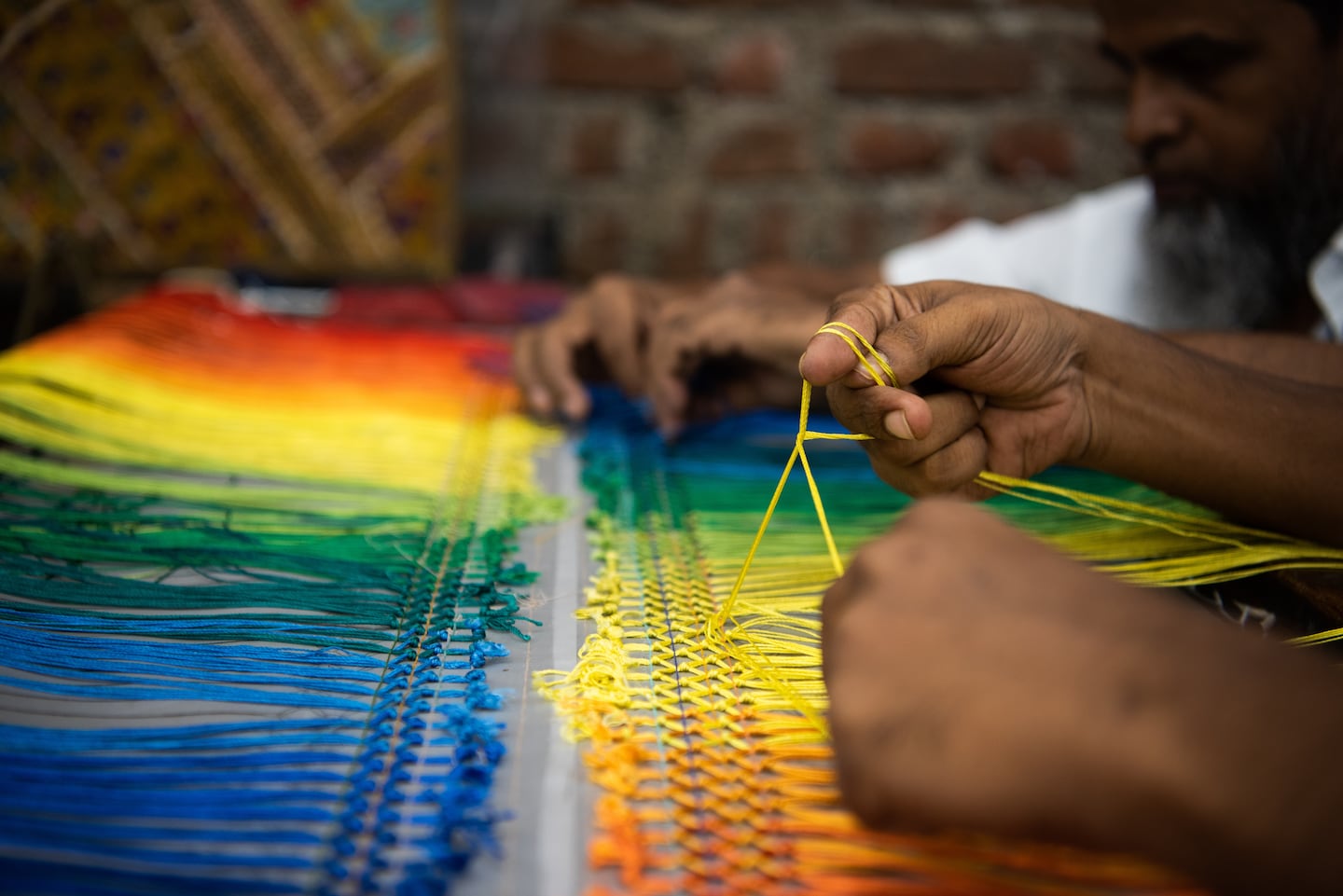
Also hard hit are India’s karigars — an Urdu term for the highly skilled artisans who specialise in handicrafts like embroidery, beading and appliqué — who have long been a lynchpin of the global luxury fashion industry, stitching ornate garments for luxury brands such as Dior, Gucci and Valentino.
Though there has long been a “respect deficit” when it comes to recognising the important part these artisans play in luxury fashion’s supply chain, today, as India faces a record-breaking Covid-19 crisis and big weddings and black-tie parties remain off the table in Europe, these craftsman are facing the complete obliteration of their businesses, The New York Times reports.
“Red-carpet dresses and cocktail outfit orders have largely disappeared, which has meant that financial pressure on specialist workshops has continued here,” Max Modesti, the founder of Les Ateliers 2M, a Mumbai embroidery firm that works with Chanel and Hermès, told The New York Times.
Those two luxury houses and Louis Vuitton were the only three that increased their Mumbai orders in the last year, while orders from other Western fashion houses were either reduced by around 50 to 70 percent or cancelled, he added.
“In more than 35 years of business, and several recessions, I have never seen anything like it,” Modesti said.
The escalating US-Israel conflict with Iran is rattling the aura of stability created by Dubai and the wider region, threatening one of the industry’s few bright spots.
Escalating conflict in the Middle East is causing major disruption and store closures for high-end and mass-market retailers, threatening a key growth engine for the global luxury industry.
This week’s round-up of global markets fashion business news also features Sri Lankan apparel manufacturers, Vietnam’s textile exporters and Korean brands in China.
Regional business activity has been disrupted after Iran launched strikes across Gulf nations in response to the US-Israeli assault on Tehran, triggering airport closures or restrictions in Dubai, Abu Dhabi and Doha.
The activewear giant seems intent on turning its nearly 40-year-old niche outdoor fashion brand into a mainstream success. The plan hinges on convincing backpackers and athletes its rugged technical gear can perform just as well as The North Face or Arc’teryx.
It’s not an existential crisis — yet — but Rick Owens and Daniel Roseberry confront some headscratchers in their latest collections.
Stick with the program or switch it up? Angelo Flaccavento reports on Chloé, Rabanne, Schiaparelli, Rick Owens and Uma Wang.
The brands Gap and Banana Republic beat comparable sales estimates.


