
Agenda-setting intelligence, analysis and advice for the global fashion community.
Agenda-setting intelligence, analysis and advice for the global fashion community.

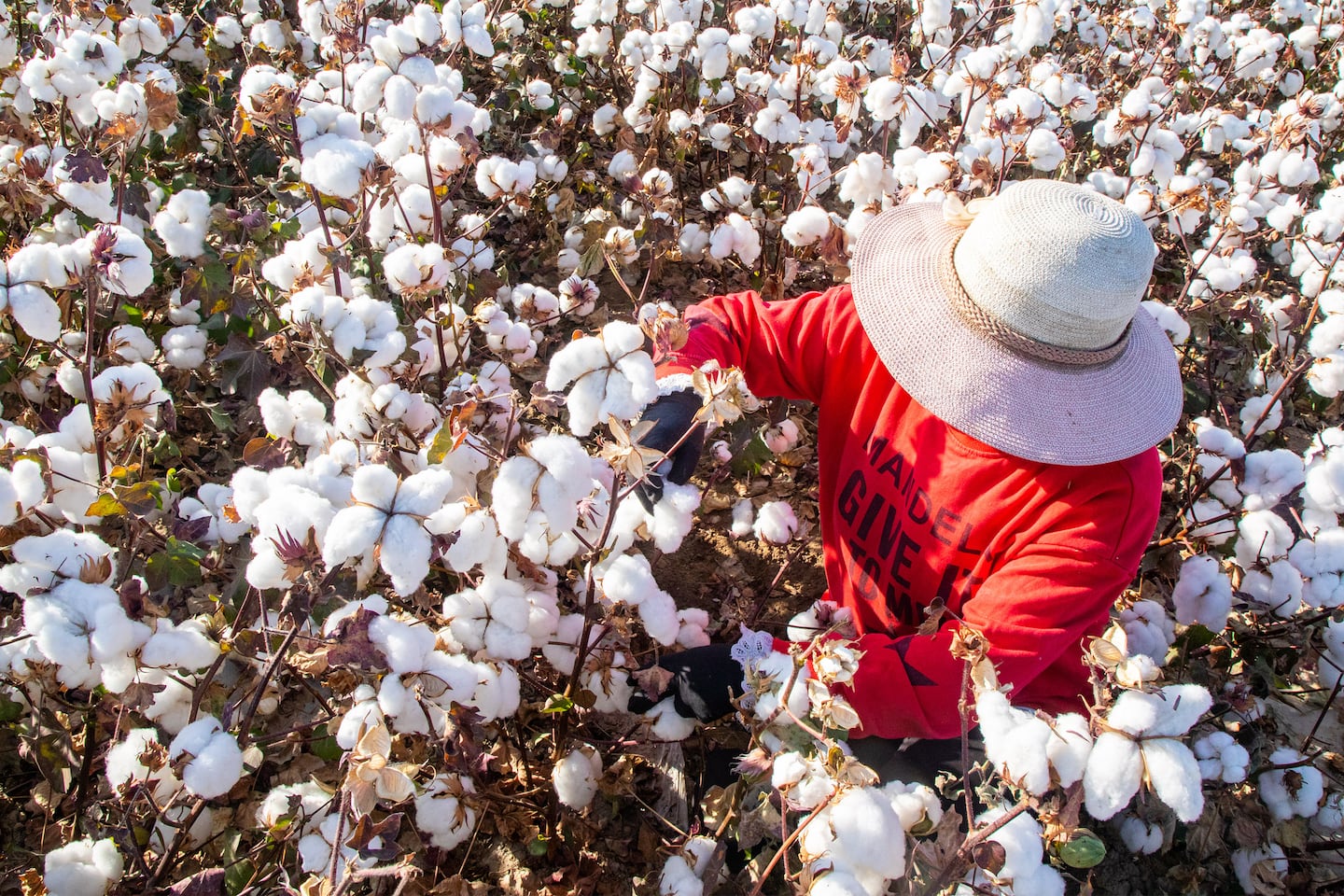
China could import more cotton to replace fibre from Xinjiang that’s being rejected by some Western companies and threatens to hurt its booming textile export industry.
The US bans entry of all products containing cotton from Xinjiang, which accounts for over 80 percent of China’s output, because of concern over the human rights situation in the region. Hennes & Mauritz AB, Nike Inc. and Adidas AG have become ensnared in the row, drawing consumer ire in China for pledges not to use cotton from the area, a major supplier in the global supply chain.
“The only option right now may be to increase cotton imports as export orders for some textile mills will suffer if they use local fibre,” said Xu Yaguang, an analyst with Huatai Futures. Xu sees so-called extra cotton import quotas this year returning to the 2019 level of 800,000 tons with an increased requirement for high-quality fibre. The government issued 400,000 tons of extra quotas in 2020, and has not so far issued any for 2021.
Consumption of Xinjiang cotton could drop by as much as 20 percent as the export outlook for products containing cotton from the region is not very bright, said Wu Faxin, a veteran cotton trader with industry portal shaxianbao.cn. Wu expects exporting countries such as Brazil and those in Africa to benefit from the additional demand.
ADVERTISEMENT
Wu Yan, head of the Better Cotton Initiative (BCI) in China, told state television the decision by its headquarters to cut ties with Xinjiang growers will block about 500,000 tons of fibre from the region from entering the global supply chain. The group in China said it has not found any forced labour in Xinjiang since 2012. Members include world retailers and brands such as H&M and Nike.
Job Cuts
Some cotton yarn factories in Xinjiang are cutting employees because of poor sales after some global brands chose not to source cotton and yarn from the region, the China Daily reported Monday, citing a local official. Suppliers of the retail brands no longer place orders with local producers. “The real victims of the false accusations of ‘forced labour’ in Xinjiang are the large numbers of vulnerable cotton growers and textile workers,” it said.
Some analysts also doubt that the US can effectively test for Xinjiang cotton in every shipment of textile products. Apart from exporting finished goods, top textile shipper China also sends intermediate products to third countries. Vietnam, for example, sources 50 percent of its cotton yarn from China and more than 60 percent of its cotton cloth, according to Huatai’s Xu.
By Bloomberg News
The escalating US-Israel conflict with Iran is rattling the aura of stability created by Dubai and the wider region, threatening one of the industry’s few bright spots.
Escalating conflict in the Middle East is causing major disruption and store closures for high-end and mass-market retailers, threatening a key growth engine for the global luxury industry.
This week’s round-up of global markets fashion business news also features Sri Lankan apparel manufacturers, Vietnam’s textile exporters and Korean brands in China.
Regional business activity has been disrupted after Iran launched strikes across Gulf nations in response to the US-Israeli assault on Tehran, triggering airport closures or restrictions in Dubai, Abu Dhabi and Doha.
On finished its 2025 fiscal year with 30 percent sales growth. Despite its successful run last year, the company isn’t getting ahead of itself for 2026. Co-founder David Allemann explains that and more in today’s newsletter.
Check out this week’s new partners and openings on BoF Careers, the global marketplace for fashion and beauty talent.
The Japanese sportswear brand is accelerating global expansion by acquiring race-registration platforms to deepen engagement with runners.
The activewear giant seems intent on turning its nearly 40-year-old niche outdoor fashion brand into a mainstream success. The plan hinges on convincing backpackers and athletes its rugged technical gear can perform just as well as The North Face or Arc’teryx.


