
Agenda-setting intelligence, analysis and advice for the global fashion community.
Agenda-setting intelligence, analysis and advice for the global fashion community.

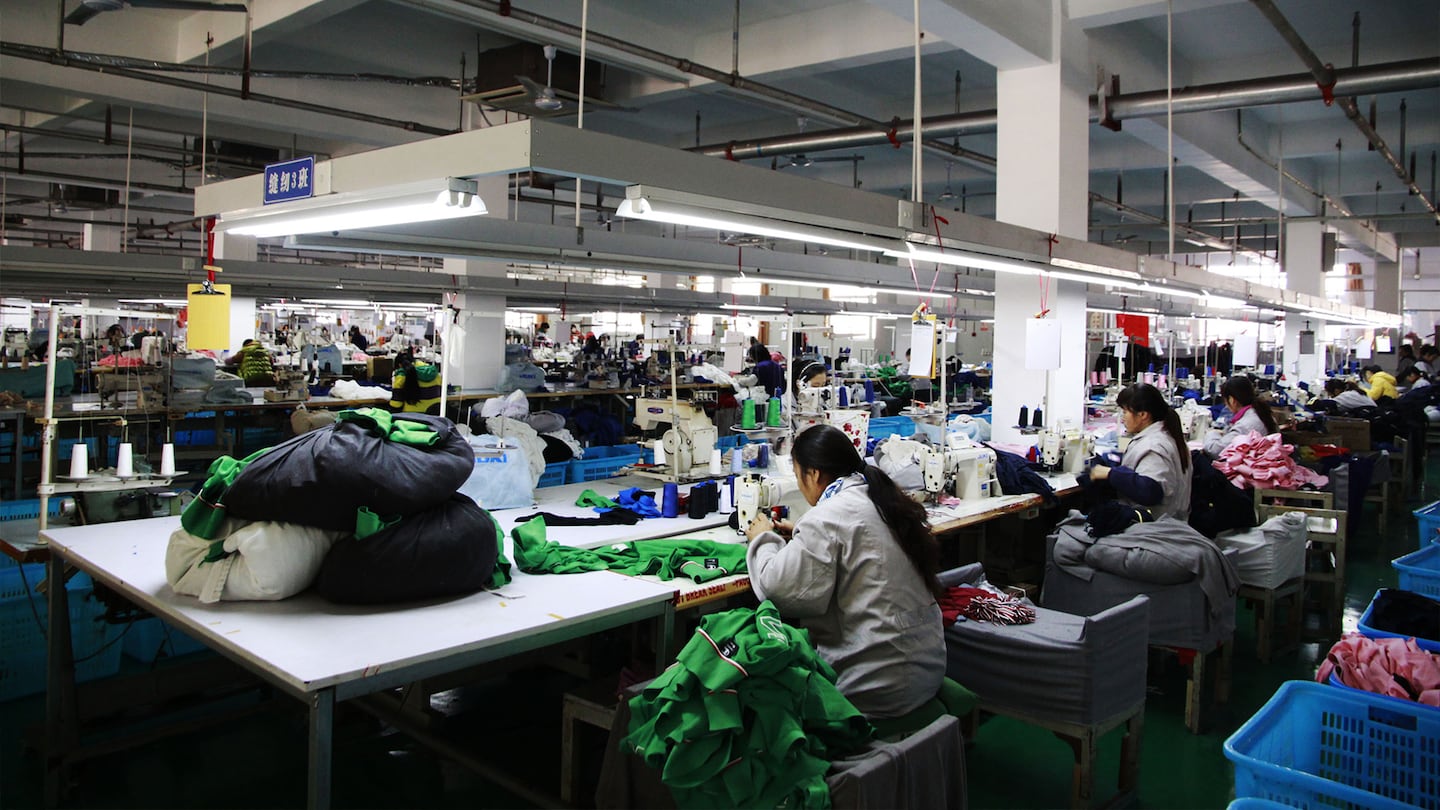
Chinese clothing suppliers are bracing for higher apparel prices as the Iran war-induced surge in crude oil prices pushes up raw-material costs across the supply chain.
Prices for chemical fibres such as polyester and acrylic — oil byproducts used in garment manufacturing — have risen more than 10 percent since the US and Israel started strikes on Iran over a week ago, according to seven apparel manufacturers in southern and eastern China interviewed by Bloomberg News. Fibre suppliers are now adjusting prices once or even twice a day to keep pace with volatile crude markets, the manufacturers said.
Wu Ying, who owns two Guangzhou‑based factories producing women’s shirts and dresses, said she has been inundated with WeChat messages from fabric and raw‑material suppliers warning that prices can no longer be guaranteed until orders are placed. To cope with the rising costs, Wu has begun negotiating with her customers — mostly small and mid‑sized apparel stores in Guangdong and sellers on Alibaba Group Holding Ltd.’s Tmall — to share the burden, while also increasing advance payments to ease cash‑flow pressure.
The spike in input costs risks rippling through the apparel supply chain, raising the likelihood of higher prices for finished garments. For manufacturers, the timing couldn’t be more worse: Global consumer demand remains fragile, and China’s broader economic recovery is still uneven. The result could be a squeeze on margins for factories.
ADVERTISEMENT
“I hope they can at least absorb half of the cost increases,” Wu said, referring to raw -material suppliers. “The amount of cash we now need to put up for materials is frightening, given how unpredictable the war risks are.”
Crude oil surged as much as 29 percent Monday, the biggest intraday move since April 2020, as more Gulf producers curbed production and Iran named the son of the late Ayatollah Ali Khamenei as its new supreme leader. President Donald Trump downplayed the oil spike as a “small price to pay,” with neither side showing any sign of deescalating a war now entering its 10th day.
Polyester accounted for 59 percent of global fiber production in 2024, while cotton made up 19 percent, according to Textile Exchange.
For exporters selling through fast‑turnover e‑commerce platforms such as Shein, Temu and Amazon.com Inc., higher material costs may be passed through to consumers more quickly. Orders are typically placed in small batches, allowing price negotiations with upstream suppliers — and retail price resets — to occur within days.
Huang Lun, a sales manager at a Guangzhou apparel company selling underwear and yoga pants online in the US, said he now checks prices daily with his procurement team to determine when cost increases must be passed on. That could happen within days if oil volatility persists, he said.
Two suppliers for low-priced fashion retailer Shein told Bloomberg that they are trying to negotiate with the company to share about half of the currently 10 percent chemical fibre cost hikes for new orders they make for the company.
But not all factories have the leverage to bargain.
Lily Lu, who runs a Zhejiang‑based clothing‑accessories exporter supplying clients including Walmart Inc., said the recent spikes threaten to make her business untenable. One fabric supplier told her on Monday to expect price increases as the cost of chemical fibre had risen 10 percent — only to be informed minutes later through another message that the price of raw materials had risen more than 15 percent.
“The recent situation in the Middle East has had a significant impact on us,” said Lu, “The thin margins of Walmart orders are simply not sufficient to cover the increase in costs of fabric prices.” While they would re-negotiate prices with clients for new orders, but for the orders that have just been placed, the factory would have to swallow the surging costs by themselves, she said.
Escalating conflict in the Middle East is exposing how quickly geopolitics can disrupt even luxury’s most carefully cultivated retail hubs.
The escalating US-Israel conflict with Iran is rattling the aura of stability created by Dubai and the wider region, threatening one of the industry’s few bright spots.
Escalating conflict in the Middle East is causing major disruption and store closures for high-end and mass-market retailers, threatening a key growth engine for the global luxury industry.
The war has driven the price of crude to a nearly two-year high. Where it heads next will have major implications for the industry.
The Supreme Court did not say how the collected tariffs should be refunded when it struck Trump’s economic policy down as unconstitutional last month, leaving small importers worried the process would be expensive and time-consuming.
Escalating conflict in the Middle East is exposing how quickly geopolitics can disrupt even luxury’s most carefully cultivated retail hubs.
The escalating US-Israel conflict with Iran is rattling the aura of stability created by Dubai and the wider region, threatening one of the industry’s few bright spots.
Chinese manufacturers are facing significant cost increases due to the Iran war, forcing them to absorb rising costs amid fragile global demand.
Join us on Tuesday, March 17 at 15:00 GMT / 10:00 EST for the next BoF Professional Masterclass on The State of Fashion 2026.
The German consumer giant is expanding its US hair care presence with the the fast-growing, teen-favourite brand.
The Italian knitwear house joins a growing list of heritage brands sold to outside investors. Chief executive Livio Proli discusses the strategy behind Missoni’s next phase.


