Agenda-setting intelligence, analysis and advice for the global fashion community.
Agenda-setting intelligence, analysis and advice for the global fashion community.

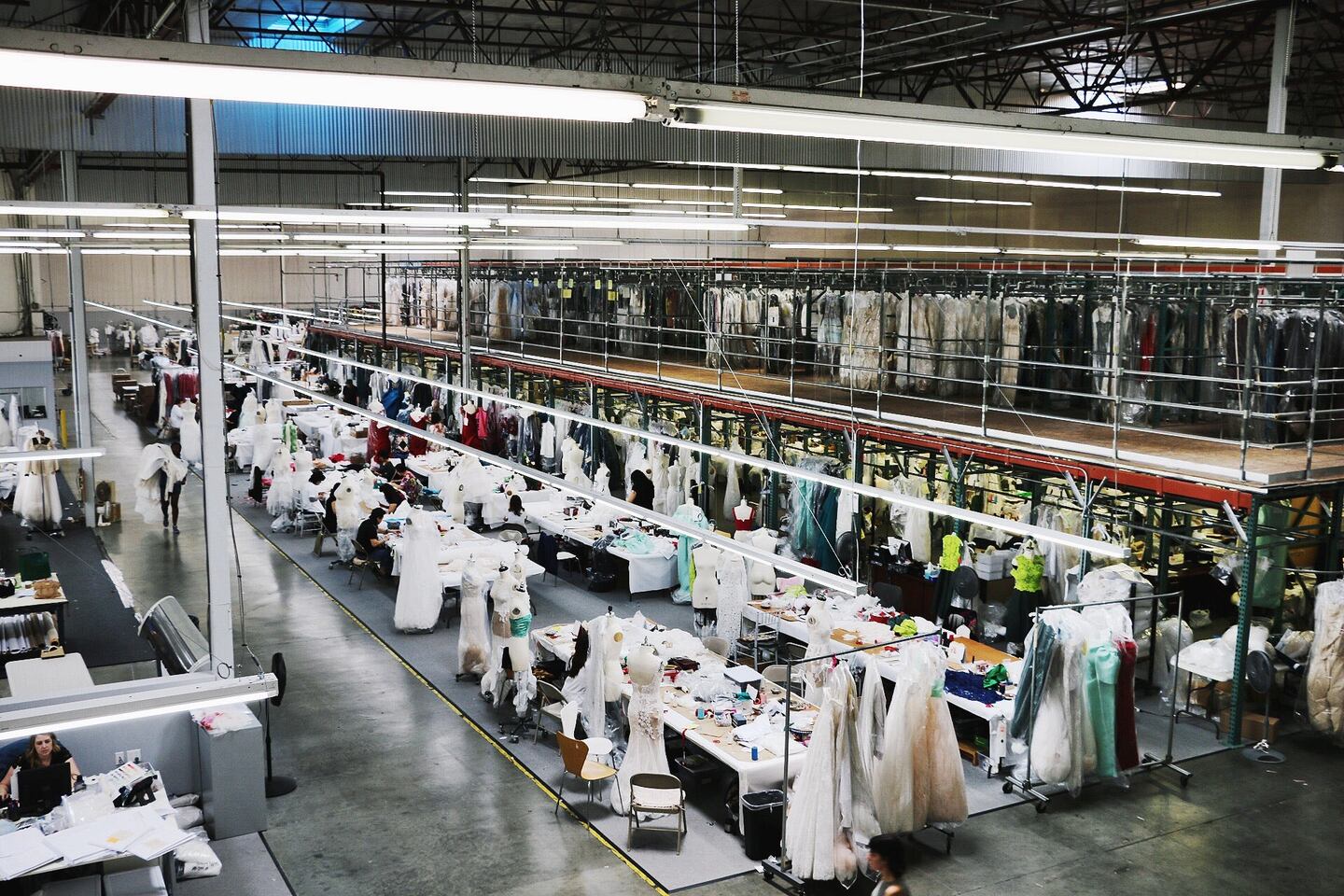
WASHINGTON, D.C., United States – The clothing and footwear industry was largely spared as the Trump administration slapped tariffs on $50 billion in Chinese imports, but a looming trade war could still do damage to an apparel sector that's more global than ever.
The actual shirts and shoes imported from China won’t get new tariffs, according to the full list of 1,102 product lines released Friday, and only some of the equipment used to make them, like textile rolling-machine parts and injection molders for shoes, were included in the final list. A host of other Chinese machinery used by American apparel companies that had been on a preliminary tariff list — like textile printing equipment, sewing machines and looms — made it through unscathed.
“We applaud the decision to remove most of the equipment and machinery used in our domestic textile, apparel and footwear manufacturing that were proposed by the administration in April,” said Rick Helfenbein, president of the American Apparel & Footwear Association, an industry trade group. “Levying a tariff on these items would have increased costs for domestic manufacturers across our industry, leading to higher prices and lower sales.”
While much of the U.S. apparel manufacturing industry has moved abroad to chase lower labor costs, the country still remains home to a multibillion-dollar textile industry. Many fashion labels and shoemakers, including L.L. Bean Inc., Allen Edmonds and American Giant still make products domestically. The exclusion of most apparel equipment from tariffs has allayed fears that manufacturers would push higher costs on to consumers.
ADVERTISEMENT
But while many of the machines used for American-made apparel didn’t make the final list, the industry isn’t out of the woods yet.
Retaliation Fears
“We remain deeply concerned,” Helfenbein said, citing the threat of retaliation. “China previously identified almost $1 billion worth of American cotton exports to China as a target, which will hurt American farmers and U.S. textile manufacturers, and add costs to our supply chains.”
“Ramping up tariffs doesn’t help bilateral trade talks reach a successful conclusion,” he added. “It’s hard to see how anyone benefits from this.”
President Donald Trump’s administration announced the tariffs on Chinese imports early Friday and the country has vowed to retaliate. Trump pledged additional tariffs if China follows through on the retaliation threats. The first set of tariffs will total $34 billion and take effect July 6, with another $16 billion still to be reviewed, the U.S. Trade Representative said.
A previous study from the National Retail Federation and the Consumer Technology Association found that imposing tariffs of $50 billion on Chinese imports, coupled with retaliation from China, would reduce U.S. gross domestic product by nearly $3 billion and eliminate 134,000 American jobs annually.
“Tariffs are taxes on American consumers, plain and simple,” Matthew Shay, chief executive officer of the NRF, said in a statement Friday. “These tariffs won’t reduce or eliminate China’s abusive trade practices, but they will strain the budgets of working families by raising consumer prices.”
By Kim Bhasin with assistance from Matthew Boyle and Matt Townsend; Editors: Anne Riley Moffat, Jonathan Roeder.
Nikhil Thukral, managing partner at the LVMH-affiliated private equity fund, talks about the ingredients of winning companies, the dynamics challenging fashion's incumbents and how economic shifts are shaping investor strategies in the BoF-McKinsey State of Fashion 2025.
The fast fashion giant is reportedly close to filing to go public in London, but faces doubts about its business and the political environment.
In 2020, like many companies, the $50 billion yoga apparel brand created a new department to improve internal diversity and inclusion, and to create a more equitable playing field for minorities. In interviews with BoF, 14 current and former employees said things only got worse.
For fashion’s private market investors, deal-making may provide less-than-ideal returns and raise questions about the long-term value creation opportunities across parts of the fashion industry, reports The State of Fashion 2024.
It’s not an existential crisis — yet — but Rick Owens and Daniel Roseberry confront some headscratchers in their latest collections.
Stick with the program or switch it up? Angelo Flaccavento reports on Chloé, Rabanne, Schiaparelli, Rick Owens and Uma Wang.
The brands Gap and Banana Republic beat comparable sales estimates.
Sex sells — if anyone can figure out what sexy means in 2026. Robert Williams tracks the search for a new silhouette at Kering’s Gucci, LVMH’s Dior and more.