Agenda-setting intelligence, analysis and advice for the global fashion community.
Agenda-setting intelligence, analysis and advice for the global fashion community.

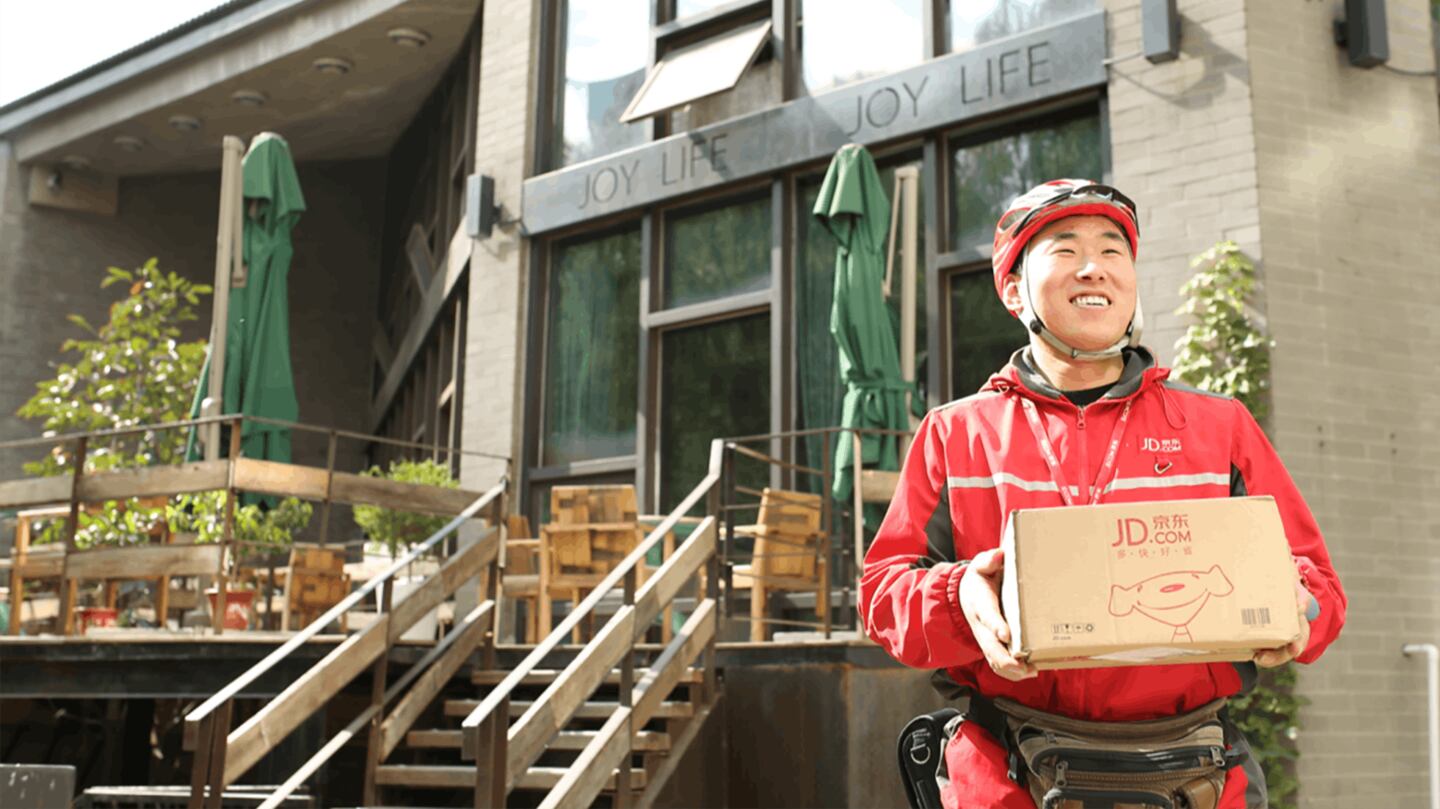
BEIJING, China — JD.com Inc. reported quarterly profit that fell short of analyst expectations as the Chinese online shopping giant ramps up the construction of physical shops and warehouses amid rising competition from Alibaba Group Holding Ltd.
Adjusted earnings-per-share were 0.71 yuan (11 cents) in the three months ended March, missing the 0.81 yuan average of analyst estimates. While sales for the quarter rose 33 percent to 100.1 billion yuan, topping projections for 99 billion yuan, it was the slowest growth on record.
JD is locked in an arms race with Alibaba to invest billions of dollars in retail and logistics to win over consumers at home and across Southeast Asia. The competition is unlikely to slow down as both online giants build high-tech supermarkets and other stores that act as shopping hubs and distribution points for web orders.
Net income for the quarter was 1.5 trillion yuan, compared to analyst estimates for 243 million yuan, which the company said was largely due to changes in the fair value of investments.
ADVERTISEMENT
“It was pretty much in-line,” said Kirk Boodry, an analyst at New Street Research, who added that one-time profit boosts from investments wouldn’t move the share price. “Gross margins are down but markets already knew that was coming.”
Chief Executive Officer Richard Liu’s strategy is to develop JD’s delivery networks to maintain better control of inventory and services. The company had 515 warehouses and more than 163,000 employees as of March 31, compared to the 63,809 workers at Alibaba.
JD forecast revenue for the current quarter of 120 billion yuan to 124 billion yuan, compared to the 122.4 billion yuan that analyst expect.
By David Ramli; editors: Robert Fenner and Edwin Chan.
Nikhil Thukral, managing partner at the LVMH-affiliated private equity fund, talks about the ingredients of winning companies, the dynamics challenging fashion's incumbents and how economic shifts are shaping investor strategies in the BoF-McKinsey State of Fashion 2025.
The fast fashion giant is reportedly close to filing to go public in London, but faces doubts about its business and the political environment.
In 2020, like many companies, the $50 billion yoga apparel brand created a new department to improve internal diversity and inclusion, and to create a more equitable playing field for minorities. In interviews with BoF, 14 current and former employees said things only got worse.
For fashion’s private market investors, deal-making may provide less-than-ideal returns and raise questions about the long-term value creation opportunities across parts of the fashion industry, reports The State of Fashion 2024.
The activewear giant seems intent on turning its nearly 40-year-old niche outdoor fashion brand into a mainstream success. The plan hinges on convincing backpackers and athletes its rugged technical gear can perform just as well as The North Face or Arc’teryx.
It’s not an existential crisis — yet — but Rick Owens and Daniel Roseberry confront some headscratchers in their latest collections.
Stick with the program or switch it up? Angelo Flaccavento reports on Chloé, Rabanne, Schiaparelli, Rick Owens and Uma Wang.
The brands Gap and Banana Republic beat comparable sales estimates.