
Agenda-setting intelligence, analysis and advice for the global fashion community.
Agenda-setting intelligence, analysis and advice for the global fashion community.

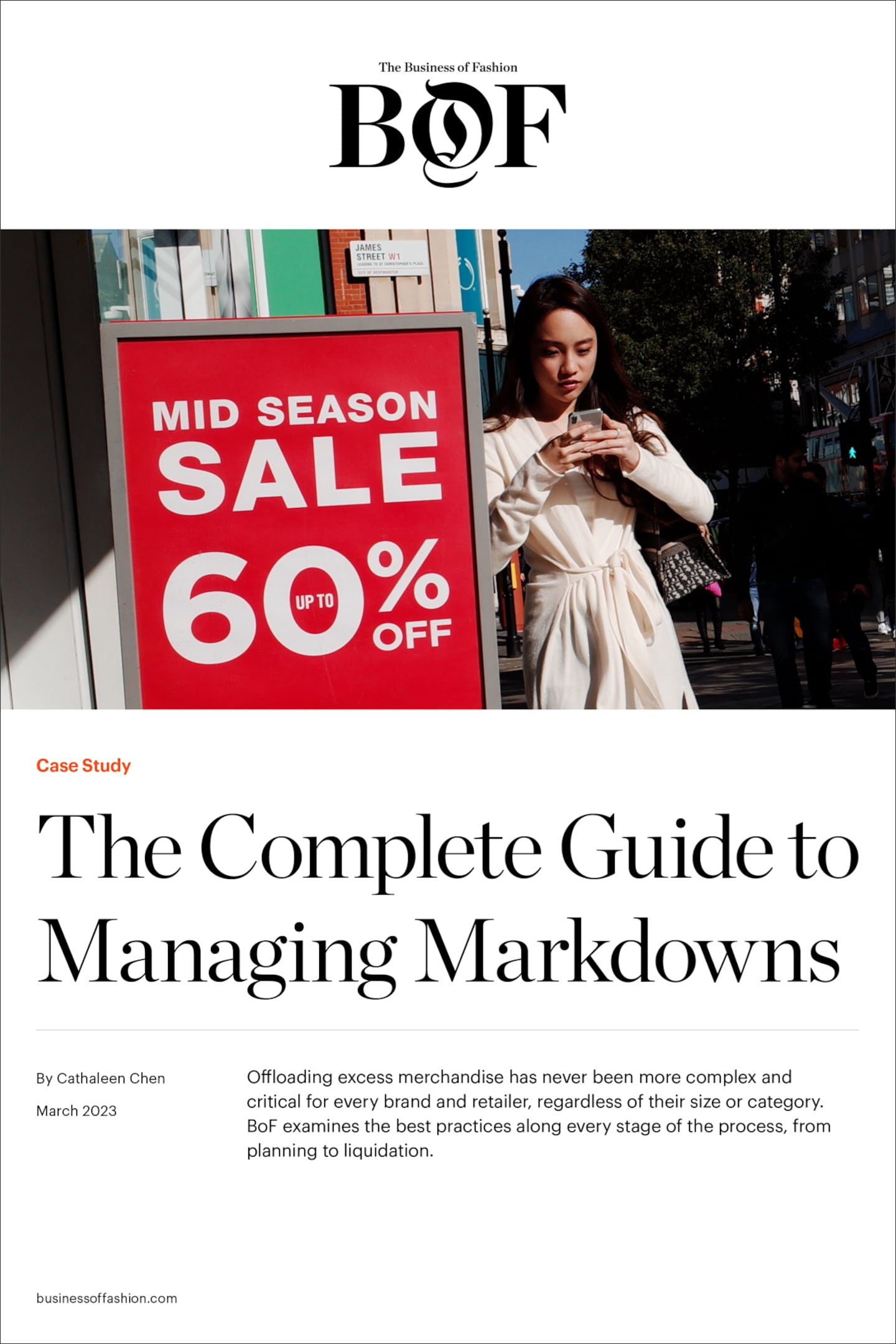
As a kid in the 1990s, Trisha Okubo remembers shopping at Gap and Banana Republic in her local mall. But those mall visits didn’t mean she went home laden with shopping bags — in fact, whenever she saw a shirt or a pair of trousers she liked, she’d wait until they went on sale. And inevitably, they would.
Years later, as Okubo built her own jewellery brand, she knew she didn’t want her shoppers to have the same expectation for discounting.
“I didn’t want to fall into that trap,” she said.
Of course, that’s easier said than done. When planning a season’s worth of products, it’s impossible to know the exact consumer appetite for each style. Trends come and go overnight. Especially since the pandemic, consumer sentiment can be tepid one day, spike the next and then plummet just as fast.
ADVERTISEMENT
Too conservative of an approach to inventory means missing lucrative full-price sales and risking shopper disappointment — an opportunity cost that most brands are reluctant to bear, especially if they answer to public shareholders every quarter. More often, retailers overestimate demand, and are stuck with excess goods with no other option than to mark down prices.
“First of all, the approach should be to minimise markdowns as much as possible in matching supply and demand better,” said Cowen analyst Oliver Chen.
The consequences of a product glut can be dire, as not only Gap and Banana Republic but also countless other mall retailers have learned in the past two decades. A constant stream of promotions can cause irrevocable damage to the perception of a brand, effectively conditioning consumers to wait for prices to fall or skip retail altogether and head straight to off-price retailers like Saks Off Fifth or T.J. Maxx (T.K. Maxx in the UK).
In certain European markets, markdowns and promotions are government regulated. Federal policy in France, for instance, limits promotions to two periods in the summer and winter. But in North America, the UK and other parts of the world, fashion companies are left to their own discretion for discounting strategies. They can mark down as much of their assortment as frequently as they’d like, for better or for worse.
Marketing plays a key role in underscoring the value of a retailer’s offering. Creative promotions, such as product bundles or personalised shopping events, can also help reduce the need for discounting. In the last segment of the inventory cycle, brands and retailers can look to third-party platforms to help offload leftover merchandise.
While there is no single blueprint suitable for every brand or retailer, the objective of this case study is to unpack the full inventory and markdown process and identify best practices in each stage, from the “test, read and react” approach in the planning stage to working with the most innovative start-ups in the liquidation space.

After avoiding markdowns for much of the last two years, many brands returned to their old ways this holiday season. Are discounts a necessary evil?
A combination of shipping delays and misjudging consumer demand has caused stockpiles to come roaring back. Retailers are using discounts and more creative measures to bring them back down.
Artificial intelligence is replacing intuition when it comes to determining what shoppers will pay.

Cathaleen Chen is Retail Editor at The Business of Fashion. She is based in New York and drives BoF’s coverage of the retail and direct-to-consumer sectors.
While $1.75 billion in court-approved funding has brought labels back to the fold, the real test for vendors will come when that temporary safety net vanishes later this year.
A growing number of mass and premium brands are pushing upmarket with a more luxe look, better materials and, often, higher prices. This case study unpacks how these labels are navigating the tricky challenge of elevating a brand.
Brands from Prada to Abercrombie & Fitch will provide clarity on how the fashion industry is approaching the newly uncertain trade landscape. Plus, a preview of Paris Fashion Week.
The goods come from more than 380 brands, including Burberry and those owned by luxury powerhouses LVMH and Kering.
Christine Hunsicker admitted she falsified financial statements to promote CaaStle Inc. as a valuable, growing business when in reality it was struggling.
The American cosmetic giant’s buyout of Ayurvedic beauty line Forest Essentials came as a surprise. By picking an under-the-radar brand it knows well, the company can show that it’s still in the M&A game without needing to outbid rivals.
The underwear company is anticipating net sales of at least $6.85 billion in the current fiscal year, exceeding analyst estimates and marking the highest revenue since its split from L Brands Inc in 2021.
The Japanese brand is accelerating its expansion in India to capture a greater share of the rapidly growing apparel market and affluent consumer base.


