
Agenda-setting intelligence, analysis and advice for the global fashion community.
Agenda-setting intelligence, analysis and advice for the global fashion community.

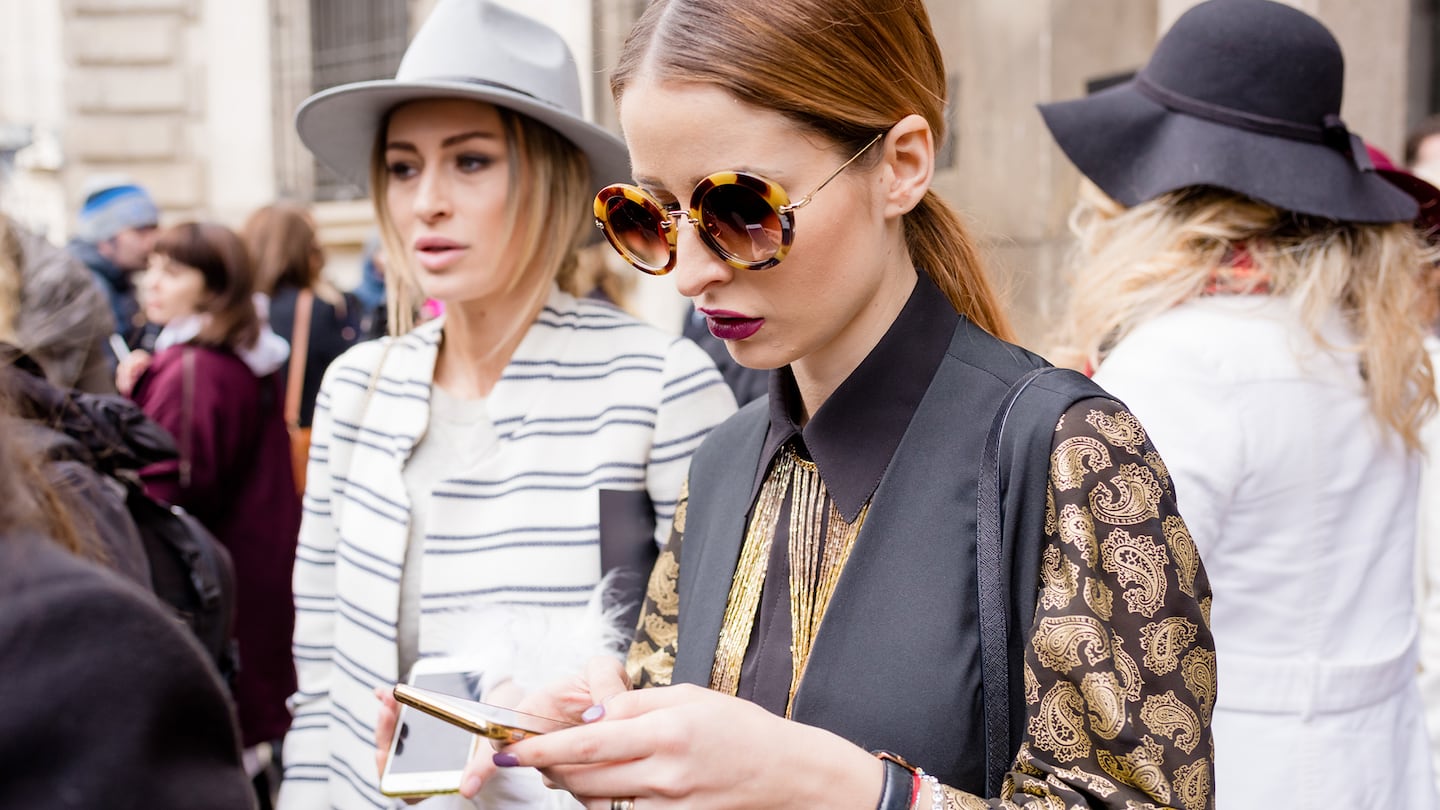
Jacey Duprie has always had an uneasy relationship with the word influencer.
Duprie launched her blog, Damsel in Dior, in 2009, and has been supporting herself full-time through her online presence since 2011. She has over 500,000 followers across social media platforms, published a memoir and launched her own brand. But she still has trouble referring to herself as an “influencer.”
“I’m so scarred by the stigma,” she admitted. “I was one of the first to be labelled that, and people hated influencers and Instagrammers. I can’t get past the fact that they probably still do. I carry that with me.”
She has good reason to — even as the influencer marketing sector has gone from shiny new toy to massive, multi-billion dollar behemoth, the term “influencer” has never quite managed to shake its negative connotation. It’s something we see firsthand at The Business of Fashion: Any coverage of the sector never fails to attract sceptical or harsh Instagram comments directed at influencers themselves. Just this week, our account was riddled with critiques: “I haven’t bought a single item, luxury or otherwise because of an influencer,” one wrote, while another said “I am so over influencers!!!! … They need to get real jobs.”
ADVERTISEMENT
The fashion establishment, too, has had a tricky relationship with online personalities. From the early 2010s, when bloggers first began nabbing front row seats at runway shows, usurping an editor-first model, a certain amount of snobbery has existed. As influencer marketing grew, that attitude permeated into the mainstream.
Misogyny, undoubtedly, holds some of the blame. Influencer marketing may be the first extremely lucrative industry that’s primarily benefited women. Influencer monetisation company LTK has minted 400 self-made millionaires since its launch in 2011 — all are women. What’s more, they’ve been able to make this money outside of a traditional corporate environment, allowing for more control over their schedules and oftentimes, making their home lives and childcare easier to manage.
It’s hard not to draw a contrast between the differing reactions to the terms “influencer” and “creator.” The influencer label was the one applied to the generation of mostly women that began as bloggers sharing their outfits online, eventually moving en masse to Instagram. There, they posted curated snapshots of their day-to-day with affiliate links. On YouTube, where the gender divide was more evenly split, they were labeled creators. It’s not a coincidence that the latter is the one the industry has embraced today.
I’ve explored the idea before that in abandoning the “influencer” label, certain creators are diminishing what makes them unique — while anyone who shares content online can, technically, be a creator, it’s influencers who have the power to sway purchasing decisions, which requires a certain degree of authority and intimacy with their audience. In today’s market, where brands are paying equal, if not more, attention to conversion metrics versus reach, it’s individual power that’s the industry’s most valuable commodity. For creators, their value is in the content, for influencers, it’s more about the person.
That’s not to say all of the critique is without merit: there have been plenty of examples of influencers saying one thing and being caught doing another or failing to properly disclose paid partnerships.
But the level of vitriol which they routinely receive hardly feels fair — or accurate. As the industry has matured, more and more influencers understand that their audience’s trust is their most valuable asset; a paycheck for an off-brand partnership is not worth the long-term career risk. Overconsumption would exist with or without their posts, as would the insecurity-inducing mentality that defines much of modern social media.
There’s an undercurrent of envy or even simple misunderstanding in much of the pushback. Take a quick scroll on TikTok and it appears that being an influencer mostly consists of taking all-expenses-paid vacations, unboxing an endless stream of gifted products and building wealth seemingly overnight. Less visible is the 24/7 pressure to create content, the nasty messages that can fill inboxes and the uncertainty that can come if a brand partner fails to reup a deal. Influencing may not be a traditional corporate job, but it certainly is a “real” one that requires both work and a level of natural ability.
“A lot of people try, but I don’t think everybody has that special sauce where they can do this and be successful at it,” said Mallory Goldman, a Los Angeles-based influencer who said she is “proud” to call herself by the title.
ADVERTISEMENT
Given how prevalent the stigma is, it makes sense that the industry is trying to adopt creator as a less-charged alternative. But some criticism will inevitably follow — and there’s an argument that if so, why bother?
“I’ve been pleasantly surprised by people’s reactions once I just ripped off the band aid and decided I’m gonna say this with confidence,” added Goldman. “I try to just own it.”
Teens are taking over social feeds and racking up bigger partnerships than ever before — but young creators play by a different set of rules than their predecessors.
Influencer marketing is bigger than ever, but it’s also become more complex as the number of creators multiplies, consumers grow more resistant to blatant ads, platforms like Substack gain traction and new tools for tracking performance appear. Fashion brands need to update their strategies.
As influencer marketing becomes more essential, and creators demand more money, brands have to parse through an increasing amount of data to confidently invest in their influencer strategies.

Diana Pearl is Senior News and Features Editor at The Business of Fashion. She is based in New York and drives BoF’s marketing and media coverage.
This week on The Debrief, BoF correspondent Lei Takanashi explains why the industry remains tethered to a small circle of established rap stars and whether a new generation of talent can break through.
While pay-for-play on creators’ feeds isn’t going away entirely, the #ad is no longer the cornerstone of social media marketing that it once was. Some brands are taking a new approach they hope will feel more like an extension of creators’ relationships with their followers.
Brands are breaking up with the romantic binary to monetise the full lifecycle of love, trading traditional narratives for a lucrative ‘autonomy economy.’
The Google-owned video-sharing service is among the largest entertainment platforms in the world, and a destination for in-depth, long-form content. BoF breaks down how brands can use the site as a world-building tool to attract loyal consumers.
The underwear company is anticipating net sales of at least $6.85 billion in the current fiscal year, exceeding analyst estimates and marking the highest revenue since its split from L Brands Inc in 2021.
The Japanese brand is accelerating its expansion in India to capture a greater share of the rapidly growing apparel market and affluent consumer base.
Strong growth at Miu Miu helped lift results, but the Italian luxury group said that integrating Versace will weigh on margins in the near term as it begins the turnaround of the struggling brand
Activist fund Oasis Management Co. is calling on the Japanese personal care company to convene an extraordinary general meeting, seeking a probe into its supply-chain risk management and internal control.


