
Agenda-setting intelligence, analysis and advice for the global fashion community.
Agenda-setting intelligence, analysis and advice for the global fashion community.

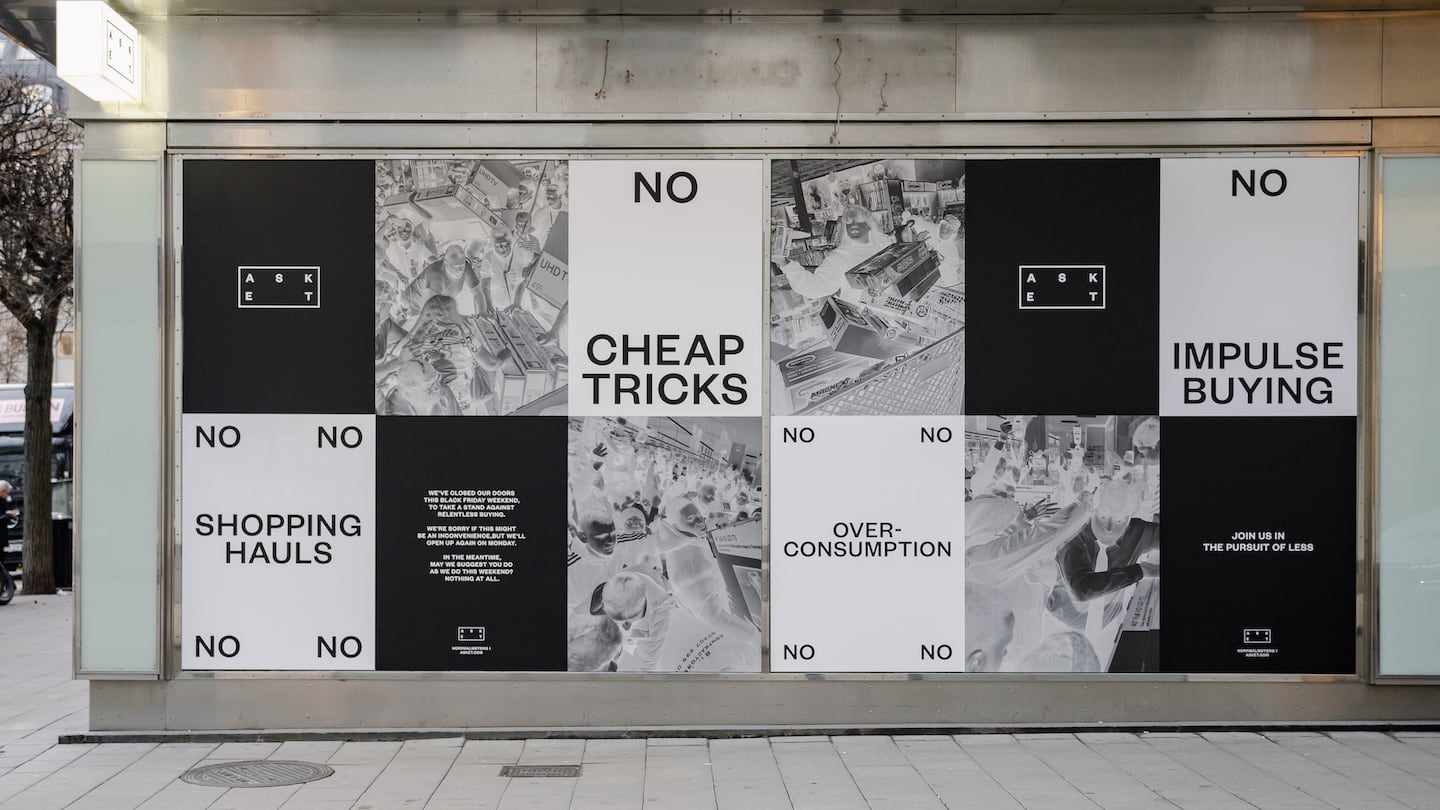
Want to be more sustainable? Consider Black Friday off the table.
The mega-shopping moment (a discount-driven start to the holiday sales period that now spans a whole weekend) is designed to encourage consumption on a scale that’s “totally incompatible” with efforts to avert climate catastrophe, according to Andrew Simms, founder of climate research and campaign group the Rapid Transition Alliance.
In fact, limiting global warming will require the richest shoppers in wealthy countries like the UK, US and Japan to buy an average of just five new garments per year by 2030, according to a new report co-authored by the organisation.
And yet Black Friday has become a major marketing moment for brands that say they stand against everything it represents, with sustainability-minded businesses adopting clever marketing tactics to tap into the holiday without condoning it.
ADVERTISEMENT
Outdoors brand Patagonia famously took out a full-page ad in the New York Times telling people not to buy its products in 2011. (The company’s sales jumped more than 30 percent that year.)
Since then, companies from Allbirds to Deciem have taken a similar approach, using their platform to denounce the retail event while taking full advantage of the buzz their stance generated. This week resale platform Vestiaire Collective banned ultra-fast-fashion listings and then promoted its Black Friday deals as a guilt-free opportunity to “shop sustainably.”
But can a brand really tap into the Black Friday marketing frenzy and claim to be promoting responsible consumption?
Resisting the pressure to join the discount bonanza is high-stakes, even for brands that don’t want to participate. That’s especially true now, as economic uncertainty prompts shoppers to pull back on spending. Many smaller brands said participating in the sales this year was a necessary compromise — if not a survival tactic.
Loud Bodies, a bootstrapped made-to-order womenswear label based out of Romania, usually abstains from Black Friday sales, but it’s offering discounts of up to 50 percent this year. Following months of steady decline, orders have plummeted to near-zero lately, a trend the brand chalked up to shoppers holding out for the sales.
“This is really not an encouragement to over consume, but rather a tough choice on my end to have to adhere to a tradition I highly disapprove of in order to keep the lights on and take care of my team,” founder Patricia Luiza Blaj wrote in a lengthy Instagram post.
Bigger brands have tried to navigate the tension by positioning their Black Friday activations as alternatives to the frenzy of overconsumption, following the playbook first laid out by Patagonia.
This year, for instance, Swedish slow-fashion brand Asket gutted its store of new inventory to exclusively sell secondhand pieces instead. In similar moves, London-based Raeburn is offering in-store valuations and buybacks for high-quality streetwear pieces, and B-Corp skin care brand Haeckels is showcasing small, mission-driven businesses in its retail space, in lieu of its own product.
ADVERTISEMENT
The reality is, even the most sustainably minded fashion players are still businesses competing for consumer attention, loyalty and spend amid an increasingly crowded landscape and a dire economic outlook.
A shopping holiday like Black Friday is a great opportunity for brands to achieve that, even when they’re ostensibly railing against it.
Coach-owner Tapestry’s new carbon-removal partnership and brands making fresh commitments to textile-to-textile recycling startups show an industry searching for ways to address its environmental impact.
A new group of brand partners, including Reformation and C&A, is joining the poly-cotton recycler’s long-term commercialisation program only weeks after its debut, signalling growing demand as the company gears up for industrial-scale production in Europe.
The consumer base for activewear made of natural materials like cotton and wool is growing, as more people on the political right join progressives in worrying about the health effects of polyester and other synthetics.
The sustainable materials company, which closed its Swedish factory in 2024, is opening it again after a year of restructuring.
The brands Gap and Banana Republic beat comparable sales estimates.
Sex sells — if anyone can figure out what sexy means in 2026. Robert Williams tracks the search for a new silhouette at Kering’s Gucci, LVMH’s Dior and more.
Christine Hunsicker admitted she falsified financial statements to promote CaaStle Inc. as a valuable, growing business when in reality it was struggling.
The American cosmetic giant’s buyout of Ayurvedic beauty line Forest Essentials came as a surprise. By picking an under-the-radar brand it knows well, the company can show that it’s still in the M&A game without needing to outbid rivals.


