
Agenda-setting intelligence, analysis and advice for the global fashion community.
Agenda-setting intelligence, analysis and advice for the global fashion community.

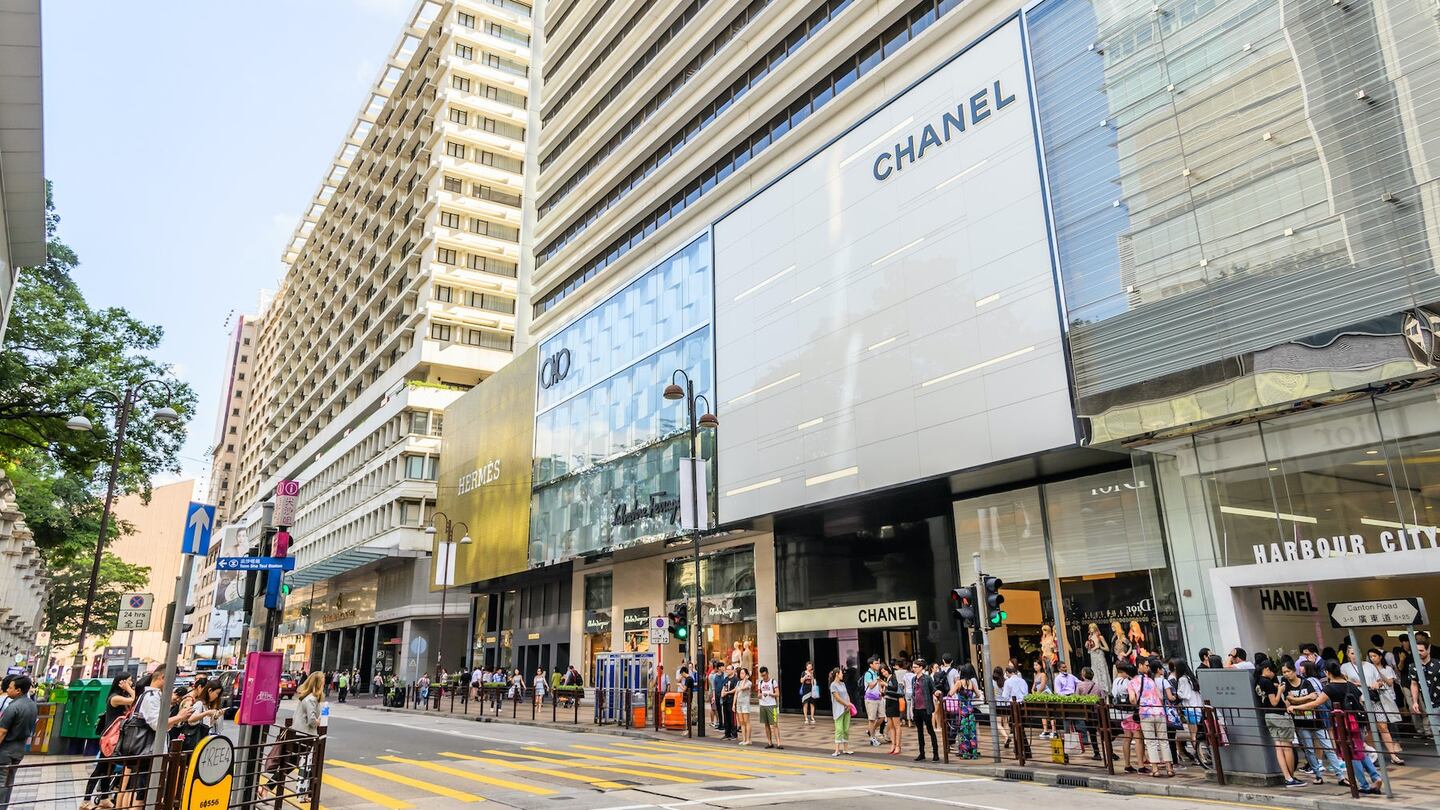
HONG KONG, China — On Saturday, Hong Kong kicks off a series of 320 events celebrating the anniversary of the region's handover from British to Chinese governance of Hong Kong in 1997. With president Xi Jinping making his first official visit since taking office in 2013, over $80 million is being invested in the celebrations by the Chinese Government.
Driving this investment is the promise of an influx of tourists from China’s Mainland, spelling an opportunity for luxury brands operating in the market. A potential economic boost sparked by the handover anniversary celebrations cannot come soon enough for Hong Kong. Luxury sales have been in steep decline, falling by as much 9 percent in 2016.
Several international luxury brands, including Ralph Lauren, Prada and Tag Heuer shut stores in Hong Kong last year. Meanwhile, Burberry halved the size of its flagship in the city's Pacific Place complex, while Gucci publicly demanded lower rents, threatening to close several stores.
Recent accounts show that Hong Kong’s technology and property shares have risen, however, suggesting a renewed confidence in the market. Significant infrastructural developments are also underway. The Hong Kong International Airport is undergoing an $800 million expansion, adding a third runway, to bolster crucial tourist flow into the city — a move projected to boost Hong Kong’s economy by $235 billion by 2030. And the New World Development group has announced a $2.6 billion development, Victoria Dockside, which will span three million square-feet and aims to reinvigorate the Kowloon Waterfront.
ADVERTISEMENT
The celebrations are an opportunity for luxury companies.
“We can see that Hong Kong is doing slightly better, but we can’t forget that, compared to its heyday in 2012 and 2013, it’s still very depressed,” warns Mario Ortelli, senior research analyst for luxury goods at Sanford C. Bernstein. “All the luxury companies are cautious about Hong Kong. Going forward, they are planning more store closures, not store openings.”
Indeed, the parallels between this weekend’s celebrations and a very different kind of public gathering — the Umbrella Movement protests that shut down Hong Kong in 2014 — remain a stark reminder of how volatile the region’s retail performance has been in recent years.
Mainland Chinese Tourists
Hong Kong’s struggle to maintain its position as one of the region’s most profitable luxury retail destinations is inextricably linked to tourism from Mainland China. Mainland Chinese tourists represented 76 percent of all visitors to the city in 2016, a significant drop of 6.7 percent from 2015. Mainland Chinese consumers are taking more overseas trips than ever before, and what they buy has evolved beyond Hong Kong’s retail offering.
“For a younger crowd, they naturally relate more to contemporary fashion, and are more informed in making consumer choices,” says Anais Mak, who co-founded Hong Kong-based womenswear label Jourden in 2012, and counts luxury department store Lane Crawford among her stockists. “I also see more curiosity [among tourists] to discover many other aspects of the city apart from the sought-after luxury fashion products,” she adds.
Competition from rival markets in the region continues to grow, despite Hong Kong's key draws: prime geographical location and tax-free shopping. "Macau is currently more dynamic than Hong Kong because it's cheaper," explains Ortelli. "South Korea and Japan are also attractive alternative regional destinations, and there are many others that are growing, like Taiwan and Singapore."
Tourists have also been deterred by political tensions between the Chinese government and Hong Kong citizens, which hit boiling point in 2014. Meanwhile, the continued sabre-rattling by China and South Korea, surrounding the installation of an American missile defence system in the latter, has also impacted touristic flow.
In Hong Kong, the attitude is positive. “The general cool down of domestic political tension as well as mixed sentiments between Hong Kong and Mainland China will account for an uptick [in tourist spending in Hong Kong],” says Mak. “Times have been tough in 2015 and 2016, but it seems people are experiencing a natural progression to regain confidence in the environment.”
ADVERTISEMENT
However, due to continuing store closures, it’s clear that international luxury brands continue to be far more cautious about Hong Kong’s potential for a turnaround. “There is potential for disruption,” insists Ortelli. “The celebrations are an opportunity for the luxury companies that could, perhaps, become another Occupy Hong Kong.”
Related Articles:
[ Amidst Hong Kong Gloom, Joyce Launches Redesign With TheatricsOpens in new window ]
[ How Can China’s Luxury Market Grow in a Slowdown?Opens in new window ]
While $1.75 billion in court-approved funding has brought labels back to the fold, the real test for vendors will come when that temporary safety net vanishes later this year.
A growing number of mass and premium brands are pushing upmarket with a more luxe look, better materials and, often, higher prices. This case study unpacks how these labels are navigating the tricky challenge of elevating a brand.
Brands from Prada to Abercrombie & Fitch will provide clarity on how the fashion industry is approaching the newly uncertain trade landscape. Plus, a preview of Paris Fashion Week.
The goods come from more than 380 brands, including Burberry and those owned by luxury powerhouses LVMH and Kering.
Stick with the program or switch it up? Angelo Flaccavento reports on Chloé, Rabanne, Schiaparelli, Rick Owens and Uma Wang.
The brands Gap and Banana Republic beat comparable sales estimates.
Sex sells — if anyone can figure out what sexy means in 2026. Robert Williams tracks the search for a new silhouette at Kering’s Gucci, LVMH’s Dior and more.
Christine Hunsicker admitted she falsified financial statements to promote CaaStle Inc. as a valuable, growing business when in reality it was struggling.


