Agenda-setting intelligence, analysis and advice for the global fashion community.
Agenda-setting intelligence, analysis and advice for the global fashion community.

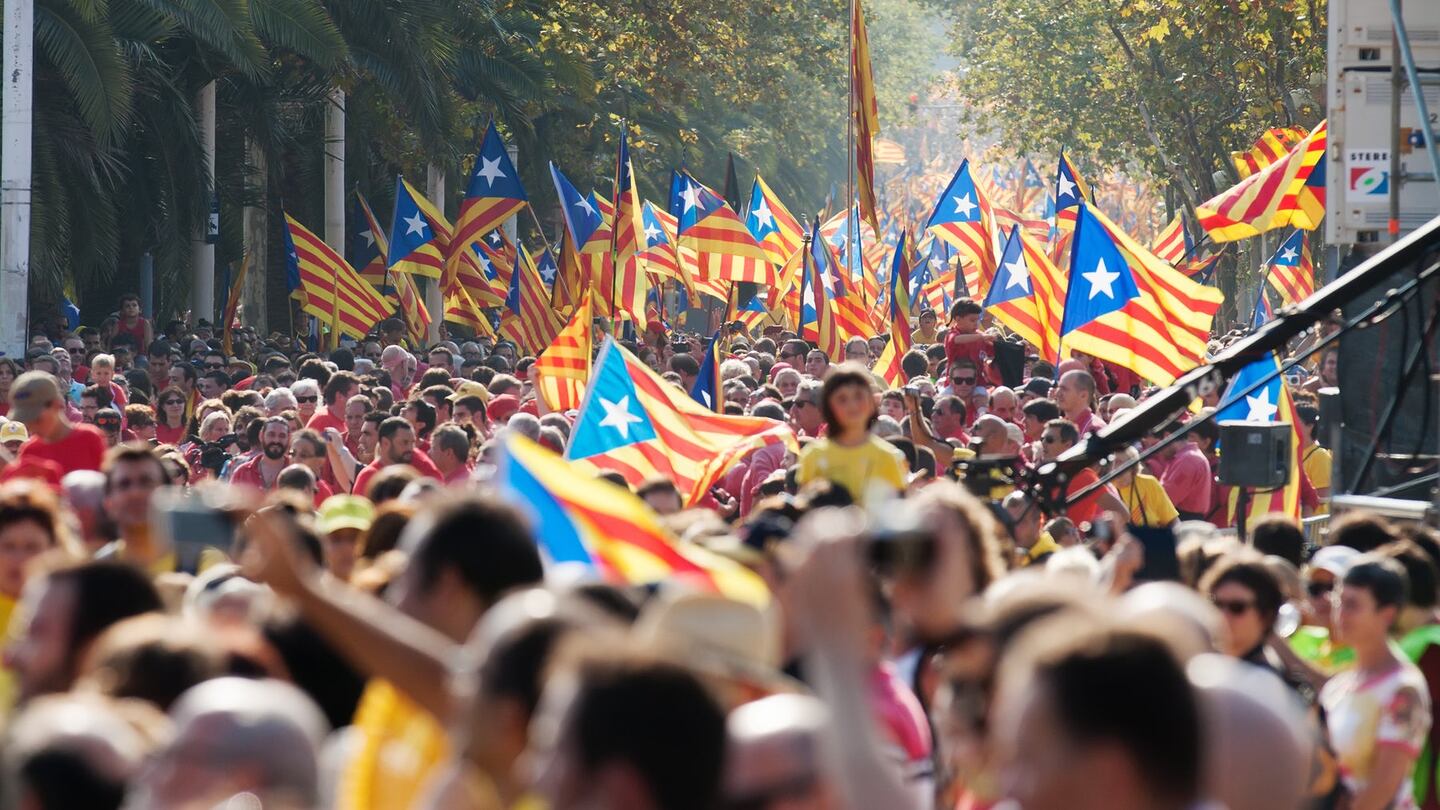
BARCELONA, Spain — Just as Spain's fashion industry was showing signs of revival following a long recession, the political upheaval surrounding the Catalan parliament's vote for independence and ensuing imposition of direct rule over the region from the country's central government have thrown a spanner in the works.
“We’re concerned about the image we are projecting on an international level and the impact on volume and sales not only in the Spanish market but also abroad,” Lucia Soriano, director at Fedecon, the Spanish clothing federation, told BoF in early October. “Tourists are cancelling their vacations, business is cancelling trips to Catalonia — it’s going to impact sales. Companies might not want to invest in Spain.”
On Friday, the Catalan parliament passed a resolution to declare independence from Spain in a secret ballot. Shortly after the vote, marking a significant escalation in an already divided country, the senate approved prime minister Mariano Rajoy’s motion to invoke Article 155 of the constitution, which will impose direct rule on the autonomous community, including the possibility of removing separatist leader Carles Puigdemont from power and curbing the independence movement completely.
The developments come after the October 1 vote in favour of independence in Catalonia, a region in Northeastern Spain with a secessionist history, and the violence that erupted as police dismantled polling stations. Catalan citizens staged a one-day strike, while Spain’s usually reticent King Felipe VI made a surprise intervention, criticising the Catalan government’s decision to hold the “irresponsible” vote despite not having constitutional backing.
ADVERTISEMENT
Analysts say the outlook is unclear, as the EU member state prepares for a volatile period of instability. With the referendum deemed illegal under the constitution, it’s just one of many nationalist and populist movements that have been threatening the democratic model globally, from the independence movement in Scotland, to the rise of far-right parties in France and Germany.
The depth of that impact will depend on the length of the disruption, which is unclear at this stage. “Our growth forecast is in a wait-and-see mode right now,” says Peter Ceretti, southern Europe analyst at the Economist Intelligence Unit. “The question is the extent to which it causes real disruption. If this festers, we will see a loss of consumption and investment in the region. Catalonia absorbs about half of start-up investment and large share of foreign investment, so foreign investors might decline and large firms move headquarters to other parts of Spain the longer it goes on. It’s a tricky situation.”
For the fashion industry, more worrying may be the long-term impact on an economy that has really only just started to thrive. Catalonia, whose capital city is Barcelona, is about 19 percent of the country’s gross domestic product and 16 percent of its population. It is also one of the fastest-growing regions.
Our growth forecast is in a wait-and-see mode right now.
The collapse in the housing market shattered Spain’s economy in 2008 and it fell into a long recession. But the Eurozone’s fourth largest economy has started to show growth momentum in the last two years, with GDP growth of 3.1 percent in the second quarter, back to pre-recession levels.
That growth has prompted a return of fashion brands to Spain: Uniqlo opened its first Spanish store on the Paseo de Gracia, a prestigious shopping street in Barcelona, this year, while local giant Inditex opened its biggest-ever Zara in Madrid. The return of Balenciaga to Barcelona, whose Spanish founder Cristóbal is celebrated in a dedicated museum in the Basque city of Getaria, was seen as a symbolic move amid the country's economy revival.
Fashion accounts for 2.9 percent of gross domestic product in Spain, an increase from 2.7 percent a year earlier. ACME, the Spanish Fashion Designers Association, which represents labels including Delpozo, Custo Barcelona, Emilio De la Morena, Adolfo Domínguez and Pedro Del Hierro, says the combined revenues of its brands would equate to $476 million (or €405 million at current exchange).
“Nervousness and sadness is the general mood,” Pepa Bueno, director of ACME in Madrid, said at the time of the referendum. “For everyone, not just the fashion industry, you have to wait and see what is going to happen. It will have an effect, definitely.”
Editor's Note: This article was updated on October 27, to include the Catalan parliament's vote for independence, and the Senate's motion to invoke Article 155 of the constitution.
Related Articles:
[ British Fashion Industry Steels Itself for BrexitOpens in new window ]
[ France at a Crossroads: Fashion Reflects on a Monumental ElectionOpens in new window ]
While $1.75 billion in court-approved funding has brought labels back to the fold, the real test for vendors will come when that temporary safety net vanishes later this year.
A growing number of mass and premium brands are pushing upmarket with a more luxe look, better materials and, often, higher prices. This case study unpacks how these labels are navigating the tricky challenge of elevating a brand.
Brands from Prada to Abercrombie & Fitch will provide clarity on how the fashion industry is approaching the newly uncertain trade landscape. Plus, a preview of Paris Fashion Week.
The goods come from more than 380 brands, including Burberry and those owned by luxury powerhouses LVMH and Kering.
Christine Hunsicker admitted she falsified financial statements to promote CaaStle Inc. as a valuable, growing business when in reality it was struggling.
The American cosmetic giant’s buyout of Ayurvedic beauty line Forest Essentials came as a surprise. By picking an under-the-radar brand it knows well, the company can show that it’s still in the M&A game without needing to outbid rivals.
The underwear company is anticipating net sales of at least $6.85 billion in the current fiscal year, exceeding analyst estimates and marking the highest revenue since its split from L Brands Inc in 2021.
The Japanese brand is accelerating its expansion in India to capture a greater share of the rapidly growing apparel market and affluent consumer base.


