
Agenda-setting intelligence, analysis and advice for the global fashion community.
Agenda-setting intelligence, analysis and advice for the global fashion community.

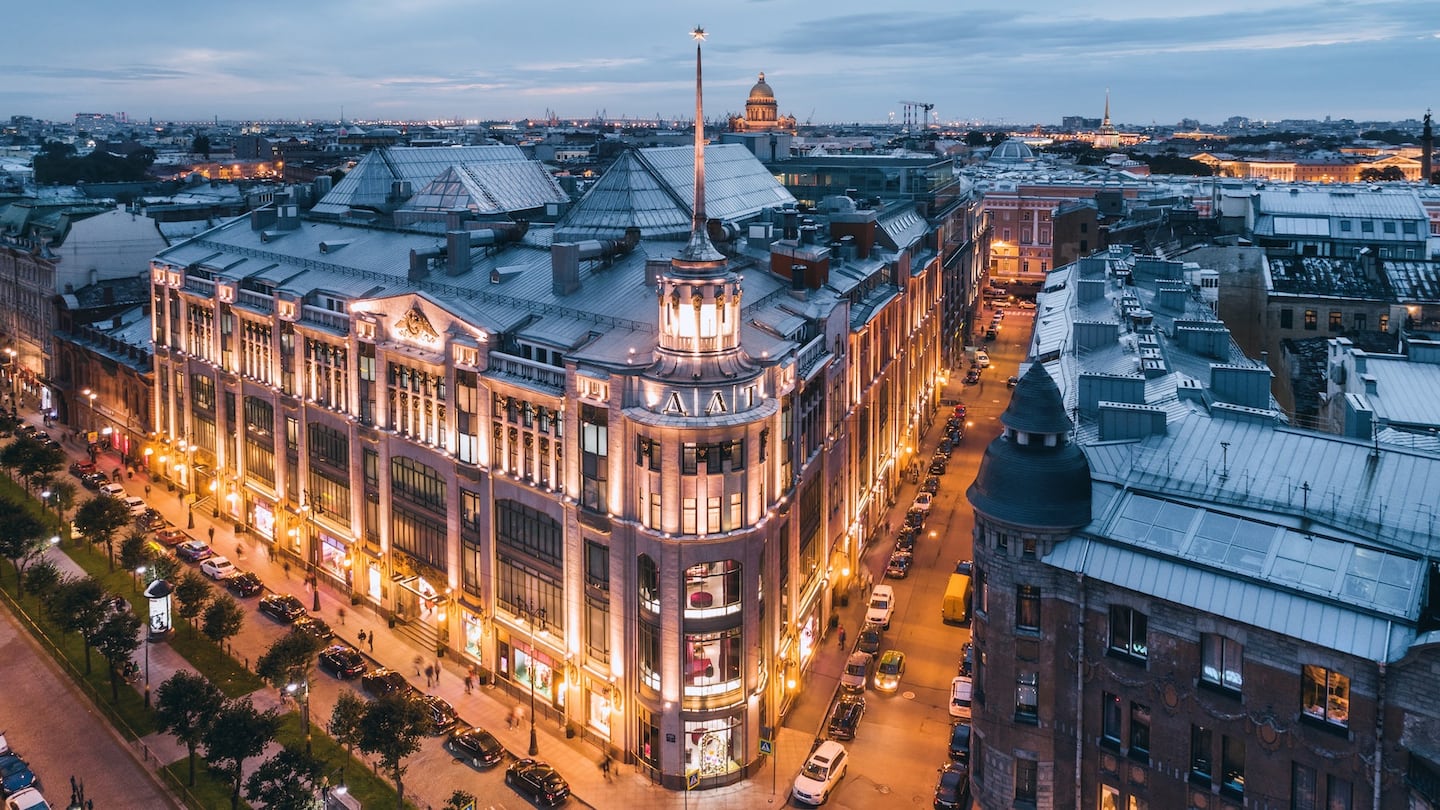
ST. PETERSBURG, Russia — Crowned with two imposing atriums, St. Petersburg's DLT department store has been at the heart of the city for over 110 years and is situated just a few minutes from the Hermitage and Palace Square.
Now part of the Mercury Group, Russia’s largest luxury goods group whose sales and performance are often viewed in the industry as an important indication of the health of the Russian luxury market, DLT is the sister store to Moscow’s famous department store, TSUM. Mercury acquired the property in 2012 and has invested significantly in its St. Petersburg location.
In 2015, along with the wider TSUM retail portfolio, DLT lowered its prices to compete with the traditional luxury capitals of Europe, including Milan and Paris. The risk paid off, with sales increasing by 300 percent, according to data shared by the company. Tourists — predominately travelling from China — now generate 20 percent of the store’s turnover. Expecting tourism to drive 30 percent of sales in the near future, Pavlov continues to be laser-focused on what he views as the fundamentals of a successful retail business: European-level pricing, exclusive product, and consistent, excellent customer service.
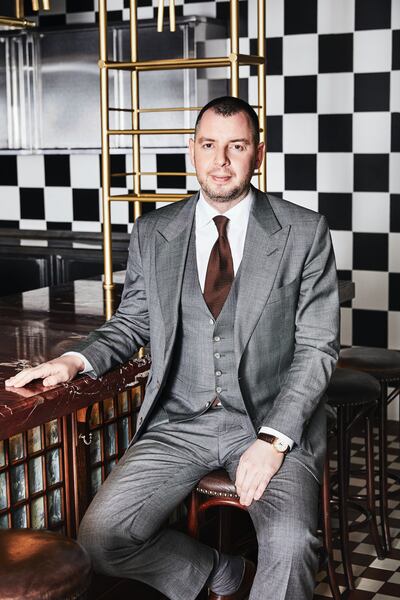
Alexander Pavlov, chief executive of the Mercury-owned TSUM and DLT stores | Source: Courtesy
What makes the DLT business unique in its market?
The DLT department store has an incredible heritage, and it is actually the only luxury department store in St. Petersburg. Having learnt from our success with TSUM in Moscow, we wanted to replicate the experience for our customers, in terms of the products we carry and the levels of service, events and the exclusive products we source. While we wanted to recreate the best of the TSUM experience, we also wanted to evolve it for the St Petersburg market, bringing new brands to the city.
We recently launched a pre-order system with partners such as Dolce & Gabbana, Balenciaga, Balmain and other brands, which enables customers to order in advance — basically direct from the runway — six months before the clothes usually become available. We also have an expansive range of collaborations with major luxury brands like Moncler, Bottega Veneta and Brunello Cucinelli, among others, and special collections only available in Russia at DLT or TSUM, such as drops from Nike or Off-White, which often sell out immediately.
What growth levers are you looking to?
We expect the proportion of sales generated by tourists to grow from 20 percent to 30 percent in the near future. DLT’s location in the centre of St. Petersburg makes it very attractive and we have everything we need to make tourists — especially our Chinese visitors — extremely comfortable when they are visiting by using WeChat pay and AliPay, in-store navigation in English and Chinese, and fully trained VIP shoppers who speak Chinese.
We have also definitely seen a shift in consumer behaviour and interest in terms of the brands we carry, and especially the products that younger consumers are interested in. Gucci, Saint Laurent, Moncler and their peers are still the largest proportion of our business, but we have followed the evolution and bought into growing streetwear brands, such as Off-White. We want the local population to view DLT as a place of discovery, somewhere they feel they can find anything they want inside.
How have you evolved your operations to tap emerging opportunities?
In 2015, we decreased our prices as we understood that there was an opportunity to not only remove the large disparity in prices that existed before, but to actually become competitive on a global scale with fashion capitals like Paris and Milan. When we decreased our prices, we increased our sales and doubled the buying, increasing our collections by more than double and the business by 300 percent.
We want the local population to view DLT as a place of discovery, somewhere they feel they can find anything they want inside.
One area that is particularly exciting for us in our DLT business is the potential in bags and accessories. Given the ease that accessory shopping represents for tourists and especially Chinese consumers, we see really strong results in this area in St. Petersburg. We are actually switching around the areas of the store dedicated to cosmetics and to bags and small leather goods. As a result, we will be doubling the size of the bag department, which will help us to present more brands in their specialised sections, and to increase the range and depth of our offering of bags. For the cosmetics zone, this switch will help us to enlarge spaces dedicated to brands where we see large tourist demand, like Jo Malone, Tom Ford, La Mer and others.
How is your business divided between on and offline channels?
We are growing across the business — offline channels grew by 22 percent year-to-date and traffic to the store grew by 30 percent. Our online business represents 20 percent of our overall turnover and is growing at a rate that I believe our entire businesses could match in the relatively near future. Online, we have invested significantly in emulating our in-store experience and enabling our customers to interact with us in unique ways.
Whether that’s us being able to deliver on the same day — which is a complex task but extremely popular considering how broad our product offering is — or allowing customers to try on clothes at home before they have paid for them, the experience online has to match coming into store, price, service and product offering. Get those right and customers will choose your online store.
We also offer personalisation and digitally connected stylists who can guide consumers. As for other digital services, such as augmented reality technology that enables users to try on clothes and see themselves in real-world environments, we are continuing to test the opportunities in these areas and next year we will be implementing a number of new technologies across the store.
This is a sponsored feature created in partnership with TSUM as part of a global Insights Series.
While $1.75 billion in court-approved funding has brought labels back to the fold, the real test for vendors will come when that temporary safety net vanishes later this year.
A growing number of mass and premium brands are pushing upmarket with a more luxe look, better materials and, often, higher prices. This case study unpacks how these labels are navigating the tricky challenge of elevating a brand.
Brands from Prada to Abercrombie & Fitch will provide clarity on how the fashion industry is approaching the newly uncertain trade landscape. Plus, a preview of Paris Fashion Week.
The goods come from more than 380 brands, including Burberry and those owned by luxury powerhouses LVMH and Kering.
Stick with the program or switch it up? Angelo Flaccavento reports on Chloé, Rabanne, Schiaparelli, Rick Owens and Uma Wang.
The brands Gap and Banana Republic beat comparable sales estimates.
Sex sells — if anyone can figure out what sexy means in 2026. Robert Williams tracks the search for a new silhouette at Kering’s Gucci, LVMH’s Dior and more.
Christine Hunsicker admitted she falsified financial statements to promote CaaStle Inc. as a valuable, growing business when in reality it was struggling.


