
Agenda-setting intelligence, analysis and advice for the global fashion community.
Agenda-setting intelligence, analysis and advice for the global fashion community.

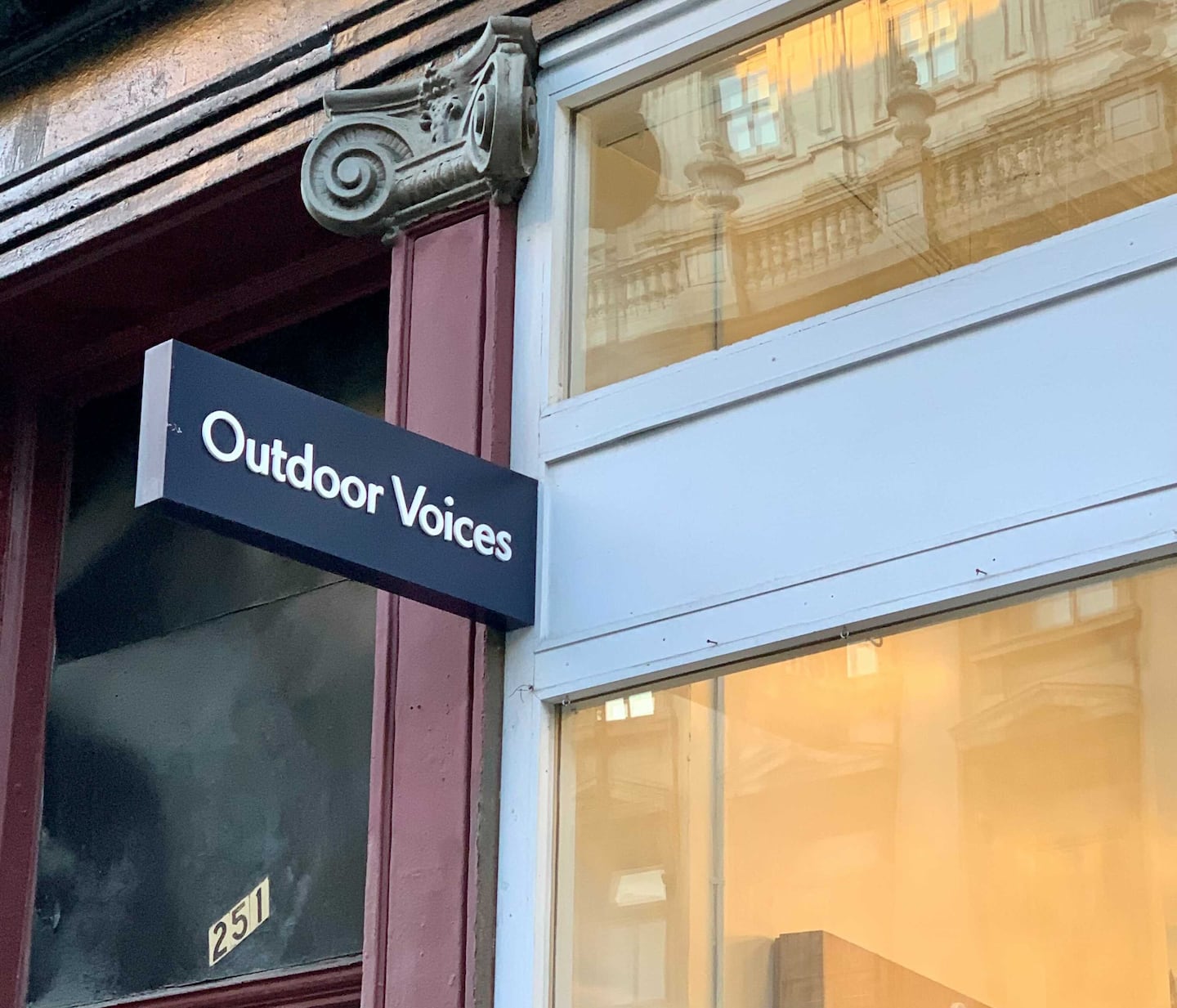
When Outdoor Voices, the activewear brand that made its name in the first wave of the direct-to-consumer revolution, went on the market this past June, its teaser presentation, viewed by BoF, included impressive growth figures. Projected sales for 2022 are $90 million, up from $40 million pre-pandemic, with a 30 percent compound annual growth rate since 2017.
Add to that a repeat purchase rate of more than 75 percent and a projected gross margin of about 45 percent this year — projected to be 50 percent next year — and the pitch deck indicates that the company, which has undergone several leadership changes in recent years, is in a good place. It even says that it is “1st Order Profitable,” music to potential buyers’ ears.
But peel back one layer, and there’s a more nuanced story to tell. According to a source familiar with Outdoor Voices’ financials, the company was not profitable on an EBITDA (earnings before interest, taxes, depreciation and amortisation) basis in 2021.
Ashley Merrill, Outdoor Voices’ chairperson and lead investor, said via a text message that the company was “basically EBITDA neutral” in 2021. When a company says it’s profitable on the first order, it’s not necessarily taking into consideration the variable costs, like paid marketing, an increasingly expensive way to acquire customers. Merrill said that OV’s “month-to-month profitability varies throughout the year based on whether we are pushing on the marketing for growth at that moment in time.”
ADVERTISEMENT
The company is also entertaining investments in lieu of an outright sale, according to multiple sources, and would be looking to raise $25 million to $50 million, with the hopes of putting some of that capital into opening more stores and scaling the business scale further. But raising money now may not be easy: investors are wary of backing consumer brands with a recession looming — especially those that are not consistently profitable.
Regardless of the outcome, Outdoor Voices is a unique case study. It’s been more than two years since founder Tyler Haney exited the business, succeeded by Merrill — CEO of the DTC sleepwear brand Lunya — who took a majority stake in the business through her investment fund, NaHCO3, at a $40 million valuation, more than 60 percent below its peak valuation of $110 million.
In early 2021, Merrill recruited Urban Outfitters veteran Gabrielle Conforti to be OV’s new CEO, with an aim to improve operations. (The website currently has a net promoter score, which measures customer satisfaction, of 80, according to the sales deck.)
Design-wise, Conforti has also taken Outdoor Voices in a broader direction. While Haney’s skills as an executive and manager were in constant question while she was still in control, her ability to sharply brand, market and design a product were held in high regard. Today, the Outdoor Voices aesthetic is less less distinctive — even compared to mass competitors like Alo Yoga and industry leader Lululemon — although perhaps more appealing to a larger audience.
After returning to OV in a consulting role a few months following her initial departure, Haney left again in January 2021 and now runs CBD and web3 businesses. Recently, however, she expressed an interest in re-entering the activewear space with a new brand.
“I’ve certainly been thinking about this and have a lot ready to go when the time is right. I’m fully focused on [web3 platform Try Your Best] TYB at the moment,” she said on Instagram Stories. “TYB would be helpful here, given that we’re making tools that allow brands and fans to directly connect, build together and then share in the success, the growth, etc….”
Activewear brand Outdoor Voices Inc. is exploring options including a potential sale, according to people with knowledge of the matter.
The serial entrepreneur shared with BoF how Joggy, a line of energy supplements and balms, is using her web3 platform, Try Your Best, to build community and circumvent challenges faced by direct-to-consumer brands, like rising customer-acquisition costs.

Cathaleen Chen is Retail Editor at The Business of Fashion. She is based in New York and drives BoF’s coverage of the retail and direct-to-consumer sectors.
While $1.75 billion in court-approved funding has brought labels back to the fold, the real test for vendors will come when that temporary safety net vanishes later this year.
A growing number of mass and premium brands are pushing upmarket with a more luxe look, better materials and, often, higher prices. This case study unpacks how these labels are navigating the tricky challenge of elevating a brand.
Brands from Prada to Abercrombie & Fitch will provide clarity on how the fashion industry is approaching the newly uncertain trade landscape. Plus, a preview of Paris Fashion Week.
The goods come from more than 380 brands, including Burberry and those owned by luxury powerhouses LVMH and Kering.
The activewear giant seems intent on turning its nearly 40-year-old niche outdoor fashion brand into a mainstream success. The plan hinges on convincing backpackers and athletes its rugged technical gear can perform just as well as The North Face or Arc’teryx.
It’s not an existential crisis — yet — but Rick Owens and Daniel Roseberry confront some headscratchers in their latest collections.
Stick with the program or switch it up? Angelo Flaccavento reports on Chloé, Rabanne, Schiaparelli, Rick Owens and Uma Wang.
The brands Gap and Banana Republic beat comparable sales estimates.


