
Agenda-setting intelligence, analysis and advice for the global fashion community.
Agenda-setting intelligence, analysis and advice for the global fashion community.


Shopping has become a trade war zone, and consumers are caught in the crossfire.
On May 2, US president Donald Trump’s administration is set to eliminate the tax loophole known as de minimis, which exempts packages under $800 from duties, on goods from China and Hong Kong. A target of bipartisan legislators for years, de minimus has been particularly beneficial for Chinese e-commerce giants Shein and Temu, and the seismic shift would put a serious strain on their bottom lines. Already, both warned customers price hikes were coming April 25 due to rising operating expenses.
Of course, nothing is yet final; Trump’s trade policies are prone to rapid change. This week, the president suggested he would bring tariffs on China down substantially, saying: “We’re going to be very nice and they’re going to be very nice, and we’ll see what happens.”
But if the plan goes forward, the resulting pain will be felt beyond the two ultra-fast fashion leaders, with the potential to impact third-party sellers on Amazon and Walmart, other smaller online retailers that source from China, as well as “dupe” brands like Quince.
ADVERTISEMENT
Still, the likes of Shein and Temu will feel its impact most acutely. It comes at an already precarious time for the two: Amid its ongoing fight to IPO, Shein’s annual profit slid by more than a third in 2024, the Financial Times reported in February, while in March, Temu parent company PDD announced it missed revenue estimates. Both rely on a constantly expanding customer base to grow, meaning they have to spend to recruit shoppers — but both slashed digital advertising spend last week.
The next few months will put their futures — and consumers’ appetite for ultra-cheap goods that are suddenly less ultra-cheap — to the test.
“A lot of companies will be impacted, but they are most impacted because deep discount is their biggest value proposition,” said Michael Maloof, growth strategist at Earnest Analytics.
Shein shoppers are scrambling. The e-tailer’s Reddit page is brimming with questions about tariffs and how they work. Shoppers have become overnight logistics experts, documenting their packages’ every move, watching whether it will slip through before tariffs set in. Reactions range from mourning the last few hauls to calls for action: “Call your senators and representatives … they need to hear from us,” said a commenter.
“I guess we have to go back to Forever21,” said TikTok user @rachelandc, upset she missed her window for one more haul. (It’s too late for Forever21, too — the mall staple of yore filed for bankruptcy last month, unable to keep pace with Shein and Temu.)
Another TikTokker, @princessakaren, summed up the mood of the moment: “I don’t understand any of this. I just want to shop.”
Even Shein appears to be confused. Temu’s and Shein’s statements on price hikes last week were identical, puzzling because the two are competitors: “The Shein team is curious too. This was not coordinated, and the Shein customer notice posted first,” a source close to Shein told BoF. (Temu did not respond to a request for comment.)
Should prices jump and high tariffs be tacked on, there’s a real chance shoppers may cut back on Shein and Temu purchases in particular, because being super cheap is their main differentiator, whereas Quince, which takes advantage of the same loophole, has more of a value-for-money proposition, for example, said Maloof.
ADVERTISEMENT
Spending on Shein and Temu decelerated in February, when Trump announced de minimis would close, but rebounded shortly after, according to Earnest Analytics credit card data. Shoppers appeared to begin stocking up again at the beginning of the month; Shein’s US revenue growth accelerated to 38 percent in the first 11 days of April while Temu saw 60 percent growth, Bloomberg reported. But over the past two weeks (April 8 to 21), Shein’s and Temu’s daily active users fell 5 percent and 25 percent respectively, according to intelligence firm Sensor Tower.
Many shoppers are likely taking a wait-and-see approach, said Katie Thomas, Kearney Consumer Institute lead. With the memory of TikTok’s near-shutdown still fresh, some may not believe change is coming.
“Consumers have gotten used to operating at this level of stress and uncertainty and these ongoing, unprecedented times,” said Thomas.
There’s evidence appetite for Shein is already waning. Purchase consideration, a measure of whether it’s top of mind for shoppers, dipped between March and April, according to intelligence company Morning Consult.
As tariff talk rises, TikTok views of content featuring thrifted fashion are up 375 percent compared the start of the year, and growing 8 percent per week, suggesting shoppers are pre-emptively seeking out other options as they ready for rising costs, said Michael Appler, communications director at analytics firm Trendalytics. Downloads of secondhand apps in the US jumped 18 percent on average quarter-over-quarter in the first quarter of 2025, according to Sensor Tower.
What comes next is a matter of how real things get for consumers, and some are bracing for the worst, said Thomas. As profits are pinched in the face of rising costs, layoffs could follow, which would dramatically impact spending. Though the labour market has held steady, Meta, Google, Intel and Coty have already culled their workforces this year.
Whether shoppers keep turning to Shein and Temu depends on how expensive things get and whether the value proposition stays intact for shoppers as prices and duties rise, said Maloof.
Caitlin Tetrault, a Florida-based TikTok Shop seller, said price isn’t the only motivating factor for buying from e-tailers like Shein and Temu; they have “cute things,” and stock them faster than anyone else. But she predicts there will be less of buying “18 outfits for Coachella that you don’t care if you leave in a tent behind you,” and she plans to cut frivolous spending, like buying and tossing extra sizes, herself.
ADVERTISEMENT
Even if prices rise, the calculus for shoppers might be the same: “Until people decide Amazon is as expensive as Temu, Temu has some edge [because] the edge is just so big,” said Maloof. Same for Shein. “For a foreseeable amount of runway they’re still the best offer, as long as people are still shopping for it.”
THE NEWS IN BRIEF
FASHION, BUSINESS AND THE ECONOMY

Kering’s woes deepened as Gucci sales tumbled 25 percent. Kering first-quarter group sales fell 14 percent overall, as other key units including Saint Laurent and Balenciaga, also suffered from the luxury slump. Bottega Veneta continued to be a bright spot, with retail sales rising 7 percent.
Adidas earnings were bolstered again by the retro sneaker craze. Bolstered by strong demand for classic shoe models like the Gazelle and Taekwondo, the German sportswear company posted first-quarter operating profit of €610 million ($692 million), beating analyst expectations of €545 million. €6.2 billion revenue was in line with estimates.
Louis Vuitton raised the price on a popular US bag following new Trump tariffs. The LVMH-owned brand hiked the price of the Neverfull GM bag to $2,200 in a 4.8 percent price increase. An analyst at Bernstein found that Louis Vuitton has raised its US handbag prices by 3.6 percent, though some products didn’t see a price increase, perhaps because they’re manufactured in one of Louis Vuitton’s three US workshops.
Saks Global culled its corporate workforce and shuttered a warehouse in Tennessee. The department store group will eliminate 3 percent of its total employees, or about 550 roles, with over half of the layoffs in corporate offices in New York and other locations. Additionally, Saks Global is closing a warehouse in Tennessee, terminating 446 workers.
Asos expressed confidence in growth amid tariff uncertainty. The British online fashion retailer posted higher-than-expected half-year earnings on Thursday as its turnaround plan started to pay off. CEO José Antonio Ramos Calamonte said Asos is well-placed to cope with the impact of US tariffs, citing its flexible model and lower exposure to sourcing from China.
The US and China are holding talks on the trade war, Trump said after Beijing’s rebuttal. Trump told reporters the US and China held talks on Thursday to resolve the trade war between the world’s two largest economies.
Authentic Brands Group weighed a rival bid for Guess. The New York-based brand management company is considering launching a rival takeover bid for American clothing company Guess? Inc. Authentic Brands is working on a potential offer to counter the $13-a-share cash proposal that Guess received in March from WHP Global.
Topshop will return to the high street with outlets in other retailers’ stores. Owner Asos said it’s looking to relaunch the Topshop website later this year and it had already signed deals to distribute Topshop clothing to several retail partners, with no current plans for standalone locations. The expansion comes as sales continue to fall rapidly, down 13 percent in the six months to March 2.
Mytheresa finalised its YNAP acquisition. Mytheresa announced Thursday the completion of its deal to acquire Yoox Net-a-Porter. The combined companies will fall under the parent organisation LuxExperience and start trading under that name on the New York Stock Exchange on May 1.
Forever 21 vendors scorned the retailer’s bankruptcy. Several vendors are alleging the fast-fashion brand’s US operator requested heavy discounts on orders and took shipment deliveries just days before filing for bankruptcy, without disclosing its reorganisation plans. Now, secured creditors are set to recover just 3 percent of their claims.
THE BUSINESS OF BEAUTY
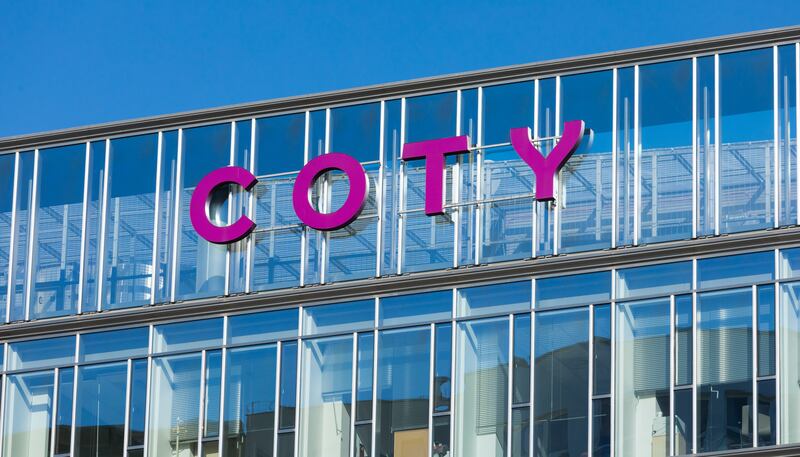
Coty will cut 700 jobs as part of a cost-saving initiative. The American beauty company announced Thursday it would eliminate around 700 jobs globally, around 5 percent of its total workforce. Coty CEO Sue Nabi cited tariff regulations, a new geopolitical landscape and shifting consumer behavior as reasons for the cuts, which will begin in the coming months.
Unilever sales rose 3 percent on demand for premium products. The European consumer goods giant beat expectations in first-quarter earnings, bolstered by price increases and strong demand for its premium products. The maker of Dove soap and Vaseline also said it expects the direct impact of tariffs to be limited,
Procter & Gamble Co. lowered its sales guidance on “volatile” market conditions. The CPG company cut its annual sales and profit outlook due to tariffs and volatility in consumer demand. Its prices rose by 1 percent in the three months that ended on March 31, driven by beauty and grooming products, whose sales increased slightly.
Eli Lilly sued four compounders over copies of weight-loss drugs. The Indiana-based pharmaceutical company announced Wednesday it had sued four compounders — Mochi Health Corp. Fella Health and Delilah, Willow Health Services and Henry Meds — for selling unapproved products containing tirzepatide, the main ingredient in its weight-loss and diabetes medicines, after a US judge blocked copies when not in times of shortage.
Sexual wellness start-up Dame acquired Chakrubs. The 11-year-old start-up, known for its $125 curved vibrators, announced Tuesday it had acquired Chakrubs, which sells spiritual crystal-based sex products. The deal, Dame’s second acquisition in the past year, was done for a mix of cash and equity.
PEOPLE

Chanel signed Kendrick Lamar as a brand ambassador. The French brand featured the American musician — the first and only rapper to win a Pulitzer Prize — in its new eyewear campaign, which launched Tuesday.
Francois Pinault’s wealth has slid as his heir fails to revive Gucci. The 88-year-old founder of Kering SA has seen his net worth drop by 29 percent to $18.6 billion since August 2021, a steeper decline than that of Bernard Arnault of LVMH, as his son struggles to turn around Gucci, the French luxury conglomerate’s biggest brand.
Acne Studios named Brune Buonomano chief marketing officer. Brune Buonomano will join the Swedish label on May 5 following four years as executive vice president of global communications agency Mazarine Group. She succeeds Isabelle Burley, who announced her departure in March. The brand is targeting €500 million in annual sales.
Nike added a new strategy head to aid the company’s turnaround. The sportswear giant named Jennifer Hartley, a 14-year Nike veteran, chief strategy officer, amid CEO Elliott Hill’s attempts to stage a comeback. Nike’s former chief strategy and transformation officer Daniel Heaf left the company earlier this year after his role was eliminated.
MEDIA AND TECHNOLOGY

A Major David Bailey exhibition will open in Spain. English photographer David Bailey’s work will be featured at an exhibition titled “David Bailey’s Changing Fashion” in Spain this summer at Inditex chairperson Marta Ortega Perez’s MOP Foundation. The show will highlight Bailey’s role in shaping ’60s and ’70s fashion and celebrity culture.
Compiled by Jessica Kwon.
For years, brands have used Mexico as a cheap storage location for goods destined for sale in the US market. Now, new tariffs have spurred an exodus, with companies rushing to shift warehousing onto American soil.
Chinese creators claiming to manufacture for luxury brands have gone viral on the platform, offering cut-price ‘dupes’ in response to Trump’s punitive tariffs on the country.
President Trump’s sky-high tariffs on China, along with the end of the de minimis tax loophole, have left American fashion businesses scrambling. BoF unpacks the challenges ahead as companies try to navigate the situation.

Joan Kennedy is Correspondent at The Business of Fashion. She is based in New York and covers beauty and marketing.
While $1.75 billion in court-approved funding has brought labels back to the fold, the real test for vendors will come when that temporary safety net vanishes later this year.
A growing number of mass and premium brands are pushing upmarket with a more luxe look, better materials and, often, higher prices. This case study unpacks how these labels are navigating the tricky challenge of elevating a brand.
Brands from Prada to Abercrombie & Fitch will provide clarity on how the fashion industry is approaching the newly uncertain trade landscape. Plus, a preview of Paris Fashion Week.
The goods come from more than 380 brands, including Burberry and those owned by luxury powerhouses LVMH and Kering.
Christine Hunsicker admitted she falsified financial statements to promote CaaStle Inc. as a valuable, growing business when in reality it was struggling.
The American cosmetic giant’s buyout of Ayurvedic beauty line Forest Essentials came as a surprise. By picking an under-the-radar brand it knows well, the company can show that it’s still in the M&A game without needing to outbid rivals.
The underwear company is anticipating net sales of at least $6.85 billion in the current fiscal year, exceeding analyst estimates and marking the highest revenue since its split from L Brands Inc in 2021.
The Japanese brand is accelerating its expansion in India to capture a greater share of the rapidly growing apparel market and affluent consumer base.


