
Agenda-setting intelligence, analysis and advice for the global fashion community.
Agenda-setting intelligence, analysis and advice for the global fashion community.


TOKYO and PARIS — Yohji Yamamoto is angry.
“Fashion has become a joke,” he says. “It’s all about money. The major companies of fashion, they’re like kids playing soccer, just running after the ball. They’re not thinking about their customers. I just think they have too much money, so they don’t need to work hard. Money is always floating on them.”
There’s little doubt the sharp downturn in demand for some of the world’s largest and most prestigious luxury houses is, in part, the product of what some analysts have called “greedflation” as brands sought to juice profits with punchy price hikes while under-delivering on creative innovation and quality.
But Yohji-san, as he is called out of respect by his team and the wider industry, is no stranger to tough times. “We were there before also,” he says, recalling his 2009 bankruptcy and restructuring. “So now I’m focused on making my company small but strong.”
ADVERTISEMENT
A survivor who succeeded by going against the grain with the label he founded more than four decades ago, Yamamoto’s creative energy has long sprung from anger and frustration. In the early years, the loss of his father during World War II when he was only two years old was the main source of his fury, but these days he’s equally upset about the state of fashion — and the wider world.

We are at the Tokyo headquarters of Yohji Yamamoto Inc. All around Yohji-san’s office, things are piled up on the floor. Papers are strewn everywhere. The main table in his office is cluttered with a crumpled pink tissue box, an old-school landline phone, post-it notes, used coffee mugs and, of course, a lighter and a pack of cigarettes. There is a small clothing rail in the corner with a few garments hanging together, but they don’t seem to be part of a collection he is working on.
As always, Yamamoto is wearing a long crumpled black blazer and black trousers, and his signature black wool hat. But he is more frail than the last time I interviewed him at length, almost 10 years ago. This time, interacting with the designer reminds me of speaking with my father, who is about the same age and whose own anger and frustrations have softened over time. So, I want to be sensitive with him, but I am also curious about how Yohji-san is thinking about the legacy he will leave behind.
These days, he’s thinking about the future: of his company, of fashion and of a planet roiled by wars and climate disasters. He is angry, not just with fashion’s big groups, but with politicians — especially US President Donald Trump: “I’m a fashion designer, so if I am thinking about a new collection, I need to imagine the models. But when I see his face, I lose all my imagination,” he sighs.
He’s exhausted with geopolitical conflicts, and frightened by the climate crisis. “Human beings are making climate change,” he says. “This is our mistake. And, at the same time, we have so many wars. People are killing each other. I’m always asking myself, why, why, why? I can’t find an answer. I really hate it. It makes my heart so dark and down.”
But Yamamoto is also worried about the future of the fashion industry, particularly the loss of skills required to make the special fabrics he uses in his collections. “Specialist workers for threads and fabrics and dyeing, so many of these important specialist techniques are disappearing around the world. Those jobs are very, very hard and complicated. You need high skills, but the workers are getting old,” he says.
They don’t want to jump into that world, so those specialists are disappearing. In this way, I think the fashion business is disappearing.
“And young people don’t want to do it because it looks too hard. They don’t want to take the place of their father or uncle,” he continues. “They don’t want to jump into that world, so those specialists are disappearing. In this way, I think the fashion business is disappearing.”
In Japan’s Aichi prefecture, one of the top three regions in the world for high-quality wool manufacturing, alongside Biella in Italy and Huddersfield in the UK, many small family-owned businesses are closing.
ADVERTISEMENT
In contrast to the natural fabrics that dominate Yamamoto’s mainline collection, much of what is available in contemporary Japanese fashion (including brands like Issey Miyake, CFCL and Yamamoto’s own Y-3 line with Adidas) is made from less expensive polyester fabrics, which Yamamoto points out are made from petroleum and fossil fuels. According to a recent report from Textile Exchange, global textile production rose to record levels last year, increasing industry-based emissions, especially from polyester, which accounts for 43 percent of global emissions from fibre production.
Yamamoto, who is known around the world for his pure-black aesthetic, also has his own sustainability issues to contend with. “The chemicals in the black dye are very bad for human health,” he admits. “In the future, intelligent countries will decide no black anymore because to make real black we use chemical dyes. In the future, people will have to wear only white!” he jokes. “I’m always thinking about it.”
“And anyway, year by year, my creations are becoming more and more expensive because manufacturing is becoming more expensive,” he adds. “People don’t want to spend on well-designed, -cut and -made clothes. The industry is doing things more quickly, so generally, when you visit fashion stores, everything looks the same.”

With all of this weighing on his mind, Yamamoto says he has been in a creative rut. It’s July 29 and this is his first day in the office since returning from the Paris men’s shows a few weeks earlier.
Lately, he has found solace in the music of two young singers: Aki Azuma, who sings enka, an old-time Japanese genre known for its sentimental ballads, and Kawai Yuto, a 14-year-old street singer who has found fame on TikTok. He plays a few of their covers of anime and Studio Ghibli songs, and their duet of Bette Midler’s “The Rose” in Japanese for me on his mobile phone, bringing a sweet smile to his face. “They sing so nicely,” he says. “It’s so touching. Sometimes when I am listening to them, I naturally start crying. And I am so surprised. Why? Why am I crying?”
His newfound sentimentality comes on the heels of a personal loss: the death of Rin, his dog, an Akita breed known for their dignity, courage and loyalty, who would often accompany Yamamoto to the office. “I don’t need a new girlfriend. I just need a new dog,” he jokes. “Just before you arrived, I was talking to my daughter Limi about getting a new dog. For two months, I didn’t want to have a new dog, because I can’t forget her. Then after a few months, I thought maybe she would want me to have another dog.”
Backstage after his Spring/Summer 2026 men’s show at the brand’s Paris headquarters a few weeks earlier, Yohji Yamamoto was curled up on a chair, having a post-show cigarette. He knew a queue of journalists and well-wishers were waiting to say their hellos, but it was easy to understand why he’d rather just return to his hotel and take a nap.
Yamamoto has been doing the backstage dance since 1981, when he and his then-girlfriend Rei Kawakubo first arrived in Paris and shocked the fashion establishment with their radical new aesthetics. Yamamoto’s deconstructed, all-black look couldn’t have been more different from the personas of the French designers dominating the runways at the time: Yves Saint Laurent’s power women, Thierry Mugler’s sexy sirens and Jean Paul Gaultier’s irreverent provocateurs.
ADVERTISEMENT
Along with Kenzo Takada, who had arrived a few years earlier, and Issey Miyake, who came a few years later, Kawakubo and Yamamoto created a burst of new energy that still resonates in fashion today.
“Yohji is fashion’s anti-hero,” says the photographer Max Vadukul, who has collaborated with the designer since the 1980s. “Against all odds, he broke into the European fashion world — one of the hardest arenas for an outsider to survive in — and he’s thrived there for decades. He doesn’t bend to the system, he doesn’t bend his values. His work is uncompromising, deeply personal. The asymmetry, the drape, the way a garment catches your eye — it’s not just design, it’s emotional intelligence made visible.”

Yamamoto’s signature aesthetic and silhouettes have influenced countless designers from Rick Owens to Christophe Lemaire, but he remains a renegade who continues to do things his own way.
“When I went to the Yohji Yamamoto retrospective at the Musée des Arts Décoratifs, I remember wishing that this could be the standard of dressing for the world,” says Owens. “A world of gracefulness and graciousness, and benevolence. I think Yohji-san occupies — and dominates — a niche in fashion closer to delicate poetry than standard clickbait. And of course we need both, but his contribution to the balance is crucial.”
Indeed, Yamamoto refuses to engage in the circus that has turned fashion shows into spectacles competing for attention on social media. In an industry chasing algorithms and celebrity culture, Yamamoto stages the same kind of shows he always has — slow, reflective, uncompromising. There are no gimmicks designed for virality, no stomping down the catwalk and no celebrities there to promote their next movie.
But that doesn’t mean young fashion fans are not deeply engaged in his work, too. Yamamoto’s front row included the content creator Wisdom Kaye who sees in Yamamoto not nostalgia, but genuine fashion creativity at a time when the industry is suffering from a creative malaise.
“Having the honour to attend his shows and witnessing the slow and simmering pace of the models, giving time to analyse each detail juxtaposes so greatly against the fast-paced runways which are indicative of the industry as a whole,” says Kaye.
Also in the crowd at the show was Donatien Grau, head of contemporary programs at the Louvre Museum, who included Yamamoto among 100 contemporary artists in “Copyists,” an exhibition he curated in collaboration with the Centre Pompidou-Metz that also featured Jeff Koons, Francesco Vezzoli and Agnès b. — the only other fashion designer included.
“Yohji has studied deeply the history of culture and costume,” says Grau. “He knows the history of French and European dressmaking, and he understands the techniques of Japanese dressmaking and pattern making. It’s not about turning them against each other — it’s an interplay, a layering, a constant tension.”
Indeed, taking in a Yohji show usually requires deciphering and contemplation to appreciate this tension. But increasingly, it seems he feels there is little time for subtlety. In the men’s show, his messages — ”NO MORE WARS,” “OCEAN DISAPPEARS MAKES HUMANS FINISHED,” “NUCLEAR POWER DISASTERS” — were written directly into his designs.

In a quintessentially Yohji puzzle, these warnings were juxtaposed with syrupy love songs that had the front row singing along — “Endless Love,” “Killing Me Softly” and other ballads from the 1980s — on a soundtrack that was, as always, created by Yamamoto himself.
The show offered a rare moment of reflection and pause during a busy men’s fashion season. While most of the industry was preoccupied with the worsening crisis, Yamamoto’s show was a reminder that the original source of success in fashion is rooted in creativity and emotion, not in the safe, commercial merch on offer elsewhere.
Back in Tokyo, Yohji Yamamoto operates slightly apart from the rest of the Japanese fashion cluster. His headquarters overlook the waterfront in Shinagawa, a transportation gateway and business hub on the southern edge of the city, far from the fashionable neighbourhoods of Omotesando, Ginza and Aoyama, where most of the industry is based.
The company is led by chief development officer Tsuyoshi Muraki who joined the company 26 years ago after he saw a television show about Yamamoto’s growing impact at Paris Fashion Week. Muraki-san, who started as a junior employee in the then-nascent Y’s business, has held a variety of increasingly senior roles in the company ever since.
“I was nervous when I met him for the first time,” Muraki-san says about his first meeting with the designer. “I respect Yohji-san so much. He has this aura. The atmosphere he creates is very special.”
Indeed, the first thing everyone mentions about working with Yamamoto is the unique energy — and high-pressure environment — he creates. This is a business focused on artistic integrity over commerce, where creation sits at the centre of everything, fostering a sense of loyalty and devotion that is rare in the fashion industry. Many team members have worked with the company for more than 10 years. Some, like Muraki-san, have worked with the company for their entire professional lives.
“We are all very faithful to him,” says Caroline Fabre, the Paris-based PR executive who joined the company in 1986 before going to work with Azzedine Alaïa in 2003, only to return to Yohji Yamamoto in 2022, five years after Mr. Alaïa died. “He creates this atmosphere of family even if it’s not easy. He’s very challenging. He’s never happy. He’s never satisfied. He’s always looking for more, pushing his own limits and also testing our limits.”
Nowadays, Fabre is Yamamoto’s key intermediary with Western media and in private, seems to be his “shadow,” his greatest cheerleader, supporter and protector, especially on those days when he is feeling tired and exhausted.
The business has been on a sustained growth streak since Covid. Today, Yohji Yamamoto Inc. generates more than $200 million in annual revenue and has been steadily growing at 15 percent annually, according to figures shared for the first time with The Business of Fashion.
That the company has managed to not only endure but thrive in the current crisis is in part due to the fact that they have been through tough times before. After the global financial meltdown in 2008, a heavy debt burden of $65 million nearly sank the company before it was rescued and restructured by private equity firm Integral Corp, leading to the shuttering of the Y’s for men line and the sudden closure of the brand’s two New York stores.
Now, the company reaches customers through a global e-commerce website and more than 630 wholesale doors and shop-in-shops and 23 flagship Yohji Yamamoto stores and counting, in London, Paris, Shanghai and beyond. Yamamoto made his return to the New York retail scene with a store on Wooster Street which opened in September 2023.

Another thing that stands out about the company is its brand architecture and go-to-market model. Whereas other companies such as Chloé, Marc Jacobs and Dolce & Gabbana have collapsed their secondary lines under one brand to streamline operations, Yamamoto has done the opposite. The company now has nine different brands, plus six brands under Yohji Yamamoto, like a constellation orbiting around the main Yohji Yamamoto line, which the designer still personally oversees.
There’s Y’s (the original brand started by Yamamoto in 1972), Ground Y (genderless clothing), discord (accessories), Wildside (for younger generations) and Limi Feu, a line designed by his daughter. Each brand has its own distribution network of stores and stockists and a different customer target in mind.
Without Y-3 there would be no Rick Owens and Grace Wales Bonner for Adidas or Virgil Abloh and Undercover by Jun Takahashi for Nike.
Even though it would be more cost-efficient to operate fewer brands, Muraki-san says that building and operating these different lines is part of the company’s creative process. By creating new brands, Yamamoto pushes the company in new directions that people don’t understand at first.
“For instance, take the Y-3 business. Other brands are creating clothes, we are creating new categories,” says Muraki-san, pointing to the pioneering sports-meet-fashion collaboration with Adidas, now in its twenty-third year. As the first high-fashion brand to partner with an athletic apparel company, Yamamoto paved the way for countless other designers to mix fashion with sports. Without Y-3 there would be no Rick Owens and Grace Wales Bonner for Adidas or Virgil Abloh and Undercover by Jun Takahashi for Nike.
“We also have a kind of special business model. We don’t do any paid advertising. We don’t pay VIPs. We don’t pay people to come to our shows,” adds Fabre. Everything shown on the runway is produced even if it is uneconomical to do so, and the collection is priced in a way that customers can also buy into the most complicated garments. “Because the business is growing, we can be more creative and we can take more risks,” she says.
“The business follows the creation,” agrees Muraki-san. This core strategy, now under single management and with better collaboration between the commercial and design teams has also led to a healthier working environment.
“You can feel it in the company. It was really noticeable when I came back,” says Fabre. “It was like ‘Wow, there’s a huge change.’ It’s a completely different company. People are more open, speaking and smiling … which was not always the case before. He wants everybody to learn to speak English, to have the people from the atelier visit museums to open their minds. He knows that we have to expand, and that we have to be global and think internationally.”
“I’ve been thinking about my past recently, because I am getting old,” says Yamamoto. “When Caro came back to the company three years ago, she made me promise I would do at least 20 more collections,” he says motioning to Fabre.
As of now, he has completed 12 collections and for now he continues to work. So, what’s left that he wants to say?
“Nice question,” he says. “Every time I think about a new collection, I think I don’t have any new ideas because you need strong, fresh emotions for creation. But sometimes I’m losing it. To get my passion back to create, it takes time,” he begins.
Yohji-san still works with paper patterns and aims to design something new every season, with new show formats.
“This duty is becoming very heavy because making something special is becoming too hard and expensive. I have to compete with what I did before. Very often my creative staff don’t know what I want … so I get angry. And then I’m asking myself, why do I have to be angry so much? And sometimes I hate myself for it because as you know, we cannot go back.”
“But as long as I’m living, I will keep doing what I do. My son is 25 years old. He’s working for the Y-3 business. His generation is going to lose the real creation. Recently, young people stop me in the street because they want to take photos with me. In those cases, I get angry … about me. ‘Hey you,’ I’m telling myself. ‘Why did you become so famous? It’s meaningless.’”
I gently broach the topic of succession, about what will happen when the 20 collections are finished, and he responds pragmatically.
“There are two ways. One way is that I keep on designing until I die. The other way is that in four or five years, I have to name head designers for each brand. For example, Mr. Giorgio Armani, he has five head designers. When I heard about that, I wondered, ‘Should I copy him?” (Just over a month later, Armani died at the age of 91.)

“No, I don’t think so. To get a strong spirit in the outfits, five people is almost impossible. With two or three people at most, I can put all my power and imagination and work together with them. I don’t like talking in this way, about my future.”
Reading the tea leaves, his daughter Limi, whom he has mentored over the years, is most likely to succeed Yohji-san. Though he hasn’t made his intentions known, the designer for the first time included looks from her Limi Feu collection in his own Autumn/Winter 2025 women’s show in March.
“Yes, the reason I included Limi’s pieces in my show is because her creations are becoming stronger. I feel really confident in her,” he says.
Limi-san, a shy and reserved character like her father, says she became a designer because he expected it of her. There was no other way. Like him, her creativity often comes from anger or frustration, but the identity she has carved out a different, more feminine approach within the Yohji Yamamoto universe.
“I don’t know the full picture of what he wants, but I am confident I can protect the universe of the Yohji Yamamoto brand,” she says. “I grew a lot by learning from him, especially on the technical aspects,” she says. “He taught me to draw patterns around the body, as if you draw a painting. And every season I always start with a new pattern, just like my father. I don’t want to look at the past, I want to be in the present and think about the future.”
“It’s personally very important to me,” she adds. “This started as my grandmother’s business, and my father started working with her and turned it into a big company.” Yamamoto’s mother Fumi-san, who died in January 2023 at the age of 103, was an ever-present force in the company who had her own office in the headquarters until she died.

As my conversation with Yohji-san comes to a close, he lights a cigarette and pauses to reflect on all we have discussed. The shifting sands of an industry in crisis and world in chaos, dealing with fame, trying to keep a business going and, through it all, the constant pressure to create something new.
“Lucky or unlucky, when I’m driving my car and I stop at the stop sign, many people pass in front of me and a new idea falls down. I catch it, like this!” he says, gesturing with his hand. “Never in the toilet, always on the street.”
“So maybe I should not be resting in my bed. Maybe it’s better for me to be driving and walking, so I can catch an idea. Activity gives you power. But after the last men’s collection, I got so tired. Because I lost my dog, I stopped walking in the morning. That makes my legs powerless so last time I was in Paris I needed help to walk. And then I started thinking, ‘No, no, this is not good. I have to walk by myself without any help.’”
“Right now for the next ladies collection, I’m already late; eight to ten days later than usual. I wanted to make a surprise, to create something new. But I couldn’t find my surprise for two weeks. But finally, I found it. Before you came here, I explained my main sense of beauty, sense of funniness to my pattern-maker, to my drawing team and painting team,” he says. “I made it today!”
“I have to thank you, because you were coming today, I came here. If you weren’t coming today, I don’t know…”
I say to Yohji-san that he is following his own advice, that he needs to get out of his bed and into the street and drive. Only then can you catch an idea.
“Today, my wife drove me, because my legs are too weak because I started not to walk. But from next week, I’ll start driving by myself — and walking with the dog.”
To explore The BoF 500 Class of 2025 and this year’s cover stories, sign up to the BoF Daily Digest Newsletter.
On Oct. 3, The Business of Fashion will unveil The BoF 500 Class of 2025. To mark the occasion, we sat down with three members of The BoF 500 community to discuss how they are responding to the tumultuous state of fashion and the wider world.
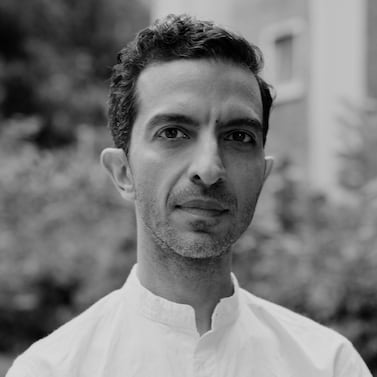
Imran Amed is the Founder, CEO and Editor-in-Chief of The Business of Fashion. Based in London, he shapes BoF’s overall editorial strategy and is the host of The BoF Podcast.
Sex sells — if anyone can figure out what sexy means in 2026. Robert Williams tracks the search for a new silhouette at Kering’s Gucci, LVMH’s Dior and more.
Strong growth at Miu Miu helped lift results, but the Italian luxury group said that integrating Versace will weigh on margins in the near term as it begins the turnaround of the struggling brand
After Swatch Group launched an attack on Morgan Stanley’s influential annual watch report, Swatch-owned Tissot cracks open the door for a glimpse at some numbers and Robin Swithinbank says it’s time a secretive industry came clean on financials.
Half a year after Giorgio Armani’s death, it appears to be business as usual at the sprawling fashion empire while potential investors continue to circle with no firm bid in sight.
Stick with the program or switch it up? Angelo Flaccavento reports on Chloé, Rabanne, Schiaparelli, Rick Owens and Uma Wang.
The brands Gap and Banana Republic beat comparable sales estimates.
Sex sells — if anyone can figure out what sexy means in 2026. Robert Williams tracks the search for a new silhouette at Kering’s Gucci, LVMH’s Dior and more.
Christine Hunsicker admitted she falsified financial statements to promote CaaStle Inc. as a valuable, growing business when in reality it was struggling.


