
Agenda-setting intelligence, analysis and advice for the global fashion community.
Agenda-setting intelligence, analysis and advice for the global fashion community.

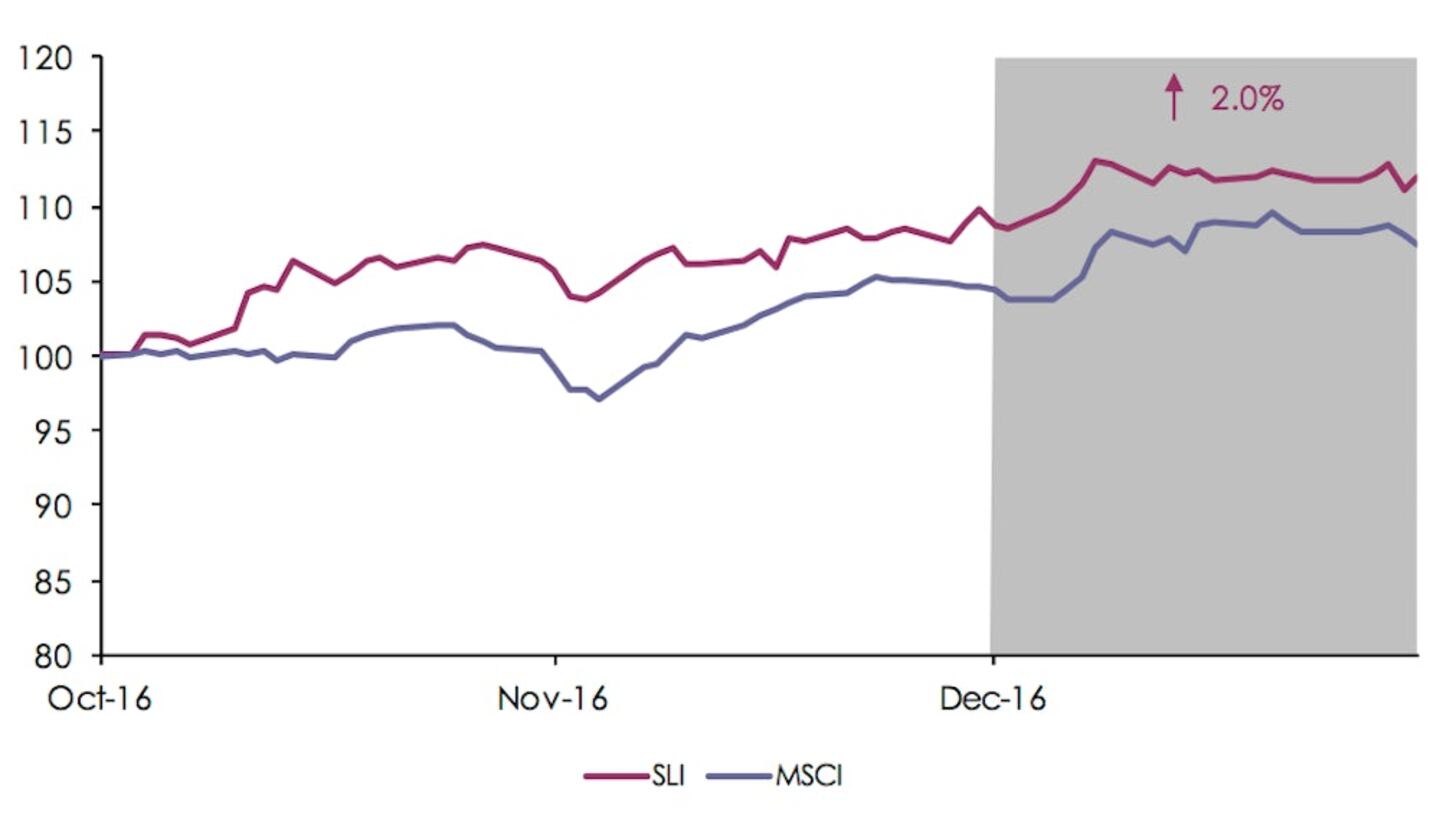
LONDON, United Kingdom — The Savigny Luxury index ("SLI") rose 2 percent, a touch less than the MSCI World Index ("MSCI") which rose 2.6 percent, largely on positive broker comment driven by renewed optimism over China and the ability of the sector to adapt to its new reality.
Big news
Optimism has returned to mainland China in the critical period between the Christmas rush and Chinese New Year. Driven by a weaker yuan and the Chinese government's focus on growth through consumption rather than through infrastructure investment, as well as the narrowing of the gap between prices in China and abroad, China's wealthy are spending at home again. Bain estimates that sales of luxury goods in mainland China will grow by 4 percent in 2016, after three years of decline. Company results back this up, with Burberry, Tiffany, Hermès and Richemont all posting growth in China in their latest results. Richemont notably reported "marked" October sales growth in mainland China.
Luxury brands have watched and learned in 2016 and are adapting to a new reality by tailoring merchandising to local needs and offering more affordable price points in order to encourage middle class consumers, key in emerging markets such as China, and millennials to buy their wares. Brands such as Louis Vuitton are offering a larger selection of small leather goods as well as perfumes, whilst Cartier launched its latest watch immediately in steel, as opposed to launching it in precious metals followed by a diffusion line in steel.
ADVERTISEMENT
Other watch brands are also on it: Tag Heuer has successfully regrouped around its core price point, resulting in sales growth of 10 percent this year; Girard Perregaux has reduced the number of points of sale from 500 to around 400 in order to better service each point of sale. The brand has also entered the SFr5,000 to 10,000 segment with a strong offering.
Corporate activity was brisk this month with deals in jewellery, apparel and personal care. Italy was at the forefront of such activity with Gansu Gangtai, a Chinese conglomerate with activities in jewellery, buying 85 percent of legendary Italian jeweller Buccellati from Clessidra and the Buccellati family, valuing the business at €270 million; local private equity firm Armonia purchasing a majority stake in casual chic apparel brand Aspesi reportedly for €50 million and outdoors clothing specialist Woolrich being acquired by Italian mid-market retailer WP Lavori in Corso.
Elsewhere, US private equity firm Berkshire Partners bought an undisclosed stake in affordable jewellery brand Kendra Scott, reputedly valuing the brand north of $1 billion; Unilever acquired premium haircare brand Living Proof, and French perfume group Jacques Bogart bought German perfumery chain H.C. Again in Germany, Strenesse, one of the few German fashion brands to have known international success, was bought out of insolvency by fashion entrepreneur Juergen Gessler in concert with an undisclosed bidder.
Going up
Going down
What to watch
The malaise in the US luxury sector may take a while to play out and a lot hinges on the latest Christmas trading figures. On the upside for luxury, Trump plans to significantly reduce the tax burden of the wealthy thus freeing up more disposable income; on the downside, the US department store sector is still struggling and luxury brands will have to reduce their exposure to this segment with consequent loss in revenue.
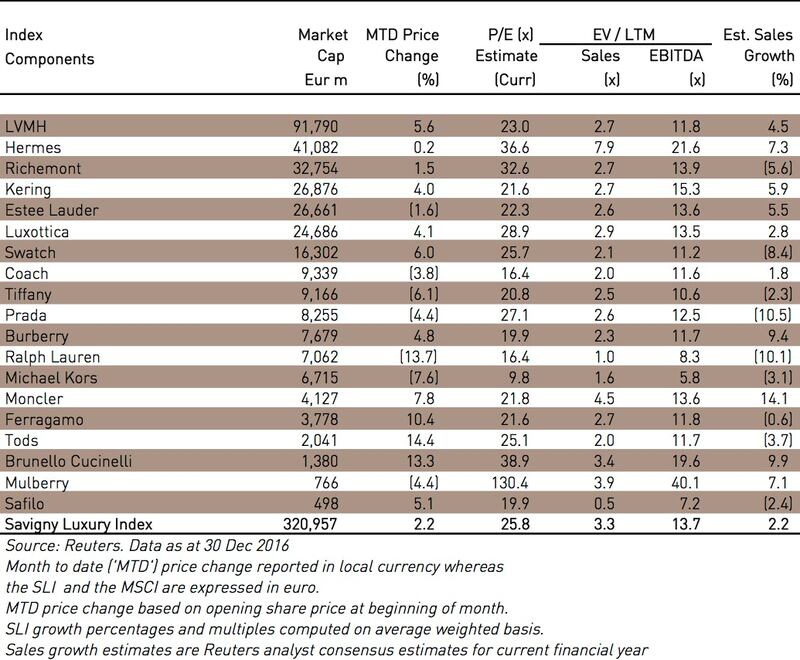
Sector valuation
Sex sells — if anyone can figure out what sexy means in 2026. Robert Williams tracks the search for a new silhouette at Kering’s Gucci, LVMH’s Dior and more.
Strong growth at Miu Miu helped lift results, but the Italian luxury group said that integrating Versace will weigh on margins in the near term as it begins the turnaround of the struggling brand
After Swatch Group launched an attack on Morgan Stanley’s influential annual watch report, Swatch-owned Tissot cracks open the door for a glimpse at some numbers and Robin Swithinbank says it’s time a secretive industry came clean on financials.
Half a year after Giorgio Armani’s death, it appears to be business as usual at the sprawling fashion empire while potential investors continue to circle with no firm bid in sight.
The Japanese sportswear brand is accelerating global expansion by acquiring race-registration platforms to deepen engagement with runners.
The activewear giant seems intent on turning its nearly 40-year-old niche outdoor fashion brand into a mainstream success. The plan hinges on convincing backpackers and athletes its rugged technical gear can perform just as well as The North Face or Arc’teryx.
It’s not an existential crisis — yet — but Rick Owens and Daniel Roseberry confront some headscratchers in their latest collections.
Stick with the program or switch it up? Angelo Flaccavento reports on Chloé, Rabanne, Schiaparelli, Rick Owens and Uma Wang.


