Agenda-setting intelligence, analysis and advice for the global fashion community.
Agenda-setting intelligence, analysis and advice for the global fashion community.

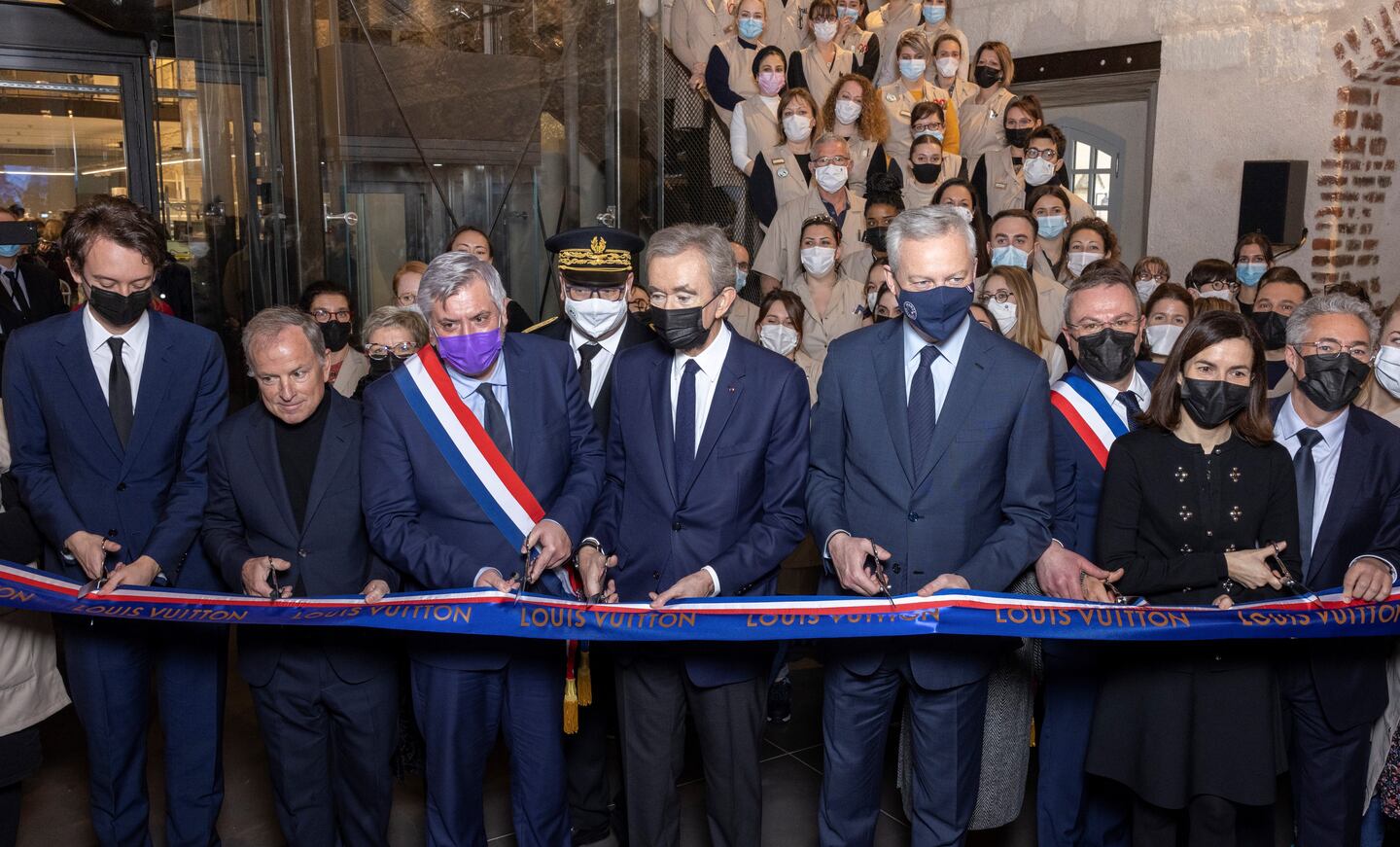
VENDÔME — Louis Vuitton inaugurated two new accessories workshops in France’s central Loir-et-Cher region Tuesday, with two additional workshops slated to open in the coming months.
The push to increase capacity comes as the French luxury giant juggles surging demand with a long-term push to move its products upmarket, increasing its focus on higher-end styles like its Capucines handbags and raising prices for the monogrammed canvas styles, which historically drove sales.
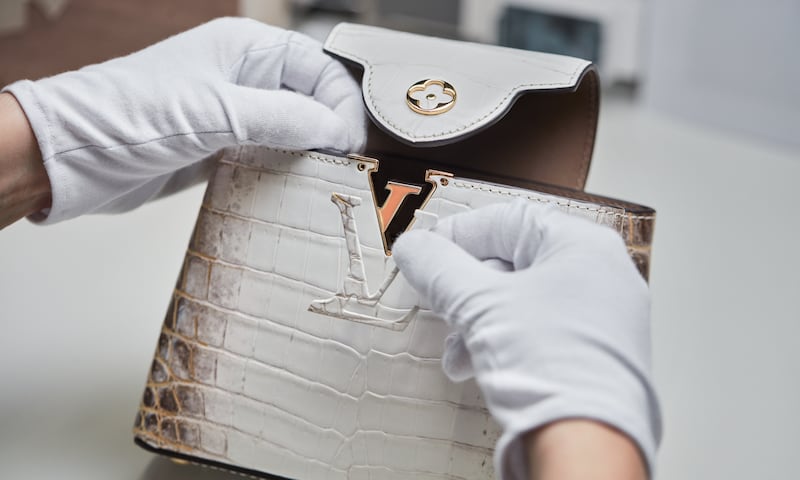
Rapid growth at Louis Vuitton helped push owner LVMH’s sales to record highs last year, with fashion and leather goods sales that surged 42 percent above 2019′s pre-pandemic levels. One of the two new workshop facilities, constructed inside a renovated abbey in the town of Vendôme, is set to specialise in reptile skins including alligator, crocodile and python. A medium Capucine bag in crocodile is now priced at $31,500.
France’s economy minister, Bruno Le Maire, joined the visit alongside LVMH chairman Bernard Arnault and Louis Vuitton’s CEO Michael Burke. Arnault’s son, Frédéric, the 27-year-old CEO of the group’s TAG Heuer watch brand, also attended the ribbon-cutting.
ADVERTISEMENT
Le Maire said he had come to “pay homage to French craftsmanship.” After decades of de-industrialisation, “industrial reconquest is indispensable for France,” he said.
Michael Burke highlighted the brand’s efforts to hire workers locally, as well as training them to to complete a variety of steps in the production process.
The new workshops will lift the number of Louis Vuitton’s French factories from 16 to 20 by year-end. Other key hubs for production include Texas, Portugal and Italy.
Burke and his team downplayed a walkout staged by unions earlier this month, highlighting that only 4 percent of staff had participated. An agreement has since been approved by workers, with the company extending them a 7 percent raise and reducing their weekly hours from 35 to 33, a spokesperson for the brand said.
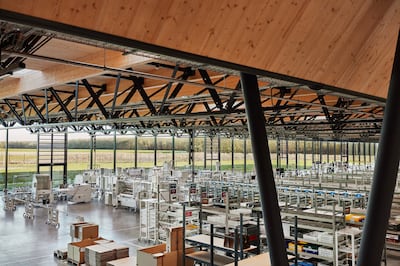
The facilities featured the latest iteration of a modular manufacturing concept to which the brand has transitioned under Burke’s leadership, with smaller factories (of around 200 to 300 employees) and equipment mounted on rolling tables to allow teams to reorganise rapidly into small “pods” to tackle new styles or techniques.
“There’s no big assembly lines with 100 people each making the same gesture since 20 years,” Valérie Dubois, the brand’s manufacturing director for France, said.
Burke hit back at the notion that ethical and sustainable brands should avoid using exotic skins, highlighting the views of some conservationists who claim the economic value of crocodile and alligator skins plays a key role in protecting habitats from encroachment by human settlement. “If we do not maintain this trade, these animals will disappear,” he said.
The brand announced a push to ensure 100 percent of its crocodile leathers could be traced to farms certified by the “Crocodile Standard” conservation group by year-end.
ADVERTISEMENT
Disclosure: LVMH is part of a group of investors who, together, hold a minority interest in The Business of Fashion. All investors have signed shareholder’s documentation guaranteeing BoF’s complete editorial independence.
Stick with the program or switch it up? Angelo Flaccavento reports on Chloé, Rabanne, Schiaparelli, Rick Owens and Uma Wang.
The brands Gap and Banana Republic beat comparable sales estimates.
Sex sells — if anyone can figure out what sexy means in 2026. Robert Williams tracks the search for a new silhouette at Kering’s Gucci, LVMH’s Dior and more.
Christine Hunsicker admitted she falsified financial statements to promote CaaStle Inc. as a valuable, growing business when in reality it was struggling.
