Agenda-setting intelligence, analysis and advice for the global fashion community.
Agenda-setting intelligence, analysis and advice for the global fashion community.

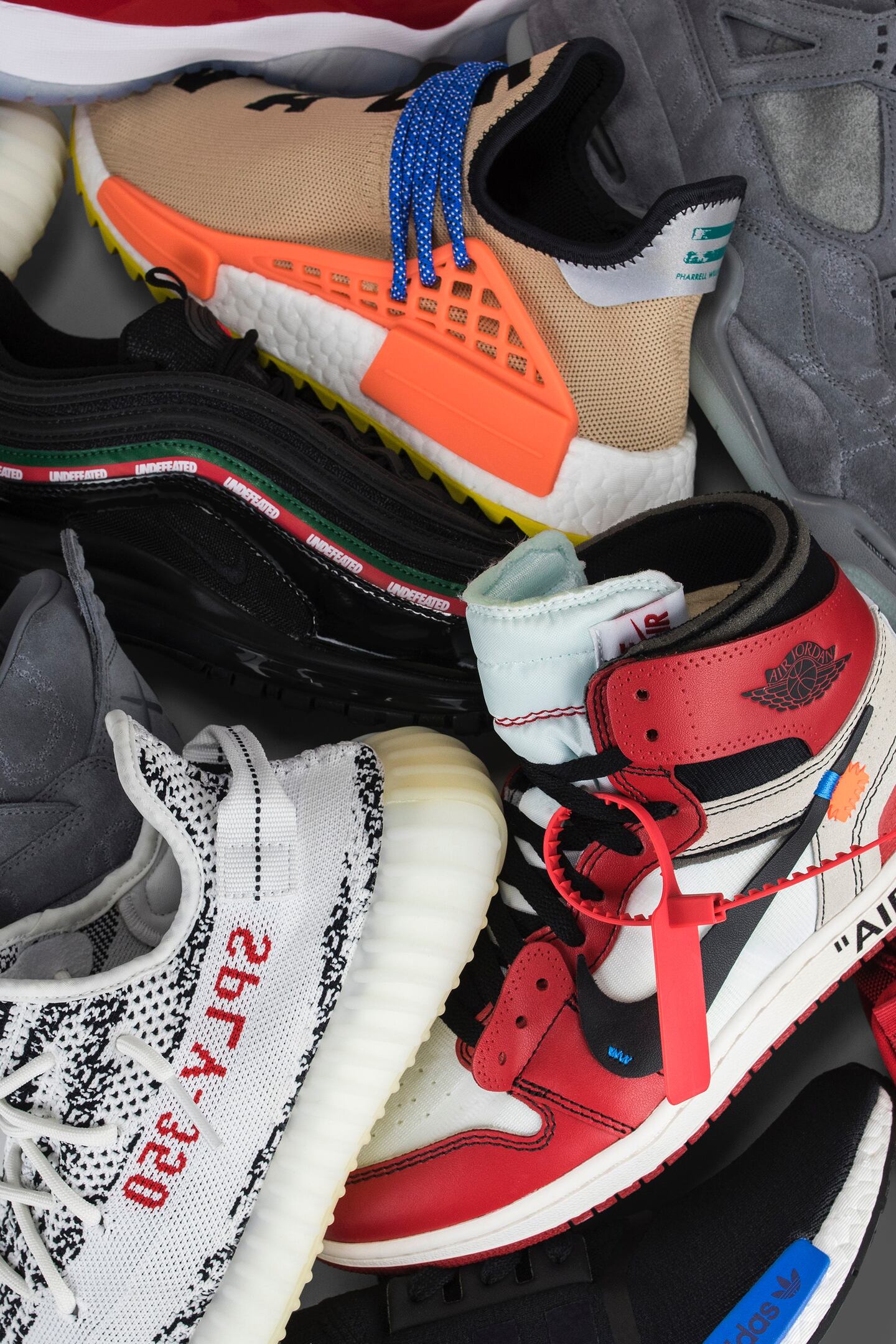
NEW YORK, United States — Venture capitalists continue to eye the growing streetwear market. After taking stakes in cult labels such as Supreme, A-Cold-Wall and Huf, this week investors targeted sneaker resale marketplaces.
LVMH Luxury Ventures acquired a stake in sneaker and apparel resale marketplace Stadium Goods for an undisclosed sum. "As we continue to scale the business, there are specific areas that require additional capital to nurture this growth. In particular, growing our proprietary tech offering, brick-and-mortar expansion, marketing efforts and staffing," said Jed Stiller, co-founder and managing partner of Stadium Goods, which operates a brick-and-mortar store in New York's Soho as well as its own e-commerce site and has extended its reach through Amazon, Ebay, Zalando and Alibaba. The company projects gross merchandise volume to reach $350 million to $400 million in 2018. LVMH Luxury Ventures did not respond to a request for comment.
Meanwhile, the marketplace app Goat, which acquired specialist sneaker consignment store Flight Club, has attracted a $60 million investment round led by venture capital firm Index Ventures. "The merger brings together a combination of breadth, inventory and consumer experience," explained Danny Rimer, partner at Index ventures, who will join Goat's board of directors.
In recent years, retailers that operate a marketplace model — providing platforms that allow users to display items for other users to purchase without the risk of buying and holding inventory — have attracted increased interest for their advantageous economics.
ADVERTISEMENT
In the streetwear sector, successful marketplace businesses include Grailed and StockX, a "stock market of things" that specialises in the buying and selling of sneakers and high-end streetwear.
"As fashion and sportswear have collided, these niche marketplaces are now being transformed by young, mobile-centric customers," explained Frederic Court, managing partner at Felix Capital, which largely invests in digital lifestyle businesses and has stakes in Farfetch and Gwyneth Paltrow's Goop, as well as BoF. "This is a strong and global trend and there are opportunities for these companies to continue to grow enormously and challenge established retailers such as Footlocker and others, who are less connected to these young customers."
But marketplace businesses generate less margin per transaction than traditional wholesale businesses, leaving them with less money to spend on customer acquisition, meaning that only those with strong word of mouth as likely to thrive.
The approach also comes with operational challenges. "In the case of premium sneakers, it's essential to guarantee authenticity. There is some friction in the models of Goat, Stadium Goods (or even Farfetch) as the marketplaces end up touching the product to ensure it's authentic. This is reflected in the margin structure as they take higher commission [and] add considerable operational complexity," explained Court. "Still, they will be much more capital efficient than retailers [and] their share of the retail market is only going to grow as they add more choice and convenience to consumers."
Disclosure: LVMH and Felix Capital are part of a group of investors who, together, hold a minority interest in The Business of Fashion. All investors have signed shareholder's documentation guaranteeing BoF's complete editorial independence.
Related Articles:
[ The Top 10 M&A Targets in StreetwearOpens in new window ]
[ Who's Winning the Fashion E-Commerce Race?Opens in new window ]
Nikhil Thukral, managing partner at the LVMH-affiliated private equity fund, talks about the ingredients of winning companies, the dynamics challenging fashion's incumbents and how economic shifts are shaping investor strategies in the BoF-McKinsey State of Fashion 2025.
The fast fashion giant is reportedly close to filing to go public in London, but faces doubts about its business and the political environment.
In 2020, like many companies, the $50 billion yoga apparel brand created a new department to improve internal diversity and inclusion, and to create a more equitable playing field for minorities. In interviews with BoF, 14 current and former employees said things only got worse.
For fashion’s private market investors, deal-making may provide less-than-ideal returns and raise questions about the long-term value creation opportunities across parts of the fashion industry, reports The State of Fashion 2024.
It’s not an existential crisis — yet — but Rick Owens and Daniel Roseberry confront some headscratchers in their latest collections.
Stick with the program or switch it up? Angelo Flaccavento reports on Chloé, Rabanne, Schiaparelli, Rick Owens and Uma Wang.
The brands Gap and Banana Republic beat comparable sales estimates.
Sex sells — if anyone can figure out what sexy means in 2026. Robert Williams tracks the search for a new silhouette at Kering’s Gucci, LVMH’s Dior and more.