
Agenda-setting intelligence, analysis and advice for the global fashion community.
Agenda-setting intelligence, analysis and advice for the global fashion community.

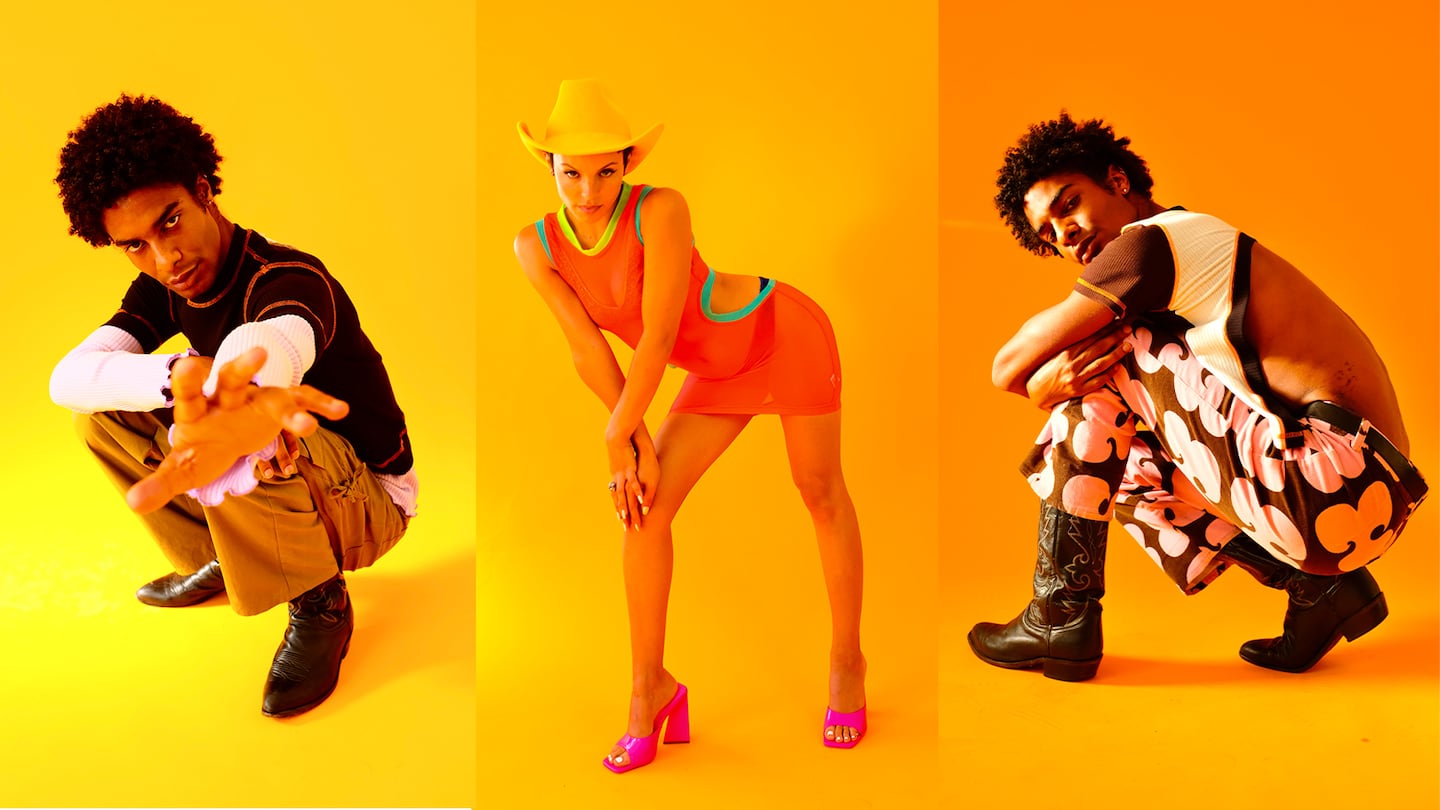
Last year, Jacob Vargas and James Flemons, founders of the Los-Angeles based label Phlemuns, exited two traditional financing partnerships — ones that offered cash in exchange for equity — in favour of a different kind of investment.
Vargas and Flemons took loans from digital payments company Square, e-commerce platform Shopify and Clearco, a financial services firm for e-commerce companies, for the funding necessary to meet the demand for their business. What these new financing opportunities had in common was that they offered the brand cash with no equity in the business required in return, and a quick way to access capital without a long application process.
Vargas called the previous financial partnerships “a learning opportunity,” but added that as the label grew its sales and wholesale accounts, both former investors were looking for more equity than the brand was willing to give up.
“We’re looking for no-strings-attached deals to keep us fully autonomous,” said Vargas. “We definitely know the demand is there, and if we have the capital to produce the product we’ll be able to scale accordingly.”
ADVERTISEMENT
Flemons and Vargas aren’t alone. They represent a larger push among young labels to retain control and pursue sustainable, not explosive, growth. That desire is leading designers to prioritise new financing options including design platforms and loan programmes.
Many young design businesses witnessed several American luxury brands including Proenza Schouler decline over the past decade after scaling too quickly, a frequent by-product of private equity ownership. Compounding that decline was a changing wholesale model, the shift to e-commerce and the overwhelming power of European fashion conglomerates. Designers are now pushing for a more sustainable model within the industry that places profitability and long-term growth above rapid scale and lucrative exits.
A New Mindset
Today, prestigious awards and industry buzz don’t guarantee the same level of interest from private equity that they once did a decade ago. But for some designers, that’s a good thing.
“Obviously when someone comes to you with a lot of money, they want to put gasoline in every cylinder,” said designer Derek Lam, who, in the early 2000s, rose to be one of American fashion’s luxury darlings.
Lam has since revived his label Derek Lam 10 Crosby with new owners, private label firm Public Clothing Company, looking to a slower model of growth. “[Now] people have a little bit more realistic sense that that’s not the best approach.”
After witnessing what happened to many of their predecessors, today’s crop of designers is more wary of investors. Some designers who saw their popularity rise during the pandemic are betting that they don’t need excess capital to maintain their momentum.
“It’s an added pressure I don’t want,” Marcelo Gaia, the founder and designer of womenswear label Mirror Palais, said of investment opportunities. The sort of growth that the brand has seen in the past two years — celebrity clients, cult-status hero products and press attention — traditionally would attract investors. But so far, Gaia has remained self-funded, turning down several offers for funding in favour of a slower model of growth.
ADVERTISEMENT
A Shifting Model
As designers become increasingly hesitant of more traditional options, new paths for funding and operational support have stepped in to fill the void.
Businesses like Shopify and Clearco provide alternative ways for fashion businesses to access quick capital, often offering a flexible payback schedule of monthly payments with a flat fee. They also have few requirements for those interested: many simply rely on automated services that correspond with order numbers and credit scores.
They may want to be the next Virgil, but most of them want to have a sustainable, mid-size business with longevity.
Now, smaller-scale design platforms that offer a range of services to designers like Tomorrow, a showroom turned design platform, and Twentyfourseven, a Milan-based company that provides licensing, distribution, advice and early-stage funding to labels including Collina Strada, Supriya Lele and Charlotte Knowles, are opting for minority stake investments to grow the businesses at a slow and controlled pace, without an exit timeline. To entice designers, these investors offer a mix of money and services and push for profitability instead of sheer scale.
That approach also involves a more equitable relationship between designers and the groups that fund them. Tomorrow’s most recent investment in designer Martine Rose, for instance, also involved a share swap that gave the label an undisclosed stake in the Tomorrow business.
“It really felt interesting and good and decent to have a new view of how a platform, and the creators who are supporting the platform, are sharing the values and the upsides,” Stefano Martinetto, co-founder and chief executive, told BoF.
Many recommend designers hold off on seeking outside investment until absolutely necessary, and to pursue fundraising from family and friends or crowdfunding first
“It’s not just a matter of money,” said Giacomo Piazza, founder and chief executive of Twentyfourseven. “Most cases it’s not the right approach, sometimes it’s giving too much water to a very young plant.”
ADVERTISEMENT
Designers’ shifting approach to raising capital also signals a new path for business in fashion.
“I don’t think anyone needs another billion-pound business,” said Martinetto. “They may want to be the next Virgil, but most of them want to have a sustainable, mid-size business with longevity.”
Services and technology start-ups that aim to ease direct-to-consumer pain points are winning over venture capital funds amid a record wave of investment.
Twentyfourseven, a showroom turned full-fledged design platform, is pushing for a new kind of sustainable growth in the industry.
The intimate New York Fashion Week dinner celebrated the organisation’s new masterclass cohort of 18 designers — its largest yet. Alongside the designers, guests included model and activist Bethann Hardison, fashion designer Naeem Khan and Moda Operandi’s April Hennig, as well as fashion executives, retail partners and programme advisors.
The 15-year-old New York-based womenswear brand is introducing White Label — an accessible offer of button downs, pants and dresses ranging from $350 to $650, aimed at serving priced-out shoppers and future-proofing the business in a challenged retail environment.
The Korea Creative Content Agency is placing Korean fashion firmly on the global stage. The Business of Fashion sits down with the founders of Kimhēkim, Bonbom and Re Rhee — three fashion designers in its incubator programme, Concept Korea — to learn more.
With fresh capital from Kellwood Company, Dicks Sporting Goods Ventures and model Taylor Hill, co-founders Ariana Ferwerda and Kiley McKinnon are looking to expand into activewear and more wholesale doors.
Sex sells — if anyone can figure out what sexy means in 2026. Robert Williams tracks the search for a new silhouette at Kering’s Gucci, LVMH’s Dior and more.
Christine Hunsicker admitted she falsified financial statements to promote CaaStle Inc. as a valuable, growing business when in reality it was struggling.
The American cosmetic giant’s buyout of Ayurvedic beauty line Forest Essentials came as a surprise. By picking an under-the-radar brand it knows well, the company can show that it’s still in the M&A game without needing to outbid rivals.
The underwear company is anticipating net sales of at least $6.85 billion in the current fiscal year, exceeding analyst estimates and marking the highest revenue since its split from L Brands Inc in 2021.


